▶ Watch the original YouTube video
After analyzing over 300 anime across 15 years, one protagonist stands out for his radically different approach to heroism: Osamu Mikado from World Trigger. Unlike typical shonen protagonists driven by emotion and friendship, Osamu operates on pure logic and responsibility—a mentality so unusual that it has sparked intense debate within the World Trigger fan community.
What Happened
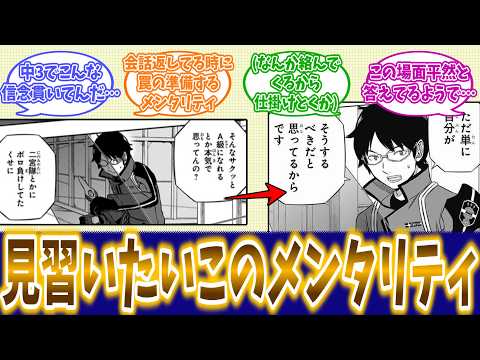
Osamu Mikado, the protagonist of World Trigger, exhibits a psychological profile that fundamentally differs from conventional anime heroes. Rather than being motivated by protecting friends or pursuing dreams, Osamu prioritizes logical reasoning and a sense of duty. His willingness to prepare traps while maintaining casual conversation, his refusal to hesitate once a decision is made, and his ability to sacrifice himself for strangers have all become focal points of fan discussion. The World Trigger community (known as “Wami”) has been actively analyzing what drives this middle schooler to maintain such an extraordinary mental framework.
Why It Matters
Osamu represents a departure from the emotional, instinct-driven protagonists that dominate modern shonen manga and anime. His character challenges the conventional narrative of heroism by suggesting that responsibility and logic can be more powerful motivators than passion or friendship. For viewers and fans, understanding Osamu’s mentality offers insight into how trauma, environment, and personal philosophy can shape a person’s entire worldview. Additionally, his character raises questions about the cost of emotional suppression and whether pure logic can sustain a person through increasingly complex moral situations.
Background
Osamu lives in a world that experienced a catastrophic invasion from another dimension 4.5 years before the series begins. While Osamu himself was not directly victimized—his family remained safe—he grew up surrounded by disaster survivors. This environmental context appears crucial to understanding his mentality. Unlike Eren from Attack on Titan, who lost his mother directly, Osamu developed his sense of responsibility indirectly, through witnessing collective trauma and observing his mother’s pragmatic acceptance of hardship. Osamu’s parents, particularly his mother, demonstrated a philosophy of “accepting circumstances and moving forward,” which Osamu internalized and transformed into a logical framework for action.
Key Points
- Logic Over Emotion: Osamu prioritizes rational decision-making and responsibility over emotional impulses, a trait rare among shonen protagonists
- Weaponizing Weakness: Rather than overcoming his limitations, Osamu strategically exploits his average abilities and the underestimation they invite from opponents
- Environmental Trauma: Growing up amid disaster survivors shaped Osamu’s mentality, though he was not a direct victim himself
- Absence of Hesitation: Osamu operates under a personal principle that hesitation leads to future cowardice, forcing him to commit fully to decisions
- Organizational Tension: While intellectually suited for leadership, Osamu’s tendency toward independent judgment makes him better suited as a field commander than as an administrator
- Emotional Suppression: Osamu consciously suppresses romantic feelings and emotional attachments to maintain operational clarity
Character Comparison Analysis
Osamu vs. Yuma (Yuuma): While both share a pragmatic approach to survival, Yuma operates from experience and intuition, whereas Osamu functions through calculated logic. Despite their different methodologies, both characters share a fundamental seriousness that creates complementary partnership dynamics.
Osamu vs. Arashiyama: Arashiyama maintains a more balanced, flexible mentality centered on situational judgment. His sense of responsibility stems from protecting his family specifically, whereas Osamu extends his responsibility to strangers and society broadly.
Osamu vs. Kitora: Kitora possesses comparable intellectual capacity but is driven by emotional instinct and romantic feelings. Her attraction to Osamu may stem from recognizing a similar logical mindset, yet Osamu deliberately rejects romantic motivation as a basis for action.
| Character | Mentality Type | Primary Motivation | Key Weakness |
|---|---|---|---|
| Osamu | Logical, duty-driven | “Calculate what must be done” | Emotional suppression |
| Yuma | Experience-based, intuitive | “Learn from experience” | Shallow reasoning |
| Arashiyama | Balanced, flexible | “Judge based on circumstances” | Indecisiveness |
| Kitora | Emotional, instinctive | “Follow your heart” | Emotional volatility |
The Paradox of Heroism Without Heroic Identity
One of the most striking contradictions in Osamu’s character is that he performs heroic actions while explicitly rejecting a heroic identity. Osamu states that protecting those he cares for is “natural for any boy” and claims he lacks exceptional skill. Yet his actions demonstrate willingness to sacrifice himself for complete strangers—a definition of heroism by any measure. This paradox reveals Osamu’s true nature: he does not see his actions as heroic choices but as logical necessities. For Osamu, sacrificing himself is not a special decision but an inevitable one, given his principles. This distinction separates him from characters like Levi from Attack on Titan, who consciously adopted a soldier’s mentality. Osamu developed his mentality organically, almost unconsciously, through environmental pressure and parental influence.
The Absence of Hesitation
Perhaps the most defining aspect of Osamu’s psychology is what fans describe as “a man for whom hesitation does not exist in the dictionary.” This does not mean Osamu cannot hesitate—rather, he refuses to allow himself to hesitate. Osamu operates under a personal axiom: if he permits himself to flee once, he will flee again when truly necessary. This self-awareness of his own potential weakness drives him to eliminate hesitation entirely from his decision-making process. Notably, observers have detected one moment where Osamu did hesitate—during a public hero conference—suggesting he is not entirely immune to doubt, but rather someone who actively suppresses it through conscious effort. This makes Osamu not a man incapable of hesitation, but a man who forbids it to himself.
Fan Community Perspectives
The World Trigger fan community has responded to Osamu’s mentality with a mixture of fascination and bewilderment. Many fans express shock at how a middle schooler could develop such a mature psychological framework, with comments like “What kind of life would produce a mind like that?” and “This kid is maintaining this resolve at age 14.” Interestingly, fan reactions diverge based on personal experience: fans who experienced disaster tend to find Osamu’s mentality understandable, while those without such trauma struggle to comprehend his psychology.
Regarding Osamu’s romantic feelings toward Kitora, the fan community expresses nuanced skepticism. While acknowledging that Osamu likely does experience some affection, fans debate whether his emotional suppression prevents him from acting on such feelings. The consensus suggests Osamu is not emotionally dead but rather someone who consciously prioritizes duty over personal desire.
A significant portion of fan discussion focuses on Osamu’s suitability for leadership positions. While acknowledging his intellectual capacity and organizational aptitude, fans express concern about granting him authority, noting that “giving power to someone who regularly bets his own life is dangerous.” This suggests fans recognize that Osamu’s independent judgment and willingness to take extreme risks make him better suited as a field operative than as an administrator.
Leadership Potential and Organizational Fit
Osamu demonstrates high aptitude for leadership in terms of strategic thinking and decision-making speed. However, his psychological profile suggests he is better positioned as a field commander than as an organizational administrator. Osamu’s tendency to act on his own convictions rather than organizational directives, combined with his willingness to stake his life on decisions, creates risk at the administrative level. Currently, Osamu functions effectively as a liaison figure, connecting different factions and maintaining operational cohesion. This role leverages his strengths while mitigating the dangers of granting him formal authority. The fan community expresses particular concern about Osamu’s upcoming expedition, noting that “if things go wrong on an expedition, it could spark war”—highlighting how his independent judgment could have national-level consequences.
Insights and Future Trajectory
Osamu represents a fundamentally modern approach to heroism, one grounded in responsibility rather than passion. In contemporary Japanese society, where duty often supersedes personal desire, Osamu embodies a more realistic model of heroism than the dream-chasing protagonists that dominate shonen manga. His character suggests that responsibility and logical reasoning can be more powerful motivators than friendship or ambition.
However, Osamu’s trajectory raises critical questions about sustainability. His emotional suppression, while effective for immediate decision-making, may create psychological vulnerabilities in the long term. The series’ most compelling arc may involve Osamu learning to balance logic with emotion, rather than eliminating emotion entirely. As Osamu faces increasingly complex situations—particularly during the upcoming expedition—he may encounter scenarios where pure logic proves insufficient, forcing him to integrate emotional reasoning into his decision-making framework.
The central tension in Osamu’s character is whether he will evolve toward emotional integration or become completely dominated by logic. His current trajectory suggests the former is possible but not inevitable. Osamu’s value as a character lies not in his current psychological state but in his potential for growth beyond the binary of logic versus emotion.
Conclusion
Osamu Mikado stands as one of modern anime’s most psychologically complex protagonists, precisely because he rejects the emotional frameworks that typically drive shonen heroes. His mentality—shaped by environmental trauma, parental influence, and personal philosophy—creates a character who is simultaneously more realistic and more alien than conventional protagonists. The World Trigger fan community’s ongoing analysis of Osamu reflects broader questions about heroism, responsibility, and the psychological cost of emotional suppression. As the series progresses, Osamu’s evolution will likely determine whether World Trigger offers a critique of pure logic or a celebration of it. Either way, Osamu has already secured his place as one of anime’s most distinctive and thought-provoking protagonists.