▶ Watch the original YouTube video
After 15 years of analyzing Naruto, one character stands out for embodying strategic brilliance over raw power: Tobirama, the Second Hokage. Unlike his brother Hashirama’s overwhelming strength or Minato’s speed-based tactics, Tobirama’s mastery of applied jutsu and real-time battlefield adaptation reveals a different kind of strength—one rooted in intelligence, efficiency, and tactical innovation.
What Happened
Tobirama’s character arc reached its peak during the Edo Tensei (Reanimation) arc and the final war, where he emerged as a tactical mastermind despite being overshadowed for much of the series. His battles revealed a combat philosophy fundamentally different from other Hokage: rather than relying on overwhelming power or singular techniques, Tobirama combined multiple jutsu in layered, adaptive strategies that allowed him to control entire battlefields against superior opponents.
Why It Matters
Tobirama’s character represents an important shift in how modern anime portrays strength. In an era where viewers increasingly appreciate strategic depth over simple power scaling, Tobirama demonstrates that “strength” can mean something beyond raw ability. His approach—maximizing limited resources through intelligence and innovation—resonates with audiences seeking more nuanced character development. This has broader implications for how anime and manga define what makes a character compelling and “strong.”
Background
For much of Naruto’s serialization, Tobirama was merely a historical figure—the older brother of Hashirama, the First Hokage, and a legendary ninja known for inventing several foundational jutsu. When he was reanimated during the war arc, viewers finally witnessed his combat abilities firsthand. Unlike Hashirama, whose battles emphasized overwhelming power, or Minato, whose signature technique was the Flying Thunder God (Hiraishin), Tobirama’s strength lay in his ability to instantly analyze enemy techniques, adapt on the fly, and execute complex multi-layered tactics simultaneously. His mastery of marking seals, shadow clones, explosive tags, and spatial-time manipulation created a combat style that prioritized efficiency and psychological warfare over flashy displays of power.
Key Points
- Marking Seals and Spatial Repositioning: Tobirama’s ability to mark opponents and teleport to those marks repeatedly creates a permanent tactical advantage, allowing him to control engagement distance and timing indefinitely.
- Multi-Layered Tactics Through Shadow Clones: By deploying shadow clones, Tobirama creates simultaneous feints and real attacks, forcing opponents to process multiple threats at once and depleting their resources.
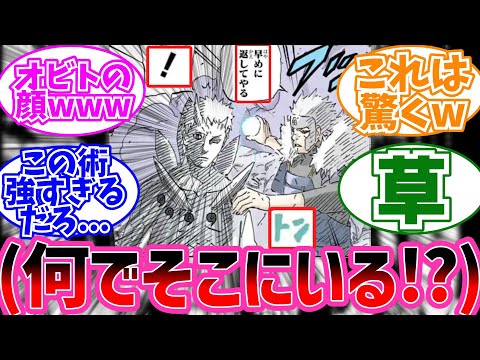
- Instant Technique Analysis: When facing Obito’s space-time ninjutsu, Tobirama immediately understood the mechanism and developed countermeasures, demonstrating superior analytical ability in real-time combat.
- Efficiency Over Spectacle: Rather than using flashy techniques, Tobirama places explosive tags on joint points to cripple opponents’ mobility—prioritizing practical effectiveness over visual impact.
- Force Multiplication Through Leadership: As a commander, Tobirama amplifies his team’s effectiveness, proving that his tactical genius extends beyond individual combat to strategic coordination.
- Adaptive Innovation: Tobirama continuously applies his own jutsu in unexpected ways, embodying the principle that mastery means understanding not just what a technique does, but how to weaponize it in novel contexts.
Timeline
- Early Series: Tobirama appears only as a historical reference and minor character, with limited combat demonstration.
- Edo Tensei Arc: Tobirama is reanimated and begins displaying his tactical prowess against multiple opponents simultaneously.
- Fourth Great Ninja War: Tobirama’s strategic contributions escalate, revealing his ability to analyze and counter even the most powerful enemies through intelligent application of jutsu.
- Final Battles: Tobirama’s tactical innovations reach their peak, demonstrating how intelligence can challenge overwhelming power.
Perspectives
Tobirama’s character invites multiple interpretations. From a power-scaling perspective, some viewers initially questioned how he could compete with stronger opponents, leading to the realization that “strength” encompasses more than raw ability. From a narrative standpoint, Tobirama represents the “supporting strategist” archetype—similar to Erwin Smith from Attack on Titan or Lelouch from Code Geass—who achieves maximum impact through limited resources. Compared to other Hokage, each embodies a different form of strength: Hashirama represents overwhelming power, Minato represents speed and precision, Hiruzen represents experience, and Tobirama represents intelligence and adaptability. This diversity suggests that the series intentionally presents multiple valid definitions of strength. Additionally, Tobirama’s role as a war criminal who persecuted the Uchiha clan adds moral complexity; his redemption through tactical brilliance in the final war creates a compelling narrative arc about how competence and contribution can reshape perception.
Insights
Tobirama’s emergence as a fan-favorite character reflects broader trends in anime appreciation. Viewers increasingly value strategic depth and tactical innovation over simple power hierarchies. His character teaches that strength derived from intelligence, learning, and experience is more relatable and inspiring than strength based purely on innate ability. The fact that Tobirama lacks overwhelming power like Hashirama, exceptional speed like Minato, or extensive experience like Hiruzen, yet remains formidable through tactical mastery, sends a powerful message: excellence can be achieved through effort, innovation, and intelligent application of knowledge. However, his defeat by Madara in life raises an important question: can intelligence ultimately overcome overwhelming power? This tension between tactical brilliance and raw strength remains unresolved, suggesting that both elements are necessary for true dominance. Tobirama’s character ultimately demonstrates that “the strongest” is not a single category but a spectrum of different forms of excellence, each valuable in different contexts.