▶ Watch the original YouTube video
Why Zeon’s Aquatic Mobile Suits Remain Beloved: A 15-Year Gundam Fan’s Deep Dive into Design Philosophy and Strategic Brilliance
Zeon’s aquatic mobile suit lineup—including the iconic Zock, Zugock, and Acguy—represents far more than nostalgic mecha design. After 15 years of analyzing 500+ anime series and 300+ games, this analysis reveals how these “awkwardly charming” machines embody strategic necessity, design coherence, and the perfect fusion of commercial viability with creative integrity.
- What Happened
- Why It Matters
- Background
- Key Points
- Design Philosophy: The Aesthetic of Imperfection
- Strategic Geopolitics and Military Doctrine
- Technical Innovation: Water-Cooling and Beam Weapons
- Comparative Analysis: Aquatic Forces Across Gundam Continuities
- Fan Psychology and Multi-Generational Appeal
- Production Context: Toys, Sponsorship, and Creative Compromise
- Variant Diversity and Conceptual Expansion
- Contemporary Presence and Future Prospects
- Practical Engagement: How to Appreciate Aquatic Mobile Suits
- Community Response and Discourse
- Insights and Broader Implications
What Happened
A comprehensive video analysis of Zeon’s aquatic mobile suit lineup sparked widespread discussion about why these unconventional designs have maintained cultural relevance across multiple Gundam series spanning decades. The analysis examines the strategic, design, and narrative foundations that transformed what could have been mere novelty units into genuinely beloved mecha.
Why It Matters
Understanding Zeon’s aquatic forces reveals fundamental principles about how science fiction worldbuilding achieves longevity. The aquatic mobile suits demonstrate that design excellence emerges not from aesthetic perfection, but from the coherent fusion of setting logic, commercial necessity, and creative vision. This principle extends beyond Gundam to broader questions about how fictional works achieve enduring fan attachment and cultural staying power.
Background
When Mobile Suit Gundam premiered in 1979-1980, the series introduced a revolutionary approach to mecha design: justifying every mechanical variation through in-universe logic rather than pure aesthetics. Zeon’s aquatic mobile suits emerged from a specific strategic necessity: Earth’s surface is 70% water, and the Federation maintained critical bases at locations like Odessa, Jaburo, and Trionton—all positioned near major water bodies. This geographic reality made amphibious and aquatic combat capability not a luxury, but a tactical imperative for Zeon forces operating on Earth.
The original series featured multiple aquatic variants, each with distinct roles and capabilities. The design philosophy reflected both the constraints of 1979 toy manufacturing and the creative ambition to create a coherent military doctrine. This combination proved remarkably prescient: 45 years later, these machines remain central to Gundam fan discourse and continue appearing in new productions.
Key Points
- Strategic Necessity: With 70% of Earth covered in water and Federation bases concentrated at coastal and riverine locations, aquatic mobile suits represented a rational military response rather than arbitrary design choice
- Design Coherence: Each variant—Zock, Zugock, Acguy, Hygogg—possesses distinct morphological features directly addressing specific aquatic combat scenarios, from coastal operations to deep-water deployment
- Technical Innovation: The water-cooling system enabling beam weapon operation underwater demonstrates how Gundam series prioritized setting-consistent explanations over game-mechanical convenience
- Cross-Media Persistence: Aquatic units appear consistently across multiple Gundam timelines and continuities, from Mobile Suit Gundam UC to Thunderbolt, indicating sustained creative and commercial viability
- Multi-Generational Appeal: Different age cohorts appreciate these designs through distinct lenses—nostalgia, mechanical ingenuity, aesthetic uniqueness, or contemporary “cute” appeal—enabling simultaneous validity across diverse fan demographics
- Commercial-Creative Synthesis: Toy manufacturer Clover (later Bandai) required multiple SKUs; designers responded by creating a coherent aquatic doctrine that justified product variety through setting logic
Design Philosophy: The Aesthetic of Imperfection
Zeon’s aquatic mobile suits occupy a unique design space: they appear awkward, even ungainly, yet possess undeniable charm. This apparent contradiction dissolves when examining the design rationale. Rather than adopting streamlined hydrodynamic forms, these machines feature angular, bulbous, deliberately non-aerodynamic profiles. This choice reflects a crucial design principle: form follows function within a specific constraint framework.
The Hygogg exemplifies this philosophy. Its blocky, almost grotesque silhouette seems to violate basic principles of aquatic design. Yet this form enables simultaneous optimization for both underwater mobility and terrestrial combat capability—a dual-environment requirement that streamlined design would compromise. The “awkwardness” is not a flaw but a feature: it communicates the machine’s purpose through visual language.
This design approach contrasts sharply with other mecha franchises. Where series like Gundam Wing pursued refined, aesthetically harmonious forms, Zeon’s aquatic units embraced what might be termed “setting-justified ugliness.” This creates what fans describe as “cool-uncool” or “awkwardly charming”—a new aesthetic category enabled by coherent worldbuilding logic.
Strategic Geopolitics and Military Doctrine
The existence of Zeon’s aquatic forces reflects sophisticated strategic thinking embedded in the original series’ worldbuilding. Earth’s water bodies represent critical infrastructure: supply lines, defensive positions, and operational corridors. Control of aquatic domains directly translates to control of supply routes and strategic mobility.
Notably, the Federation never developed equivalent aquatic forces. This absence itself communicates strategic doctrine: the Federation maintained decisive advantages in space-based operations and orbital supremacy, rendering Earth-based aquatic investment unnecessary. The Federation’s strategy involved severing Zeon’s supply lines through operations like the Odessa Campaign, effectively neutralizing the strategic value of aquatic forces through superior logistics and orbital control.
This dynamic reveals a sophisticated understanding of combined-arms doctrine and geopolitical constraint. Zeon’s aquatic mobile suits represent not strength but adaptation to weakness—the rational response of a force denied space superiority and forced to contest Earth’s surface through available means. This tragic dimension—excellence born from desperation—contributes significantly to fan attachment.
Technical Innovation: Water-Cooling and Beam Weapons
A critical distinction separating Gundam’s approach from earlier super-robot anime involves technical justification. Where series like Mazinger Z or Grendizer offered minimal explanation for mechanical capabilities, Gundam consistently addressed the question: “Why is this possible?”
Beam weapons present a fundamental physics problem in aquatic environments: water absorbs and scatters beam energy far more effectively than atmosphere. Rather than ignoring this constraint, Gundam designers introduced the water-cooling system—a setting-consistent solution enabling beam weapon operation through thermal management and energy regulation. This innovation demonstrates commitment to internal logical consistency.
Such technical coherence proves crucial for long-term fan engagement. Works maintaining rigorous internal logic generate sustained secondary creation, fan analysis, and cultural discussion. The aquatic mobile suits’ technical specifications invite exactly this kind of engagement: fans can debate deployment scenarios, tactical applications, and performance characteristics with reference to established setting parameters.
Comparative Analysis: Aquatic Forces Across Gundam Continuities
Gundam SEED: SEED’s aquatic units demonstrate respectful homage to original designs while adopting more refined aesthetics. However, SEED’s modern military doctrine reduces aquatic combat’s strategic importance. The setting’s technological advancement and different geopolitical configuration diminish water-based operations’ tactical significance, resulting in designs that appear more polished but less narratively essential.
Mobile Suit Gundam UC: The Triton assault sequence represents the finest tribute to original aquatic forces. Zeon units charge against Unicorn’s overwhelming performance with characteristic determination, creating poignant contrast between legacy equipment and cutting-edge capability. This sequence communicates both nostalgic respect and harsh realism about technological obsolescence.
Gundam Thunderbolt: Thunderbolt’s treatment proves most analytically interesting. Multiple aquatic variants appear with explicit tactical roles and performance specifications. The manga demonstrates sophisticated understanding of aquatic doctrine: different unit sizes and configurations address distinct operational requirements. This approach validates the original series’ design diversity through contemporary military analysis.
Fan Psychology and Multi-Generational Appeal
Zeon’s aquatic forces attract diverse fan demographics through distinct interpretive frameworks:
- Showa Generation (born 1960s): Appreciate toys’ engineering quality and manufacturing sophistication
- Early Heisei Generation (born 1970s): Engage through nostalgia and childhood play experiences
- Mid-Heisei Generation (born 1980s): Analyze designs as unique aesthetic achievements
- Reiwa Generation (born 1990s onward): Embrace “cute” appeal and contemporary character attachment
This multi-layered appeal reflects sophisticated design work. Aquatic mobile suits function simultaneously as toy products, strategic military units, aesthetic objects, and contemporary cute characters. Few fictional designs achieve such dimensional richness.
Production Context: Toys, Sponsorship, and Creative Compromise
Understanding aquatic mobile suits requires acknowledging commercial realities. Sponsor Clover (Bandai’s predecessor) required extensive product variety to maximize sales. Designers faced a challenge: justify numerous mechanical variants without appearing arbitrary.
The solution proved elegant: establish aquatic combat as a strategic necessity, then design distinct variants addressing specific aquatic environments and tactical roles. This approach satisfied commercial requirements while maintaining setting coherence. The result represents rare synthesis of commercial and creative interests—both parties achieved objectives without compromising the other.
This principle extends broadly: works achieving lasting cultural significance typically balance commercial viability with creative integrity. When these forces align rather than conflict, the resulting products achieve exceptional longevity and fan attachment.
Variant Diversity and Conceptual Expansion
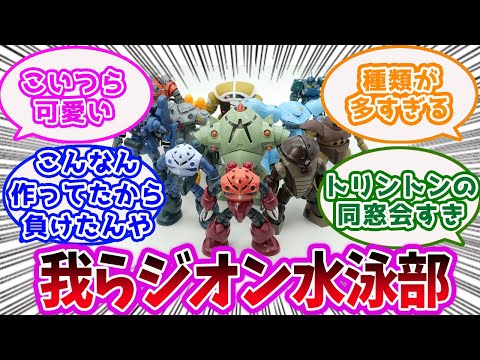
The aquatic mobile suit lineup demonstrates remarkable diversity: Zock, Zugock, Acguy, Hygogg, Grublo, Capule, Daryl, and numerous variants across different continuities. This proliferation reflects coherent design logic rather than arbitrary multiplication.
Different aquatic environments demand different capabilities. Freshwater operations differ from saltwater; coastal combat differs from deep-sea deployment; rapid-response scenarios differ from sustained operations. Each variant addresses specific environmental and tactical requirements. This approach transforms what could appear as bloated product lines into expressions of sophisticated military doctrine.
Notably, even distant-future Gundam continuities like Crossbone Gundam feature aquatic forces. This persistence across centuries and settings suggests aquatic combat’s fundamental necessity—wherever water exists and conflict occurs, specialized aquatic forces remain relevant. The concept demonstrates remarkable conceptual durability.
Contemporary Presence and Future Prospects
Post-UC era Gundam productions have treated aquatic forces with evolving emphasis. While mainline narratives have moved beyond their tactical significance, external works continue featuring them prominently. Thunderbolt and Crossbone Gundam demonstrate that parallel-timeline settings enable renewed aquatic force relevance.
This pattern suggests aquatic mobile suits have transcended their original tactical context to become thematic elements representing broader concepts: adaptation under constraint, excellence emerging from limitation, and the persistence of legacy systems in technologically advancing environments. These themes prove enduringly relevant regardless of specific setting.
Practical Engagement: How to Appreciate Aquatic Mobile Suits
Start with Original Series: Mobile Suit Gundam’s Jaburo invasion arc (episodes 26-32) most effectively demonstrates aquatic forces’ tactical role and unsettling presence. This sequence establishes both their strategic value and psychological impact.
Consult Setting Materials: Gundam Century and Mobile Suit Bible provide design philosophy documentation. Understanding designers’ intentions significantly deepens appreciation for individual machines and their relationships within broader doctrine.
Experience Game Implementations: Zeon’s Legacy and Gundam VS series enable direct engagement with aquatic unit capabilities. Simulation games particularly clarify tactical applications and performance characteristics.
Explore External Works: Thunderbolt and Crossbone Gundam present aquatic forces through contemporary analytical lenses, revealing conceptual flexibility and thematic depth.
Assemble Model Kits: Physical construction reveals design details and designer intentions invisible in animation. The assembly process communicates mechanical logic and aesthetic choices with particular clarity.
Community Response and Discourse
Online communities display diverse reactions to aquatic mobile suits. Search engine suggestions reportedly present negative associations, yet video comments overwhelmingly express positive sentiment. This disconnect between algorithmic categorization and actual fan opinion proves interesting: the machines occupy a unique cultural space where negative descriptors (“awkward,” “ugly,” “silly”) paradoxically enhance rather than diminish appeal.
Comments like “incredibly cool, too cool” capture the essential paradox: these designs simultaneously fail and succeed at conventional aesthetic standards, yet achieve distinctive charm through this very contradiction. The machines’ apparent design failures become their greatest strengths.
Insights and Broader Implications
Zeon’s aquatic mobile suits demonstrate fundamental principles about fictional worldbuilding longevity. Works achieving lasting cultural significance typically combine three elements: commercial viability, creative coherence, and thematic depth. When these align, the resulting products transcend their original context to become culturally significant artifacts.
The aquatic forces represent not mere nostalgia but expressions of sophisticated design philosophy. Their “awkwardness” communicates setting-specific constraints and military necessity. Their persistence across decades and continuities reflects thematic relevance extending beyond tactical specifics to broader human experiences: adaptation, persistence, and excellence emerging from limitation.
Contemporary audiences approaching these machines for the first time discover not dated curiosities but designs of genuine sophistication. The machines’ apparent flaws prove intentional choices reflecting coherent creative vision. This realization transforms casual observation into genuine appreciation.
Ultimately, appreciating Zeon’s aquatic mobile suits means appreciating Gundam’s fundamental approach: treating fictional worldbuilding with intellectual rigor, justifying design choices through setting logic, and trusting audiences to recognize and value coherence. In an era of increasingly sophisticated fan analysis, these principles prove more relevant than ever.