▶ Watch the original YouTube video
Gundam Quasar and Char’s Paradox: How a Mechanic from Another Timeline Challenges the First Gundam Universe
A viral fan theory explores what happens when a mechanic from an alternate Gundam timeline encounters Char Aznable in the original series universe. The scenario reveals a fascinating paradox: Char has never piloted a Gundam in the First Timeline, yet the mechanic arrives with evidence of an advanced mobile suit developed from Gundam technology in a completely different historical branch.
What Happened
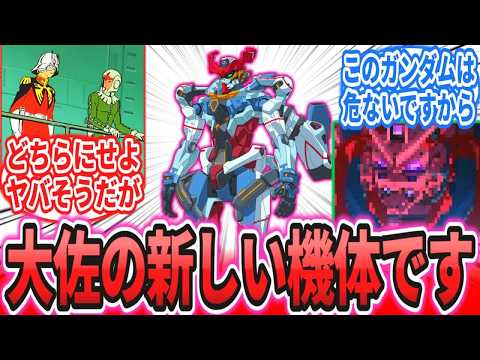
In this thought experiment, a mechanic from the Diaxis timeline—where history took a radically different path—somehow transfers to the First Gundam universe and encounters Char Aznable. The mechanic presents Char with the Gundam Quasar, an advanced mobile suit equipped with “Omega Psycho-Neuro,” technology that allows pilots to control the machine through thought alone. Char’s confusion is immediate: in his timeline, he never successfully captured a Gundam, making the existence of this advanced derivative technology impossible in his world.
Why It Matters
This scenario encapsulates one of the Gundam franchise’s core themes: how a single pivotal choice can branch history into completely different outcomes. The paradox highlights the fundamental tension between parallel timelines and raises questions about the nature of causality within the Gundam multiverse. For longtime fans, it represents the franchise’s evolution toward exploring “what if” scenarios that challenge the established canon while remaining thematically consistent with the series’ exploration of human choice and consequence.
Background
The Gundam franchise spans multiple timelines and alternate universes, each with distinct histories shaped by different outcomes of key events. The First Timeline (Universal Century) centers on the One Year War between the Earth Federation and the Principality of Zeon. Char Aznable, one of the series’ most iconic characters, plays a crucial role in this conflict. In the original First Gundam series, Char attempts to capture the RX-78 Gundam piloted by Amuro Ray but ultimately fails, leading to his eventual defeat and the Federation’s victory. This single failure sets the stage for decades of subsequent conflict and political maneuvering in the UC timeline.
The Diaxis timeline, by contrast, represents a branch where Char successfully captured a Gundam early in the conflict. Using reverse engineering, he developed advanced mobile suit technology that allowed Zeon to achieve military parity with the Federation. This alternate history created an entirely different geopolitical landscape, one where Zeon’s technological capabilities evolved along a completely different trajectory.
Key Points
- The mechanic from Diaxis timeline transfers to the First Timeline, creating a direct encounter between two incompatible historical branches
- Char’s confusion stems from the fact that in his timeline, he never obtained Gundam technology, making the Gundam Quasar’s existence historically impossible
- The Omega Psycho-Neuro system represents a technological leap that could only exist in a timeline where Zeon successfully reverse-engineered Gundam technology
- In the First Timeline, Amuro’s original Gundam remains overwhelmingly dominant, making any new mobile suit’s victory prospects questionable
- The mechanic’s transfer suggests an intentional force at work, possibly connected to Newtype abilities transcending timeline boundaries
- The scenario explores how individual choices—whether Char captures the Gundam or not—create cascading historical consequences
Timeline Comparison
| Timeline | Char’s Position | Gundam Status | Zeon’s Outcome |
|---|---|---|---|
| First Timeline | Failed to capture Gundam; pursued coup d’état plans | Dominated entirely by Amuro | Defeated; led to Gryps War era |
| Diaxis Timeline | Successfully captured Gundam; conducted reverse engineering | Gundam Quasar developed from captured technology | Earth invasion succeeded; achieved space parity |
| UC Timeline (Reference) | Deceased by this era | Multiple advanced Gundam variants deployed | Neo Zeon faction persists |
Perspectives
The Paradox Interpretation: The mechanic’s transfer is not accidental but represents a collision of causality between two incompatible timelines. The “red light” phenomenon mentioned in the scenario—where Char and Amuro vanish during the climactic battle at A Baoa Qu—suggests that Newtype abilities may possess the capacity to transcend temporal and dimensional boundaries. This interpretation aligns with long-standing fan theories about Newtype consciousness existing outside conventional spacetime.
The Thematic Reading: Beyond the technical paradox, the scenario emphasizes the role of unnamed soldiers in shaping history. The mechanic represents the countless support personnel whose labor enables military operations. In the Diaxis timeline, this mechanic served on the winning side. Upon transfer to the First Timeline, he becomes part of the losing side—a stark illustration of how the same individual can occupy opposite positions in history depending on which branch of reality they inhabit.
The Technological Perspective: The Omega Psycho-Neuro system represents a logical evolution of Newtype-responsive technology. In the First Timeline, concepts like the Psychommu (used in later conflicts) do not yet exist during the One Year War. The Gundam Quasar’s thought-control capability would be incomprehensible to Char, who has no frame of reference for such technology in his own timeline’s development.
Insights
This scenario distills the Gundam franchise’s central thesis: that human choice determines historical outcomes, and that even small decisions cascade into profound consequences. The mechanic’s transfer serves as a narrative device to externalize the internal conflict that defines the series—the tension between individual agency and historical inevitability.
The paradox also reflects a broader trend in recent Gundam productions toward exploring parallel timelines and alternate histories. As the franchise approaches its 50th anniversary, creators increasingly turn to multiverse concepts to generate fresh narratives while respecting established canon. The scenario demonstrates how this approach can deepen thematic resonance rather than dilute it.
Furthermore, the mechanic’s presence raises an unresolved question: if a Newtype ability or transcendent force enabled this transfer, why did it affect only a support soldier and not Char or Amuro themselves? This ambiguity mirrors the franchise’s consistent treatment of Newtype abilities as mysterious and incompletely understood, even by those who possess them. The answer to this question may ultimately reveal the true nature of the transfer mechanism and the forces that govern the Gundam multiverse.
For viewers encountering this scenario, the recommendation is clear: understanding the First Gundam series is essential to appreciating the paradox. The humor and depth of the encounter depend entirely on recognizing what Char has lost in his timeline and what the mechanic has gained in his. This intersection of two incompatible histories creates a moment that is simultaneously comedic and philosophically profound—a fitting encapsulation of why the Gundam franchise continues to captivate audiences decades after its inception.