▶ Watch the original YouTube video
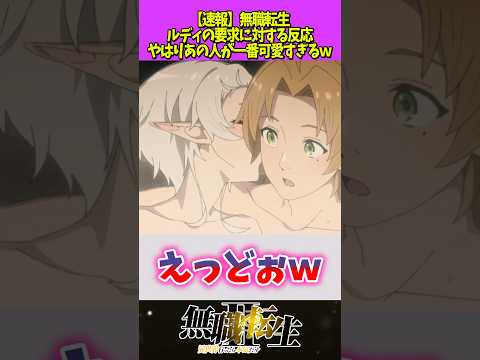
Mushoku Tensei’s fourth episode features a scene where protagonist Rudeus simultaneously expresses romantic feelings toward multiple heroines, sparking widespread discussion on social media about how the anime portrays complex emotional dynamics. The scene has become a turning point in how harem anime depicts multiple female characters’ reactions with psychological depth rather than comedic exaggeration.
What Happened
In episode 4 of Mushoku Tensei, Rudeus expresses romantic affection toward three heroines—Sylphiette, Eris, and Roxy—simultaneously. Rather than treating this as a comedic misunderstanding or conflict, the anime presents each character’s reaction with distinct emotional authenticity. Each heroine responds differently: Eris shows emotional resistance while gradually accepting the situation, Sylphiette responds with trust based on their shared history, and Roxy demonstrates mature understanding from her position as Rudeus’s mentor. This scene has generated significant discussion across social media platforms, particularly X (formerly Twitter), with fans analyzing the psychological realism of each character’s response.
Why It Matters
This scene represents a departure from traditional harem anime conventions, which typically resolve such situations through comedy, jealousy-driven conflict, or the protagonist choosing a single love interest. Mushoku Tensei instead presents multiple romantic feelings coexisting simultaneously as a legitimate emotional reality rather than a problem to be solved. This approach reflects a more nuanced understanding of complex relationships and suggests a shift in how anime can explore romantic narratives. The scene’s reception indicates growing audience appetite for psychologically realistic character development in romance-focused anime, even within the harem genre.
Background
Mushoku Tensei began airing in January 2021 and is adapted from a web novel that was later published as a light novel series. The original source material’s foundation in web fiction allowed the creators greater creative freedom compared to traditionally published works, which often adhere to established genre conventions. The anime adaptation, produced by Studio Bind, has been praised for its faithful representation of the source material’s complex emotional narratives. The series follows Rudeus, a man reincarnated in a fantasy world, and his relationships with multiple female characters form a central element of the story’s structure rather than a subplot.
Key Points
- Multiple simultaneous romantic expressions: Episode 4 features Rudeus expressing love to Sylphiette, Eris, and Roxy at the same time, a scenario traditionally avoided in mainstream harem anime
- Diverse emotional responses: Each heroine reacts distinctly—Eris with conflicted resistance, Sylphiette with accepting trust, and Roxy with mature understanding—demonstrating psychological complexity
- Eris’s reaction gains particular attention: Her dialogue, suggesting she would resist more strongly if truly opposed, sparked debate about the nuance between surface-level acceptance and underlying emotional conflict
- Departure from genre conventions: Unlike earlier harem anime that treat multiple romantic interests as comedic or competitive situations, Mushoku Tensei presents them as coexisting emotional realities
- Social media discourse: The scene generated extensive fan analysis, fan art, and comparative discussions about how different anime handle similar scenarios
- Voice acting and direction: The scene’s success relies on nuanced vocal performances and directorial choices that convey each character’s internal emotional state
Comparison with Other Harem Anime
Traditional harem anime from the 2010s, such as Infinite Stratos (2011) and High School DxD (2012), typically followed a pattern where multiple romantic interests created comedic situations or were resolved through fantasy worldbuilding justifications. Infinite Stratos portrayed the protagonist as confused and bewildered, while High School DxD used a “harem” system as narrative justification. The Quintessential Quintuplets (2019) presented multiple love interests but ultimately resolved the narrative by having the protagonist choose one heroine. Mushoku Tensei breaks this pattern by presenting multiple romantic feelings as psychologically valid and emotionally coexistent without requiring external justification or resolution through selection. This represents a more contemporary approach to depicting complex emotional relationships.
Perspectives
Fan reactions have been predominantly positive, with viewers praising the psychological realism of the scene and the distinct characterization of each heroine’s response. Many noted that the scene felt emotionally authentic rather than designed purely for entertainment value. Some viewers highlighted that the anime successfully conveys each character’s internal conflict—Eris’s struggle between acceptance and resistance, Sylphiette’s secure trust, and Roxy’s compassionate understanding. However, some viewers raised ethical concerns about the narrative’s portrayal of simultaneous romantic relationships, though most acknowledged this as a separate philosophical discussion from the quality of the scene’s execution. Industry observers noted the scene as evidence of evolving audience expectations for emotional complexity in romance-focused anime.
Insights
Mushoku Tensei’s approach to depicting multiple romantic relationships signals a broader shift in anime storytelling toward psychological realism and emotional complexity. Rather than treating simultaneous romantic feelings as a problem requiring resolution, the series presents them as a legitimate aspect of human emotional experience. This reflects changing audience demographics and expectations—viewers increasingly seek character development and emotional authenticity over comedic tropes. The scene’s success demonstrates that audiences are receptive to narratives that acknowledge the complexity of human relationships without judgment or comedic deflection. The anime’s willingness to explore this territory, supported by its web novel origins and production team’s creative vision, suggests that future anime may increasingly embrace nuanced emotional narratives even within traditionally formulaic genres. The distinction between depicting multiple relationships as “competitive” versus “coexistent” represents a meaningful evolution in how anime can explore romantic themes for mature audiences.