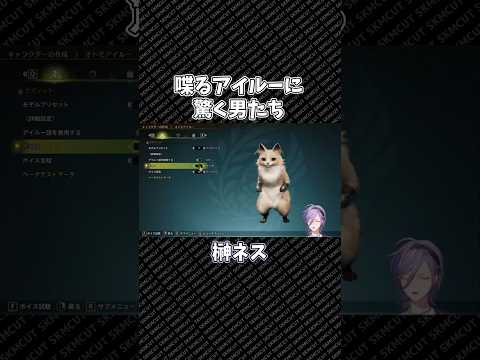
▶ Watch the original YouTube video
Monster Hunter Wilds’ Talking Palico Marks a Major Series Turning Point: VTuber Reactions Reveal Fan Divide
Monster Hunter Wilds introduces a significant change to the franchise: the Palico companion character now speaks with a full voice, departing from nearly two decades of silent gameplay. Four Nijisanji VTubers—Sakaki Ness, Hoshido Shou, Koyanagi Rou, and Watai Hibari—react with mixed emotions ranging from surprise and nostalgia to cautious optimism, reflecting a broader fan community grappling with this fundamental shift in series identity.
What Happened
Monster Hunter Wilds has introduced a dramatic change to one of gaming’s most iconic silent companions: the Palico now speaks with full voice acting in Japanese. This marks the first time in the franchise’s 20-year history that the player’s primary companion character has been given a voice, fundamentally altering how players interact with this beloved character. The change has sparked diverse reactions across the gaming community, with VTubers and fans expressing surprise, nostalgia, and conflicting emotions about the departure from tradition.
Why It Matters
The Palico’s silence has been a defining characteristic of Monster Hunter since its 2004 debut on PSP. For nearly two decades, players have projected their own emotions and interpretations onto the character through simple vocalizations like “Meow.” This design choice created a unique form of player immersion where imagination filled the gaps. The shift to a fully voiced Palico represents not just a technical update, but a philosophical change in how the franchise approaches storytelling and character development. It signals Monster Hunter’s evolution toward a more narrative-driven experience and reflects industry-wide trends of giving voice to previously silent protagonists and companions. Understanding this change is crucial for longtime fans and newcomers alike, as it represents a potential inflection point for the entire series.
Background
The Monster Hunter franchise has maintained consistent design principles since its inception. The original 2004 PSP title established the Palico as a silent companion, a choice that became integral to the series’ identity. Unlike many other game franchises, Monster Hunter prioritized hunting gameplay over narrative, with story serving as a secondary element. This design philosophy allowed players to focus on combat mechanics while maintaining an intimate, imaginative relationship with their Palico companion.
However, the franchise’s landscape shifted dramatically following Monster Hunter: World’s massive global success in 2018. The game became a cultural phenomenon, particularly in Western markets, prompting Capcom to reconsider how to serve an increasingly diverse, international player base. Monster Hunter Wilds continues this trend by emphasizing narrative elements more prominently than previous entries, featuring a main quest centered on uncovering the mysteries of a new continent.
Interestingly, the Palico has spoken in other Monster Hunter media. Monster Hunter Frontier, the now-defunct MMORPG version, depicted Palicos as intelligent, communicative beings. Official novels and supplementary materials have also portrayed Palicos as capable of complex thought and speech. This suggests that the silent Palico in mainline games was always a deliberate creative choice rather than a lore constraint.
Key Points
- Monster Hunter Wilds implements full voice acting for the Palico, breaking a 20-year tradition of silence in the main series
- VTuber reactions demonstrate mixed emotions: surprise, nostalgia, sadness, and cautious optimism coexist among viewers
- The change reflects industry-wide trends of giving voice to previously silent characters, similar to recent decisions in Zelda and Pokémon franchises
- The shift appears driven by two factors: enhanced narrative focus in Wilds and the need to communicate character emotions to a global, multilingual player base
- Long-term fans experience this as a loss of imaginative space, while new players may find the voiced Palico more relatable and emotionally engaging
- The Palico’s voice acting represents a broader philosophical shift from gameplay-first to narrative-first game design within the Monster Hunter franchise
Timeline
- 2004: Original Monster Hunter released on PSP, establishing the silent Palico as series staple
- 2008–2010: Monster Hunter Portable 2nd G solidifies the silent companion formula across multiple platforms
- 2012: Pokémon Black 2 and White 2 introduce the first speaking protagonist in the Pokémon series, signaling industry shift toward voiced characters
- 2015–2016: Final Fantasy XV demonstrates how constant character dialogue can become background noise in extended play sessions
- 2017: The Legend of Zelda: Breath of the Wild maintains Link’s silence, but subsequent titles begin introducing limited voice acting
- 2018: Monster Hunter: World becomes a global phenomenon, prompting reconsideration of design choices for international audiences
- 2020: Monster Hunter: World Iceborne reinforces the importance of subtitle systems for global accessibility
- Present: Monster Hunter Wilds introduces fully voiced Palico, marking the franchise’s most significant narrative-focused redesign
Perspectives
The Longtime Fan Perspective: Veterans who have invested 15+ years in the franchise experience the voiced Palico as a loss. The silence created imaginative space—players could interpret the Palico’s emotional state through context and tone of vocalizations. This design philosophy encouraged deep player-character bonding through projection rather than prescription. For these fans, the change represents a departure from what made Monster Hunter unique in an increasingly voice-heavy gaming landscape.
The Narrative-First Perspective: From the developer’s standpoint, a fully voiced Palico serves the enhanced storytelling ambitions of Wilds. A silent companion in a story-driven adventure about uncovering continental mysteries becomes narratively awkward. Voice acting allows for more nuanced emotional expression and clearer communication of plot-relevant information, particularly for international players who may struggle with context-only interpretation.
The Accessibility Perspective: Global audiences benefit from direct voice communication. Players across different language backgrounds can understand the Palico’s emotional state and intentions without relying on cultural context or imaginative interpretation. This democratizes the experience and lowers barriers for new players unfamiliar with Monster Hunter conventions.
The New Player Perspective: For players encountering Monster Hunter for the first time through Wilds, a voiced Palico is simply the norm. They experience the character as a fully realized companion with personality and agency, potentially creating stronger emotional attachment than the interpretive silence of previous entries.
Industry Context: The Broader Trend of Character Vocalization
The Palico’s voice acting should be understood within a larger industry pattern. Over the past decade, game developers have increasingly given voice to previously silent characters:
The Legend of Zelda Series: Link remained completely silent through Breath of the Wild (2017), but Tears of the Kingdom (2023) introduced limited voice acting. Nintendo chose a middle path—partial vocalization that preserves Link’s iconic silence while adding emotional depth to key moments.
Final Fantasy VII Remake (2019): Cloud’s voice acting was significantly expanded compared to the original 1997 game, allowing for deeper emotional expression and character development.
Pokémon Series (2012 onward): The protagonist transitioned from complete silence to full voice acting, a change that initially confused longtime fans but ultimately expanded the franchise’s appeal to new audiences.
Monster Hunter Wilds’ approach appears closer to Pokémon’s full vocalization than Zelda’s partial approach, suggesting a complete rather than gradual transition.
Community Reactions and Fan Sentiment
Social media responses to the voiced Palico reveal a nuanced fan base. Twitter shows surprise and delight alongside expressions of nostalgia for the silent companion. Reddit discussions focus on technical details: voice actor identity, character design changes, and how voice acting integrates into gameplay systems.
The VTuber reactions captured in the video demonstrate this diversity. Some express sadness at the loss of tradition, while others embrace the change with enthusiasm. Comments like “I got sad” reflect the genuine emotional investment longtime fans have in the franchise’s identity, while supportive comments suggest acceptance of evolution.
Notably, negative reactions appear less prevalent than expected. Rather than wholesale rejection, the community seems to be adopting a balanced stance: acknowledging the loss of a beloved design element while remaining open to the new possibilities the change creates.
Insights
The introduction of a voiced Palico in Monster Hunter Wilds represents more than a simple feature update—it marks a fundamental philosophical shift in how the franchise approaches player engagement. For nearly two decades, Monster Hunter succeeded by trusting players’ imaginations. The Palico’s silence was not a limitation but a design strength, creating space for personal interpretation and emotional projection.
However, the franchise’s evolution toward narrative-driven gameplay, combined with the realities of serving a global, multilingual audience, has made this change arguably inevitable. A silent companion in a story-focused adventure creates narrative friction that modern game design seeks to eliminate.
The mixed reactions from VTubers and the broader community reflect a healthy franchise in transition. Longtime fans mourn the loss of imaginative space while remaining open to new possibilities. New players encounter a more emotionally accessible companion. Both perspectives have validity.
Looking forward, three questions will determine whether this change succeeds: First, does the Palico’s voice acting enhance the narrative experience, or does it become background noise as players grow accustomed to constant dialogue? Second, how do new and veteran players ultimately assess the change after extended play? Third, will other previously silent elements of Monster Hunter follow the Palico into vocalization, or will the franchise maintain some elements of its original design philosophy?
Monster Hunter Wilds stands as a watershed moment for the franchise. It represents the series’ full embrace of modern narrative-driven game design while bidding farewell to the imaginative minimalism that defined its early identity. Whether this proves to be a successful evolution or a misstep will likely depend on execution—and on whether the emotional depth gained through voice acting compensates for the imaginative space that silence once provided.