▶ Watch the original YouTube video
How Fan Culture Divides Over ‘Face Shipping’: A 15-Year Evolution of Anime and Gaming Fandom
A phenomenon known as “face shipping”—supporting character pairings based purely on visual appeal rather than narrative connection—has become increasingly prevalent in anime and gaming communities. This shift reflects broader changes in fan culture, generational values, and how social media has transformed the way fans express their interests.
What Happened
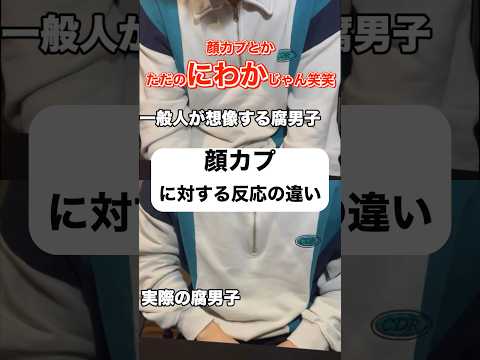
“Face shipping” has emerged as a distinct phenomenon within anime and gaming fan communities, where fans support character pairings based primarily on aesthetic appeal rather than story context or character compatibility. This trend has sparked notably different reactions between female fans (fujoshi) and male fans (fudanshi), revealing deeper shifts in how fans engage with their favorite media.
The term gained visibility around 2018 on Twitter and has since become a recognized subcategory within fan culture. Unlike traditional shipping, which typically emphasizes narrative relationships or character dynamics, face shipping prioritizes visual attraction as a complete and sufficient reason for fandom engagement.
Why It Matters
The rise of face shipping reflects fundamental changes in fan culture and the entertainment industry. It demonstrates how social media platforms have democratized fan expression, allowing simpler and more direct forms of appreciation to coexist alongside traditional, analysis-heavy fandom. This shift also highlights generational differences in how younger fans approach their hobbies compared to established fan communities.
Understanding face shipping provides insight into broader trends in anime and gaming industries, where visual appeal has increasingly become a primary marketing and creative focus. The phenomenon also challenges long-standing assumptions about what constitutes “legitimate” fan engagement.
Background
Fan culture has evolved significantly over the past 15 years. In 2009, supporting characters (“oshis”) typically required fans to articulate detailed reasons rooted in narrative, character psychology, or voice acting performance. Between 2015 and 2016, fan culture expanded to include shipping (supporting character pairings) and relationship-focused appreciation.
The anime and gaming industries themselves have shifted priorities. Earlier works like “Attack on Titan” (2013) were adapted primarily for their compelling narratives. By contrast, more recent titles like “Twisted Wonderland” (2020) and “Ensemble Stars!” (2015) are explicitly designed with visual appeal as a central feature, creating environments where face shipping naturally flourishes.
Twitter’s rise as the dominant fan platform proved crucial to this evolution. The platform’s “like” and “retweet” systems quantify validation, making simpler expressions of fandom—such as “I like this character’s face”—feel more legitimate and shareable than ever before.
Key Points
- Definition: Face shipping means supporting character pairings based purely on visual attractiveness, without requiring narrative justification or character compatibility analysis.
- Gender differences: Female fans tend to incorporate creative storytelling into face shipping, imagining potential relationships, while male fans more directly emphasize visual preference alone.
- Industry shift: A clear trend exists from story-focused adaptations (2009–2014) toward visually-driven properties (2015–present), normalizing face shipping as a valid fan practice.
- Social media acceleration: Twitter and similar platforms made face shipping visible and shareable, creating communities around this previously informal practice.
- Generational divide: Fans aged 35–45 often view face shipping skeptically, while fans under 30 treat it as completely legitimate, reflecting different formative experiences with fan culture.
- Democratization effect: Face shipping has lowered barriers to entry for fan engagement, allowing people to participate without extensive analysis or explanation.
Timeline
- 2009: Traditional fan culture emphasizes narrative-based character appreciation and detailed reasoning for supporting characters.
- 2012–2015: Doujinshi (fan-created works) conventions show emergence of relationship-focused shipping culture alongside traditional fandom.
- 2015–2016: “Face shipping” concept begins emerging; visual-focused properties like “Ensemble Stars!” and “Touken Ranbu” gain popularity.
- 2018: Term “face shipping” appears on Twitter; becomes more explicitly discussed and named within fan communities.
- 2019–2020: Face shipping becomes widely recognized and normalized, particularly with releases of visually-driven titles like “Twisted Wonderland.”
- 2023–2024: “#FaceShippingIsGreat” trends multiple times on Twitter; generational debate intensifies between traditional and modern fan approaches.
Perspectives
Supportive view: Advocates argue that “I like their faces” is a completely valid reason for fandom engagement. They emphasize that fan culture should be accessible and enjoyable rather than requiring complex analysis. Many younger fans note that face shipping allows them to experience pure, uncomplicated appreciation without overthinking.
Critical view: Established fans and industry veterans express concern that face shipping represents a loss of depth in fan engagement. They worry that visual-only appreciation misses character psychology, narrative significance, and creative intent. Some argue this trend reflects a broader cultural shift toward superficiality.
Reconciliatory perspective: A middle position acknowledges that both approaches have merit. Fans can appreciate visual appeal while also engaging with narrative depth, and different works naturally lend themselves to different engagement styles. The ideal outcome involves coexistence rather than competition between these approaches.
Insights
Face shipping represents a maturation of otaku culture rather than its degradation. As anime and gaming fandom has become mainstream, it has naturally developed multiple valid entry points and engagement styles. What once required extensive explanation and justification can now be expressed simply and directly.
The generational divide around face shipping reflects broader differences in how digital natives versus earlier generations approach online communities. Younger fans grew up with social media validation systems and expect their preferences to be accepted without extensive justification. Older fans developed within communities that valued detailed analysis and peer discussion as core to the fan experience.
The anime and gaming industries have actively encouraged this shift by prioritizing character design and visual appeal in their creative decisions. When studios invest heavily in beautiful character art and animation, they implicitly validate visual appreciation as a primary engagement mode.
Looking forward, face shipping will likely become increasingly normalized as current younger generations become the dominant fan demographic. Emerging technologies like AI-generated characters may further emphasize visual appeal over narrative depth. However, the most healthy outcome would involve fan communities maintaining space for both approaches—allowing fans to choose whether they prioritize story, character psychology, visual appeal, or some combination thereof.
The phenomenon ultimately demonstrates that fan culture remains dynamic and responsive to technological and social change. Rather than viewing face shipping as a threat to traditional fandom, it can be understood as an expansion of what fan engagement can encompass.