▶ Watch the original YouTube video
Why Fans Dream of Becoming Inui Takumi: A Deep Dive Into Kamen Rider 555’s Enduring Appeal
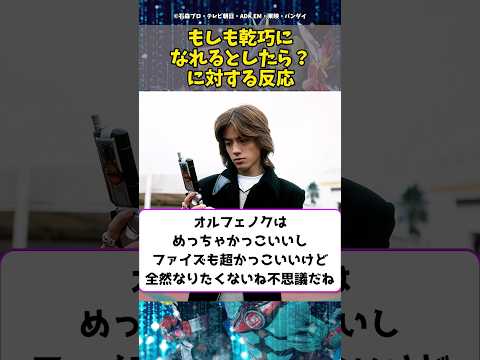
A viral video asking “What if you could become Inui Takumi?” has sparked widespread fan discussion about the protagonist of Kamen Rider 555 (Faiz). Through psychological analysis and comparative character study, this exploration reveals why viewers remain captivated by a hero defined not by perfection, but by his willingness to move forward despite doubt and suffering.
What Happened
A YouTube Shorts video posing the hypothetical question “What if you could become Inui Takumi?” has generated significant viewer engagement and emotional responses from fans of Kamen Rider 555. The video taps into a deeper fascination with the character that extends far beyond typical fan enthusiasm, revealing complex psychological mechanisms at work in how audiences connect with this particular protagonist.
Inui Takumi, the main character of Kamen Rider 555 (which aired from 2003-2004), has become the subject of renewed analysis in contemporary fan culture. The character’s portrayal as an ordinary boy thrust into extraordinary circumstances—combined with his constant internal conflict and unwavering commitment to his beliefs—has created a unique form of character identification among viewers.
Why It Matters
Understanding the appeal of Inui Takumi offers insight into how audiences connect with fictional characters and what qualities resonate across generations. The character embodies a distinctly modern form of heroism that differs fundamentally from earlier archetypes: rather than possessing special talents or unwavering certainty, Takumi represents the struggle of moving forward despite doubt and uncertainty.
This analysis is particularly relevant to contemporary audiences, as the psychological pressures Takumi experiences—academic stress, social alienation, existential uncertainty, and the burden of personal choice—mirror the challenges faced by modern viewers. The character’s enduring popularity suggests that audiences continue to seek validation for their own struggles through fictional narratives.
Background
Kamen Rider 555 premiered in 2003, a pivotal moment in Japanese anime and tokusatsu (special effects) media. The year marked the conclusion of Neon Genesis Evangelion’s theatrical run, whose aftermath still influenced the industry’s approach to protagonist characterization. Simultaneously, the .hack// series was gaining prominence, and internet culture was rapidly permeating subculture.
The series introduced a structural innovation: rather than a single clear protagonist, Kamen Rider 555 presented multiple characters—Inui Takumi, Amanojaku Asahi, Kiba Yuuji, and Sonoda Mari—each functioning as quasi-protagonists. This narrative approach reflected contemporary audience desires for complex, multifaceted storytelling.
Inui Takumi’s characterization departed significantly from previous Kamen Rider protagonists. Unlike the straightforward heroes of earlier Showa-era riders or the more archetypal designs of contemporary series, Takumi was deliberately constructed as an ordinary boy without special talents or exceptional background. This ordinariness became his defining feature, allowing viewers to project themselves onto his character.
Key Points
- Active Suffering vs. Passive Suffering: Unlike Evangelion’s Shinji Ikari, who represents passive, escapist suffering, Takumi embodies active suffering—he continuously chooses to move forward despite doubt, making his anguish self-directed rather than imposed.
- Coexistence of Strength and Weakness: Takumi’s appeal lies in his simultaneous portrayal as both capable and vulnerable. He is strong, intelligent, and decisive, yet also uncertain, flawed, and emotionally burdened—a combination that mirrors human reality rather than fantasy.
- Belief-Based Decision Making: Unlike Lelouch from Code Geass (who makes dominating choices) or Eren from Attack on Titan (who makes revenge-driven choices), Takumi makes decisions grounded in personal conviction, even when those decisions cause harm or lead to failure.
- Psychological Validation Mechanism: The desire to “become Takumi” reflects an unconscious need to validate one’s own suffering as legitimate and meaningful, rather than arbitrary or shameful.
- Timeless Relevance: The existential uncertainties Takumi navigates—proceeding forward without complete certainty—remain universally relevant across decades, making the character’s struggles perpetually resonant.
- Community Recognition Through Shorts Format: The short-form video format enables rapid emotional engagement and community discussion, allowing new audiences to discover and analyze the character through contemporary media consumption patterns.
Timeline
- 1995: Neon Genesis Evangelion airs, introducing the archetype of the suffering, uncertain protagonist to mainstream anime.
- 2002-2003: The .hack// series gains prominence; internet culture accelerates its integration into Japanese subculture.
- 2003: Neon Genesis Evangelion’s theatrical conclusion; the industry seeks new protagonist models. Kamen Rider 555 premieres, offering an alternative to Evangelion’s escapist suffering.
- 2003-2004: Kamen Rider 555 completes its 50-episode run, establishing Inui Takumi as a significant character in tokusatsu history.
- 2023: A remastered broadcast of Kamen Rider 555 introduces the series to new audiences, sparking renewed analysis and discussion.
- 2024: Viral Shorts videos asking “What if you could become Inui Takumi?” generate widespread fan engagement and psychological analysis.
Perspectives
The Psychological Validation Perspective: From a psychological standpoint, the desire to become Takumi represents an unconscious need to legitimize one’s own suffering. Viewers project their real-world struggles—academic pressure, social isolation, identity uncertainty—onto Takumi’s narrative, finding comfort in his refusal to escape these challenges. By identifying with a character whose suffering is portrayed as meaningful and purposeful, viewers gain validation for their own pain.
The Generational Perspective: The character resonates particularly with audiences who came of age during the early 2000s and those experiencing similar existential pressures today. The specific anxieties Takumi embodies—uncertainty about correct choices, fear of harming others through one’s decisions, the burden of personal responsibility—reflect the psychological landscape of contemporary youth facing an uncertain future.
The Narrative Structure Perspective: Kamen Rider 555’s decision to present multiple quasi-protagonists rather than a single clear hero creates a unique viewing experience. This structure allows audiences to identify with multiple characters simultaneously, experiencing different responses to similar circumstances. Takumi’s particular appeal lies in his representation of the “believer” archetype—the character who maintains conviction despite evidence of failure.
The Comparative Character Analysis Perspective: When compared to similar characters from contemporary works, Takumi occupies a unique position. Shinji Ikari (Evangelion) represents passive suffering and escapism; Lelouch (Code Geass) represents active suffering through domination; Eren (Attack on Titan) represents active suffering through revenge. Takumi alone represents active suffering through conviction—a distinctly different psychological profile that generates distinct viewer responses.
Insights
The enduring appeal of Inui Takumi reveals fundamental truths about how audiences connect with fictional narratives. Rather than seeking escapism into fantasy power or identification with exceptional talent, modern viewers increasingly seek characters who embody their own psychological struggles. Takumi’s ordinariness—his lack of special background or innate superiority—paradoxically makes him more aspirational than traditionally powerful heroes.
The question “What if you could become Inui Takumi?” is not truly asking viewers to imagine possessing superhuman abilities or special powers. Instead, it asks them to imagine possessing Takumi’s psychological resilience: the capacity to move forward despite doubt, to make difficult choices without complete certainty, and to accept suffering as a legitimate consequence of meaningful action.
The viral nature of this question in contemporary short-form video platforms suggests that audiences across generations continue to grapple with identical existential challenges. The anxieties that defined 2003 youth—uncertainty about correct life choices, fear of social alienation, the burden of personal responsibility—remain central to 2024 youth experiences. Takumi’s character provides a narrative framework for understanding these universal struggles as meaningful rather than shameful.
Furthermore, the character’s appeal demonstrates the continued relevance of tokusatsu (special effects) media in addressing serious psychological and philosophical themes. While often dismissed as children’s entertainment, Kamen Rider 555 engaged with questions of personal agency, moral responsibility, and existential uncertainty with sophistication comparable to more critically acclaimed anime.
The phenomenon also highlights how fan communities use contemporary media formats (YouTube Shorts, social media discussions) to rediscover and reanalyze older works. This cyclical process of discovery and reinterpretation ensures that characters like Takumi remain culturally relevant across decades, their meanings continuously renewed through fresh analytical perspectives.