▶ Watch the original YouTube video
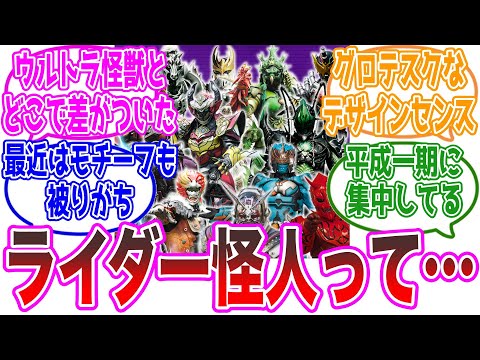
After 15 years of following the Kamen Rider franchise, fans have increasingly voiced a common complaint: the monsters and villains are treated unfairly compared to the protagonists. This article explores the structural reasons behind this perception, examining how character development, narrative efficiency, and production constraints have created a paradox where more individualized monsters paradoxically receive less satisfying story arcs.
What Happened
Online communities discussing the Kamen Rider franchise have developed a persistent critique: the monsters and villains (known as “kaijin”) are systematically treated as disposable characters despite being given increasingly complex personalities and motivations. This observation has grown particularly vocal among viewers of the Heisei and Reiwa era Kamen Rider series, where monsters are portrayed with distinct backstories, individual goals, and psychological depth—yet are defeated within just 2-6 episodes of their introduction.
Why It Matters
This phenomenon reveals a fundamental tension in modern tokusatsu (Japanese live-action special effects) storytelling. As production teams invest more effort into making villains psychologically complex and emotionally resonant, they inadvertently create narrative dissonance. Viewers develop empathy for these characters, only to watch them be eliminated quickly to maintain story pacing. This mismatch between character development and narrative resolution raises important questions about how limited production budgets and episode constraints force creative compromises that ultimately affect viewer satisfaction and emotional investment.
Background
The Kamen Rider franchise, which began in 1971, has evolved significantly in how it portrays antagonists. Early series featured relatively simple monsters that appeared and were defeated within single episodes, similar to the Ultraman franchise. However, beginning with the Heisei era (particularly from Kamen Rider W in 2009 onward), the franchise began giving monsters distinct personalities, personal motivations, and complex backstories.
This shift coincided with broader changes in anime and tokusatsu production philosophy, where character-driven storytelling became increasingly prioritized. Series like Kamen Rider Ooz (2010-2011) featured the Greeed—monsters with their own philosophical framework based on desire and consumption—while Kamen Rider Drive (2014-2015) introduced the Roidmudes, AI entities with individual personalities and goals.
The problem emerged as a byproduct of this evolution: the more individualized and sympathetic monsters became, the more their rapid defeats felt narratively unsatisfying to viewers who had invested emotional energy in understanding their perspectives.
Key Points
- The Disposability Structure: Most Kamen Rider monsters appear powerful in their introduction but are defeated within 2-6 episodes, creating a pattern of rapid elimination regardless of character complexity.
- Asymmetrical Character Development: Protagonists experience multiple defeats, learning and growing from each loss over 50+ episodes, while monsters rarely receive equivalent narrative arcs or redemption opportunities.
- The Characterization Paradox: Monsters with greater personality depth and individual motivation actually generate stronger viewer sympathy for their “unfair” treatment, a phenomenon termed “visibility of misfortune through characterization.”
- Production Efficiency vs. Narrative Satisfaction: The monsters’ abbreviated story arcs result from production constraints—limited episode counts, budget considerations, and the need to balance protagonist development with multiple villain introductions.
- Series Variation: Different Kamen Rider series handle monster treatment differently, with Kamen Rider Saber (2020-2021) attempting to extend monster appearances across multiple episodes, resulting in higher viewer satisfaction.
- Growing Viewer Awareness: Online communities, particularly on Twitter, 5channel, and YouTube, increasingly discuss and critique the “unfair” treatment of monsters, indicating a shift in audience expectations toward more balanced narrative structures.
Timeline
- 2009: Kamen Rider W introduces more individualized Dopants with personal backstories, establishing the modern template for complex monsters.
- 2010-2011: Kamen Rider Ooz features the Greeed, highly individualized monsters with philosophical depth, generating significant online sympathy for their defeats.
- 2014-2015: Kamen Rider Drive presents Roidmudes with distinct personalities, continuing the trend of complex antagonists.
- 2016-Present: Increasing online discourse about monster treatment; viewer expectations for more balanced narrative arcs grow.
- 2020-2021: Kamen Rider Saber experiments with extended monster appearances across multiple episodes, attempting to address viewer concerns about insufficient villain development.
Perspectives
The Viewer Perspective: Fans express genuine emotional investment in monsters’ fates, particularly on social media platforms. Twitter discussions frequently feature comments like “Character X deserved more screen time” or “The monster’s goal was sympathetic—why couldn’t they coexist with the protagonist?” YouTube comments reveal deeper engagement, with viewers requesting monster-focused episodes or wanting to understand villains’ backstories more thoroughly.
The Production Perspective: Creators face genuine constraints. A typical Kamen Rider series runs approximately 50 episodes and must accommodate: protagonist growth arcs (mandatory), multiple monster introductions and defeats (mandatory), supporting character relationships (recommended), world-building exposition (mandatory), and climactic battles (recommended). Within these constraints, giving monsters extended development becomes a zero-sum game against other narrative priorities.
The Structural Analysis: Data from online discussions reveals a clear pattern: monsters with higher personality depth generate proportionally higher viewer sympathy for their defeats. Conversely, when monsters receive extended screen time across multiple episodes (as in Kamen Rider Saber), viewer satisfaction increases, and complaints about unfair treatment decrease. This suggests the issue is not the monsters’ defeats themselves, but rather the insufficient narrative space allocated to justify those defeats.
Comparative Analysis
Examining different tokusatsu franchises reveals why Kamen Rider’s monster problem is unique. In the Ultraman series, monsters appear and are defeated within single episodes, yet viewers rarely express sympathy for them. This is because Ultraman’s monsters lack individual characterization—they function as obstacles rather than characters. The absence of personality prevents emotional investment, and therefore prevents the perception of unfairness.
Kamen Rider’s evolution toward character-driven storytelling created an unintended consequence: by making monsters sympathetic, the franchise made their defeats feel tragic rather than satisfying. This is not a flaw in execution but rather a sophisticated narrative technique that backfired emotionally.
Series-Specific Examples
Kamen Rider W (2009-2010): Balanced approach where Dopants receive individual backstories and human motivations, yet are defeated efficiently. The complexity of their characterization combined with their swift defeats created emotional complexity that enhanced overall narrative quality.
Kamen Rider Ooz (2010-2011): Monster-focused approach where Greeed receive extensive characterization and philosophical depth. However, their rapid defeats generated the highest volume of online sympathy, with viewers questioning why such complex entities were eliminated so quickly.
Kamen Rider Saber (2020-2021): Experimental approach extending monster appearances across multiple episodes, allowing for more substantial conflict and development. This strategy reduced viewer complaints about unfair treatment, suggesting that extended screen time directly correlates with narrative satisfaction.
Insights
The “unfair treatment” of Kamen Rider monsters is not a production failure but rather evidence of the franchise’s sophisticated approach to character development. The perception of unfairness arises precisely because monsters have been elevated from simple obstacles to complex characters worthy of viewer investment.
However, this creates a genuine creative dilemma: the more individualized a monster becomes, the more narrative space it requires to feel complete. Within the constraints of a 50-episode series, this becomes mathematically challenging. The franchise cannot simultaneously give every monster extensive development and maintain protagonist-focused storytelling.
Recent Reiwa era experiments, particularly in Kamen Rider Saber, suggest that extending monster appearances across multiple episodes provides a viable solution. By allowing monsters to return for multiple battles rather than single defeats, the franchise can maintain character complexity while providing sufficient narrative justification for their eventual elimination.
The broader implication is that viewer expectations for tokusatsu storytelling have evolved. Audiences no longer accept simple good-versus-evil narratives; they demand psychological depth and narrative fairness across all characters. Meeting these expectations requires reconsidering fundamental production structures—potentially longer series, more focused monster rosters, or narrative formats that allow for villain-perspective episodes.
The “unfair treatment” of Kamen Rider monsters ultimately reflects the franchise’s success in creating emotionally resonant characters. The solution lies not in reducing monster complexity, but in allocating sufficient narrative space to honor that complexity. How the franchise addresses this challenge will significantly influence its future storytelling quality and viewer satisfaction.