▶ Watch the original YouTube video
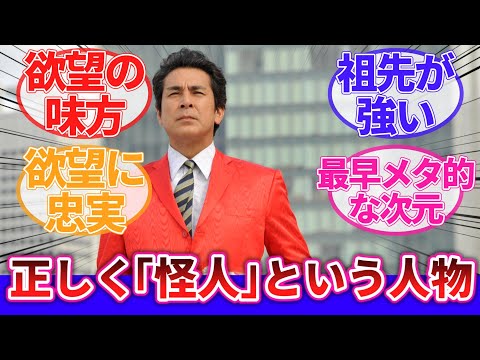
Why Kougami Mitsuo Is Being Reevaluated as Kamen Rider OOO’s Most Rational Villain
Fifteen years after its original broadcast, Kamen Rider OOO’s antagonist Kougami Mitsuo is experiencing a critical reevaluation online. What was initially dismissed as a straightforward villain role is now being recognized as a complex, strategically rational character whose actions, while morally questionable, were philosophically justified within his own value system.
What Happened
Kougami Mitsuo, the primary antagonist of Kamen Rider OOO (2010), orchestrated numerous catastrophic events throughout the series to achieve his ultimate goal: the resurrection of the Greeed, beings of pure desire. Initially perceived as a simple villain pulling strings behind the scenes, contemporary fan discourse has shifted dramatically. Online communities—particularly Twitter, 5channel, and YouTube—are now analyzing his character through a lens of strategic rationality, arguing that his methods, while destructive, were logically sound given his objectives.
Why It Matters
Kougami Mitsuo represents a turning point in how tokusatsu (Japanese live-action special effects) productions depict antagonists. His character challenges the traditional binary morality framework that dominated early 2010s genre television. This reevaluation reflects a broader shift in how modern audiences engage with complex narratives—moving from surface-level moral judgments to deeper analysis of character motivation, philosophical justification, and strategic coherence. Understanding Kougami’s appeal illuminates how storytelling conventions have evolved and why audiences now demand moral nuance in their antagonists.
Background
Kamen Rider OOO aired in 2010, during a period when tokusatsu was beginning to experiment with morally ambiguous storytelling. Kougami’s role as the series’ hidden architect differs fundamentally from earlier tokusatsu villains. Rather than pursuing destruction for its own sake, he methodically manipulates protagonist Eiji Hino and orchestrates events to facilitate the Greeed’s return. The Greeed themselves are not mere monsters but philosophical embodiments of human desire—making Kougami’s mission less about conquest and more about exploring the nature of human nature itself.
The character’s complexity becomes apparent only through careful analysis of his relationships, particularly with Eiji, and his strategic deployment of resources. Unlike protagonists driven by emotion or simple morality, Kougami operates with calculated precision, treating his goals as a rational optimization problem rather than an emotional crusade.
Key Points
- Kougami Mitsuo functions as the narrative’s hidden architect, with his actions serving as the causal foundation for most major plot events
- Initial viewer perception categorized him as a straightforward villain, but narrative progression reveals the philosophical and strategic necessity underlying his choices
- Contemporary online discourse emphasizes that his actions stem from coherent, internally consistent logic rather than simple malevolence
- Fan communities now argue that Kougami may have been the most strategically rational actor in the series, employing efficient resource management and long-term planning superior to protagonists
- His character represents a paradigm shift in tokusatsu antagonist design, predating similar complex villains in contemporary anime and manga by several years
- The Greeed are presented not as enemies to be defeated but as philosophical concepts—the embodiment of human desire—making Kougami’s mission a form of existential exploration
Comparative Analysis: Kougami Within Villain Archetypes
Kougami Mitsuo occupies a distinct position within a broader category of complex antagonists across multiple media franchises. Unlike Light Yagami from Death Note, who pursues personal gratification through absolute power, Kougami’s actions serve an external philosophical objective. His methodology parallels Erwin Smith from Attack on Titan—both willingly sacrifice individuals for what they perceive as a greater cause—yet Kougami’s goal transcends institutional or collective benefit. Instead, he pursues the liberation of fundamental human nature through the Greeed.
The distinction matters significantly. Kougami does not experience moral conflict regarding his choices because, within his value system, the resurrection of the Greeed justifies the necessary sacrifices. This internal coherence—the absence of doubt—distinguishes him from characters who rationalize morally questionable acts while harboring underlying guilt. Kougami’s conviction in his mission’s philosophical validity creates a character type that challenges viewers to question whether “villain” remains an appropriate classification.
Online Reception and Reevaluation
Twitter discourse increasingly features arguments such as: “Is Kougami truly evil, or merely pursuing a goal through necessary means?” and “Rewatching OOO reveals Kougami’s foreshadowing scattered throughout the narrative.” These observations suggest intentional narrative design by the production team to facilitate eventual viewer reevaluation.
5channel tokusatsu forums highlight appreciation for Kougami’s strategic efficiency. Multiple threads note that his resource optimization—leveraging Greeed power and human assets toward his objective—mirrors optimal decision-making in strategy games like Civilization or StarCraft. This gamification of moral analysis reflects contemporary audience sophistication in narrative interpretation.
YouTube comments frequently express surprise at discovering Kougami’s extensive foreshadowing upon rewatching, suggesting the production deliberately constructed his character for eventual reassessment. This intentionality validates the hypothesis that Kougami’s complexity was not accidental but carefully engineered.
The Philosophy of Greeed and Kougami’s Mission
Understanding Kougami requires understanding the Greeed. These entities represent more than antagonistic forces; they embody human desire in its purest, most unfiltered form. Kougami’s mission to resurrect them constitutes not world conquest but rather an attempt to liberate humanity’s essential nature from social constraint. This philosophical dimension elevates his character beyond typical villain archetypes.
His strategic approach—manipulating Eiji, orchestrating conflicts, managing organizational resources—serves this philosophical objective. Every action traces back to a coherent, internally justified purpose. This coherence distinguishes Kougami from characters motivated by personal gratification or institutional loyalty. He pursues an idea, making him more ideologue than tyrant.
Implications for Tokusatsu Evolution
Kougami Mitsuo emerged during a transitional period in tokusatsu storytelling. By 2010, the genre was beginning to move beyond simple good-versus-evil narratives. Subsequent productions—including Kamen Rider Zero-One with its Humagear ethics dilemma and Kamen Rider Saber with its contradictory book worlds—continued this trajectory toward moral complexity. Kougami represents the archetype’s genesis.
The character’s enduring appeal suggests that audiences increasingly value antagonists whose motivations withstand scrutiny. Rather than accepting villains as narrative obstacles, contemporary viewers demand philosophical coherence and strategic rationality. Kougami satisfies these expectations, making him a prototype for modern antagonist design.
Critical Questions and Remaining Ambiguities
One fundamental tension persists: if Kougami’s actions were truly optimal and philosophically justified, why does he ultimately fail? This paradox—the defeat of the seemingly most rational actor—suggests that OOO’s narrative operates on multiple levels simultaneously. Perhaps the series argues that perfect rationality, divorced from human connection and emotional consideration, contains inherent vulnerabilities. Alternatively, the narrative may propose that philosophical justification cannot override social and moral consensus.
This ambiguity constitutes the series’ greatest strength. Rather than resolving Kougami’s moral status definitively, OOO leaves viewers to construct their own interpretations, facilitating the reevaluation now occurring fifteen years after broadcast.
Insights
Kougami Mitsuo’s contemporary reevaluation reflects fundamental shifts in how audiences engage with narrative complexity. The initial perception of a straightforward villain has evolved into recognition of a strategically coherent, philosophically justified antagonist whose defeat does not necessarily invalidate his reasoning. This transformation demonstrates that great storytelling operates across temporal scales—initial impact yields to deeper understanding upon reflection.
The character’s enduring relevance also indicates that tokusatsu, often dismissed as simplistic children’s entertainment, possessed greater narrative sophistication than contemporary critics acknowledged. Kougami’s complexity was present from the beginning; audiences simply required time and cultural context to recognize it.
Furthermore, Kougami’s reevaluation suggests that moral ambiguity in antagonist design has become not merely acceptable but expected. Modern audiences demand that villains possess internally coherent justifications for their actions. Kougami satisfies this demand, making him a prototype for contemporary antagonist construction across multiple media formats.
The fifteen-year gap between OOO’s broadcast and its current reevaluation also suggests that great works contain layers of meaning that only become apparent as cultural context shifts. What seemed like straightforward villainy in 2010 now reads as complex philosophical exploration. This temporal dimension of interpretation enriches both the original work and contemporary discourse surrounding it.