▶ Watch the original YouTube video
How VTuber Asaarashi Naru’s ‘Chameleon’ Format Revolutionizes Interactive Streaming
VTuber Asaarashi Naru’s “Chameleon” format demonstrates a fundamental shift in digital entertainment, where viewer participation directly shapes broadcast content. This participatory model reveals how modern streaming platforms are transforming audiences from passive consumers into active co-creators of entertainment experiences.
What Happened
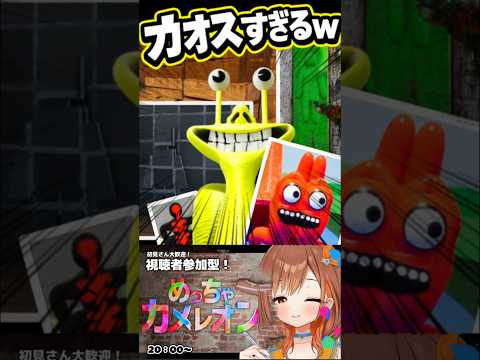
Asaarashi Naru launched a streaming format called “Chameleon” (めっちゃカメレオン) in which viewers submit creative hiding methods and the broadcaster responds in real-time to each submission. The format has generated significant engagement across social media platforms, with viewers reporting heightened satisfaction when their participation receives direct acknowledgment from the streamer. This interactive model represents a departure from traditional one-way broadcast entertainment.
Why It Matters
The success of Asaarashi Naru’s format signals a broader industry shift toward participatory entertainment. Unlike conventional anime, games, or even standard gaming streams where content is predetermined, this format places viewer creativity at the center of the broadcast experience. This transformation has implications for how digital media platforms design engagement, how creators structure their content, and how audiences perceive their role in entertainment consumption. The format demonstrates that viewer participation—when properly structured—can become the primary value proposition of a stream.
Background
VTuber culture has evolved significantly over the past three years, moving beyond simple character-driven commentary toward more sophisticated interactive formats. While early VTubers like Kizuna AI focused on character performance, contemporary VTubers increasingly emphasize real-time interaction with their audiences. The rise of participatory formats reflects broader trends in digital media, where platforms like Twitch and YouTube have enabled more direct creator-audience relationships. Asaarashi Naru’s “Chameleon” format builds on this foundation by creating a structured framework where viewer input directly determines broadcast content.
Key Points
- Format Structure: Viewers submit creative hiding methods, and the broadcaster responds in real-time with unpredictable reactions, creating dynamic, viewer-driven content.
- Psychological Engagement: The format leverages self-determination theory—viewers experience heightened motivation when their actions directly influence the broadcast environment.
- Participatory Value: Unlike passive viewing, this format transforms audiences into active participants whose creativity is recognized and rewarded with direct broadcaster feedback.
- Community Activation: Viewer-to-viewer interaction increases as audiences share hiding ideas and observe each other’s creative approaches across social platforms.
- Industry Trend: Participatory formats have demonstrated higher engagement metrics than traditional broadcaster-centric content over the past three years.
- Emotional Complexity: The broadcaster’s responses include surprise, appreciation, and admiration—creating multi-layered emotional engagement beyond simple success/failure binaries.
Timeline
- 2020: Systematic analysis of VTuber streaming formats begins, revealing engagement patterns in interactive content.
- 2021: Early participatory formats emerge, including real-time question-answer segments that demonstrate viewer participation’s addictive quality.
- 2022: Participatory format viewership surpasses traditional broadcaster-centric content in aggregate metrics.
- 2023-Present: Asaarashi Naru’s “Chameleon” format gains prominence, exemplifying the maturation of structured participatory streaming.
Perspectives
From a media evolution standpoint, the “Chameleon” format represents a fundamental shift from broadcast-era entertainment (one-way transmission) to platform-era entertainment (bidirectional participation). Traditional media—television, anime, conventional game streams—positioned audiences as passive recipients of predetermined content. Asaarashi Naru’s format inverts this dynamic: viewer creativity becomes the content itself, and broadcaster response becomes the reward mechanism.
Comparative analysis with other VTuber formats reveals important distinctions. Hololive’s casual chat streams involve reactive commentary on viewer messages, but lack the structured participation framework. Nijisanji’s multi-streamer game events center on broadcaster-to-broadcaster interaction rather than direct viewer-broadcaster relationships. Traditional gaming streams on platforms like Twitch feature predetermined gameplay with audience observation. The “Chameleon” format uniquely combines structured rules (the hiding framework) with viewer creative freedom and guaranteed broadcaster acknowledgment.
From a viewer psychology perspective, the format satisfies multiple motivational needs simultaneously: creative expression (designing hiding methods), recognition (having one’s contribution acknowledged), and social connection (observing other viewers’ creativity). This multi-layered engagement explains both the format’s initial appeal and its potential for sustained interest.
Insights
The “Chameleon” format illuminates how modern entertainment succeeds by fundamentally redefining the creator-audience relationship. Rather than audiences consuming predetermined content, this model positions audiences as essential content generators whose participation determines what the broadcast becomes. This represents a natural evolution of digital media, where technological capability (real-time interaction) finally enables the participatory experiences that audiences inherently desire.
The format’s success also reveals the limitations of traditional entertainment metrics. Viewership numbers alone cannot capture the qualitative difference between passive consumption and active participation. Viewers report higher satisfaction not because the content is objectively superior, but because they have agency within it. This suggests that future entertainment success will increasingly depend on how effectively creators structure opportunities for meaningful audience participation.
Long-term sustainability presents an interesting challenge: as viewer participation becomes normalized, the novelty factor diminishes. However, the format’s potential for evolution—through rule variations, scene changes, cross-creator collaborations, and community-driven competition—suggests multiple pathways for sustained engagement. The “Chameleon” format may ultimately influence broader industry practices, encouraging other VTubers and digital creators to prioritize participatory structures over traditional broadcast models.
For the VTuber industry specifically, this format demonstrates that viewer participation, when properly structured, can become more valuable than production quality or entertainment spectacle. This has significant implications for how creators allocate resources and design their content strategies moving forward.