▶ Watch the original YouTube video
Char Aznable’s Crisis of Conscience: How “What Am I Doing?” Became Gundam’s Most Pivotal Moment
In the new Mobile Suit Gundam GQuuuuuuX, protagonist Char Aznable utters an unprecedented line of self-doubt: “What am I doing?” This moment has sparked intense debate across the Gundam fan community, challenging 40+ years of character consistency and forcing viewers to reconsider what it means for one of anime’s most iconic antagonists to question his own convictions.
- What Happened
- Why It Matters
- Background
- Key Points
- Character Analysis: The Unprecedented Nature of Char’s Self-Doubt
- Comparative Analysis: Self-Doubt Across Gundam Series
- Industry Context: The Reinterpretation Trend
- Fan Reception: Divided Interpretations
- Production Intent and Creative Strategy
- How to Understand This Moment: A Viewing Guide
- Insights: What This Moment Reveals
- Conclusion: The Meaning of Doubt
What Happened
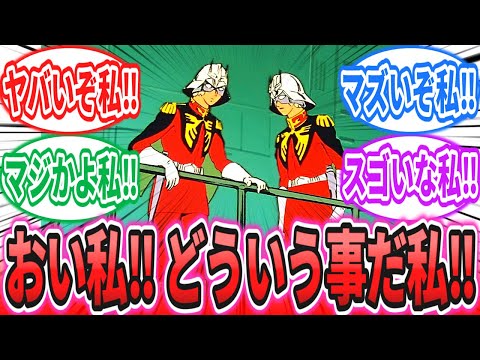
In Mobile Suit Gundam GQuuuuuuX (Sieg Axis), Char Aznable—the legendary pilot and ideologue who has defined the Gundam franchise since its 1979 debut—experiences a moment of profound self-questioning. The line “What am I doing?” (何やってんだ私!) represents the first time in the character’s canonical history that he openly doubts his own actions and motivations. This scene has become a focal point for fan discussion, generating widespread debate about whether this moment signals genuine character development or a fundamental departure from Char’s established identity.
Why It Matters
Char Aznable is not merely a supporting character in the Gundam universe—he is the ideological and narrative backbone of the franchise. For over four decades, Char has been portrayed as a figure of unwavering conviction, a man who always knows what he believes and why he acts. His consistency contrasts sharply with protagonists like Amuro Ray, who struggle with doubt and growth. When Char questions himself, it signals a seismic shift in how the Gundam series approaches its core themes of war, ideology, and personal conviction. This moment suggests that the franchise itself is undergoing a fundamental re-examination of its most sacred character, with implications that extend far beyond a single scene.
Background
Char Aznable first appeared in the original Mobile Suit Gundam (1979) as the Red Comet, a skilled Zeon pilot driven by personal vendetta and ideological commitment. Throughout subsequent series—Zeta Gundam, Gundam ZZ, and Char’s Counterattack—he evolved into a complex figure whose actions were always rooted in a coherent (if controversial) philosophy. Whether portrayed as revolutionary, tyrant, or idealist, Char maintained an internal logic that made his choices comprehensible, even if not always sympathetic.
In recent works like Mobile Suit Gundam Unicorn, this complexity deepened further, presenting Char’s motivations as a layered amalgamation of personal ambition, philosophical conviction, and psychological trauma. However, in all previous iterations, Char never questioned the fundamental validity of his own worldview. He might face external opposition, but his internal certainty remained intact.
Key Points
- Char Aznable experiences self-doubt for the first time in canonical Gundam history, asking “What am I doing?” in GQuuuuuuX
- This moment contradicts 40+ years of character portrayal as a figure of unwavering conviction and ideological consistency
- Fan reactions span from emotional acceptance (“Char is finally human”) to critical rejection (“This destroys his character integrity”)
- The scene reflects broader industry trends toward reinterpreting established characters through modern psychological and moral frameworks
- The moment’s significance depends entirely on how Char responds to his own doubt in subsequent episodes
- This development raises fundamental questions about the nature of belief, identity, and what defines the Gundam franchise itself
Character Analysis: The Unprecedented Nature of Char’s Self-Doubt
Char’s Historical Consistency
Throughout the Gundam timeline, Char has been defined by certainty. In the original series, his actions stem from a clear vendetta against the Zeon leadership and a personal rivalry with Amuro. In Zeta Gundam, despite shifting allegiances, his commitment to his vision of human evolution remains unshaken. Even in Gundam ZZ, where his influence diminishes, his ideological framework never wavers. This consistency is what separates Char from other Gundam protagonists—Amuro questions his purpose (“Why do I fight?”), Kamille Bidan experiences psychological breakdown (“What am I doing?”), and Judau Ashta rejects war itself (“What is justice?”). But Char never questions the validity of his own convictions.
Psychological Implications
Char’s self-doubt in GQuuuuuuX can be interpreted through three psychological lenses:
Awakening from Self-Deception: The realization that actions he believed to be justified by principle may actually be driven by personal desire or ego.
Relativization of Values: The recognition that his beliefs are not absolute truths but merely personal perspectives, contingent and contestable.
Identity Crisis: A fundamental questioning of “What is Char Aznable?” when stripped of the ideological framework that has always defined him.
Comparative Analysis: Self-Doubt Across Gundam Series
| Series | Character | Moment of Self-Doubt | Subsequent Development |
|---|---|---|---|
| Mobile Suit Gundam | Amuro Ray | “Why do I fight?” | Resolves doubt through commitment to his role as a soldier |
| Zeta Gundam | Kamille Bidan | “What am I doing?” | Descends into psychological collapse and trauma |
| Gundam ZZ | Judau Ashita | “What is justice?” | Rejects war entirely and seeks peace |
| GQuuuuuuX | Char Aznable | “What am I doing?” | Unknown (ongoing narrative) |
This comparison reveals a crucial pattern: each protagonist’s moment of self-doubt marks a turning point that fundamentally alters their trajectory. For Char, whose entire character has been built on the absence of such doubt, the implications are potentially more profound than for any previous character.
Industry Context: The Reinterpretation Trend
GQuuuuuuX’s approach to Char reflects a broader trend in contemporary anime and media: the reinterpretation of established characters through modern psychological and moral frameworks. Recent examples include:
- The Fate series’ reimagining of historical figures with contemporary sensibilities
- Attack on Titan’s final arc, which reexamines character motivations and moral justifications
- Jujutsu Kaisen’s humanization of antagonistic characters and exploration of their internal contradictions
These works share a common goal: transcending binary moral categories (good/evil, right/wrong) to present characters as psychologically complex beings whose actions emerge from layered, sometimes contradictory motivations. GQuuuuuuX applies this framework to Gundam’s most iconic figure, suggesting that even absolute conviction can be questioned and deconstructed.
Fan Reception: Divided Interpretations
Positive Reception
On Twitter and fan forums, many viewers expressed emotional resonance with the scene. Comments like “Char is finally human” and “This shows his vulnerability” suggest that some fans welcome the humanization of a character previously defined by ideological certainty. This perspective values psychological depth and emotional authenticity over character consistency.
Critical Reception
On 5channel’s Gundam threads and YouTube comments, skeptical voices questioned whether this development serves the character or undermines him. Criticisms include “This breaks Char’s character” and “The consistency that defined him is lost.” These viewers argue that Char’s strength lay precisely in his unwavering conviction, and that self-doubt represents a fundamental betrayal of his established identity.
Fundamental Questions
Underlying both responses is a deeper question: Is this the “real” Char finally revealed, or is this an impostor? The intensity of fan debate reflects the fact that Char is not merely a character but a symbol—his consistency has been central to how fans understand the Gundam franchise’s exploration of ideology, ambition, and moral justification.
Production Intent and Creative Strategy
The inclusion of this line suggests deliberate creative choices by GQuuuuuuX’s production team:
Humanization Strategy: By portraying Char as capable of doubt, the creators narrow the psychological distance between character and viewer. Previous portrayals of Char as an ideologically “complete” figure may have made emotional identification difficult. Introducing vulnerability creates new pathways for empathy.
Thematic Reconsideration: Char’s self-doubt functions as a narrative device to reexamine the franchise’s central questions: What is justice? What makes a conviction valid? Can ideology be separated from ego? By having Char question himself, the series invites viewers to question these same issues.
Franchise Evolution: This moment signals that Gundam is willing to deconstruct even its most sacred elements. Rather than treating Char as a fixed archetype, GQuuuuuuX presents him as a character capable of growth, change, and psychological transformation—a radical departure from his previous portrayal.
How to Understand This Moment: A Viewing Guide
To fully appreciate the significance of Char’s self-doubt, viewers should contextualize it within his complete character arc:
- Rewatch Mobile Suit Gundam Episode 43 (“Parting with Char”): Observe Char’s absolute conviction in his rivalry with Amuro and his ideological commitments.
- Review Zeta Gundam Episodes 1-5: Note how Char maintains his philosophical framework even as his political allegiances shift.
- Observe Gundam ZZ: Track the subtle ways Char’s influence wanes while his core beliefs remain intact.
- Watch GQuuuuuuX’s pivotal scene: With this context, the moment of self-doubt becomes a culmination of 40+ years of character development.
Additionally, Mobile Suit Gundam Unicorn provides valuable context, as it explores Char’s ideological foundations and psychological motivations in greater depth than previous works. Understanding why Char believes what he believes makes his moment of doubt far more impactful.
Insights: What This Moment Reveals
Char’s “What am I doing?” represents more than a single character’s crisis—it embodies a fundamental shift in how the Gundam franchise understands its own mythology.
The Collapse of Certainty: For decades, Gundam has explored the costs of war, the burden of piloting mobile suits, and the psychological toll of combat. But it has rarely questioned whether the ideological frameworks that justify these conflicts are themselves valid. Char’s doubt opens this question directly.
The Humanization of Icons: Char has functioned as an archetype—the ideologue, the antagonist, the visionary. By introducing self-doubt, GQuuuuuuX transforms him from symbol into person. This is both a creative strength (greater psychological depth) and a potential weakness (loss of the clarity that made him iconic).
The Future of the Franchise: How Char responds to his own doubt will determine the direction of GQuuuuuuX and potentially the entire Gundam franchise. If he overcomes doubt and emerges with renewed conviction, the series affirms the possibility of ideological certainty. If doubt consumes him, the series suggests that all conviction is ultimately fragile and contingent.
A Question for Viewers: Ultimately, Char’s self-doubt is also directed at the audience. “What am I doing?” becomes “What are you doing?” The moment forces viewers to confront their own relationship to the characters and narratives they consume. Do we value consistency or growth? Certainty or authenticity? The answer each viewer gives reveals something about their own values and expectations.
Conclusion: The Meaning of Doubt
Char Aznable’s moment of self-doubt in GQuuuuuuX is unprecedented in Gundam canon, and its significance cannot be overstated. For a character defined by unwavering conviction across four decades of storytelling, to question his own actions represents a fundamental rupture in his established identity.
Whether this moment ultimately strengthens or weakens the character depends on how the narrative develops. If Char emerges from doubt with renewed purpose, it suggests that conviction can survive scrutiny. If doubt overwhelms him, it implies that all certainty is ultimately illusory. The tension between these possibilities is precisely what makes this moment so compelling and so divisive among fans.
What is certain is that GQuuuuuuX has forced the Gundam franchise to confront a question it has long avoided: Can even the most ideologically consistent character survive the moment when he truly sees himself? The answer to that question will define not only Char’s future but the future of Gundam itself.