▶ Watch the original YouTube video
The introduction of Nox, the second rider in Kamen Rider Gacha, has ignited intense debate within the fan community. With contradictory motivations and insufficient character backstory, Nox represents a departure from established Kamen Rider conventions, raising questions about whether the character’s confusing nature is intentional storytelling or a scriptwriting failure.
What Happened
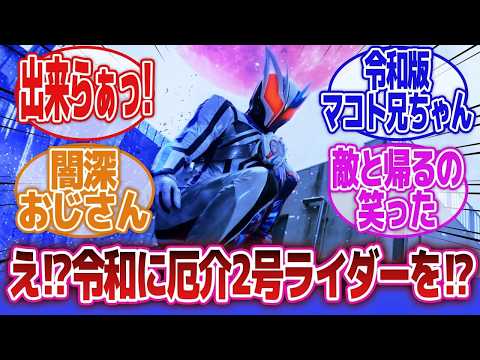
Kamen Rider Gacha introduced Nox as its second rider character, but the character’s actions and motivations have proven deeply divisive among fans. Nox simultaneously works with the Nightmare organization while claiming to want to help the Agents—a fundamental contradiction that remains unresolved in the narrative. This conflicting behavior, combined with vague explanations and insufficient character development, has sparked widespread discussion across online fan communities about the quality and intention of the character’s design.
Why It Matters
The Kamen Rider franchise has established clear conventions around secondary rider characters over its 15-year modern era. How these characters are written—their motivations, their conflicts with the protagonist, and their eventual integration into the hero’s circle—has become a reliable template for fans. Nox’s departure from this template raises fundamental questions about the show’s scriptwriting direction and whether the series is intentionally subverting expectations or failing to execute its character development effectively. This debate reflects broader concerns about narrative consistency in long-running tokusatsu series.
Background
The Kamen Rider franchise has evolved significantly since 2008. Early secondary riders like those in Kamen Rider Ohs (2010) and Kamen Rider Zero-One (2019) were written with clear motivations and gradual character arcs that built trust between them and the protagonist. Even controversial secondary riders like Alan Camille in Kamen Rider Ghost (2015) had at least some narrative explanation for their conflicting loyalties. By contrast, Nox’s character lacks this foundational clarity. He claims victimhood at the hands of the Code organization, uses this as justification for joining Nightmare, yet simultaneously attempts to protect Agents. His involvement in the meteorite incident—a serious crime—remains unaddressed. The character’s pattern of vague explanations and sudden departures has left viewers confused about his true intentions and the narrative purpose of his contradictions.
Key Points
- Contradictory Motivations: Nox works with Nightmare while claiming he wants to help Agents, creating a fundamental logical inconsistency that the script has not resolved.
- Insufficient Backstory: Viewers and the protagonist Bakugo receive inadequate explanation of Nox’s true intentions, background, or reasoning for his actions.
- Rapid Power Escalation: Nox becomes significantly more problematic immediately after gaining rider transformation abilities, drawing innocent people into conflict.
- Unresolved Past Crimes: Nox’s involvement in the meteorite incident and other serious wrongdoings have not been addressed or reconciled within the narrative.
- Scriptwriting Inconsistency: The criteria for what Nox will and will not do remain unclear, leaving viewers unable to predict or understand his behavior patterns.
- Victim Mentality as Core Motivation: Nox’s actions appear rooted in victimhood consciousness, which he uses to justify harmful behavior toward others, creating a problematic moral framework.
Perspectives
The Criticism Camp: Many fans view Nox as a scriptwriting failure. Comments like “This is one of the worst second riders I’ve seen” and “He’s going to cause irreversible damage while Nightmare takes advantage” reflect concerns that the character’s contradictions represent poor narrative planning rather than intentional design. These viewers expect secondary riders to have clear motivations and character arcs, and Nox’s lack of both feels like incompetence rather than artistic choice.
The Appreciation Camp: A smaller group of fans finds Nox’s contradictory nature compelling. Comments such as “I actually find his chaotic nature entertaining” and “His unpredictability is growing on me” suggest that some viewers are enjoying the character precisely because he defies expectations. This group interprets Nox’s vagueness as intentional mystery rather than poor writing.
The Optimism Camp: Other fans believe Nox will eventually be “redeemed” or revealed to be a better person than his current actions suggest. Comments like “In six months everyone will say he was actually a great character” reflect confidence that the show is building toward a character revelation that will retroactively justify his current behavior. This perspective treats Nox’s current state as temporary setup for a future payoff.
Industry Analysis: From a Kamen Rider franchise perspective, secondary riders have evolved over time. Early Heisei-era riders (1991-2000) were often portrayed as equals or superiors to the protagonist. Mid-Heisei riders (2000-2010) became psychologically complex but maintained clear motivations. Reiwa-era riders (2019+) have been increasingly humanized with detailed explanations for their actions. Nox appears to reverse this trend, moving toward ambiguity rather than clarity—a choice that contradicts the franchise’s recent direction.
Insights
Nox represents a critical juncture in how Kamen Rider Gacha approaches character writing. The character embodies a thematic exploration of “victim consciousness” as a form of internal darkness—aligned with the series’ apparent focus on Nightmares as manifestations of negative human emotions. If this interpretation is correct, Nox’s contradictions are intentional, designed to show how victimhood mentality can justify harmful behavior and create new victims. However, the execution has failed to communicate this clearly to the audience, resulting in confusion rather than thematic engagement.
The fan divide over Nox reveals a fundamental tension in modern tokusatsu storytelling: the balance between mystery and clarity. Audiences have been conditioned by 15 years of Kamen Rider convention to expect secondary riders to follow a recognizable pattern. When a character deviates from that pattern, viewers struggle to determine whether they’re experiencing intentional subversion or narrative incompetence. Until the show provides clearer answers about Nox’s true nature and motivations, this ambiguity will likely persist, making Nox a character that divides rather than unites the fanbase.
The ultimate evaluation of Nox will depend entirely on how the series resolves his character arc. If future episodes reveal that his contradictions were meaningful setup for character growth, current criticism will likely transform into praise. If his contradictions remain unresolved or are dismissed without proper narrative justification, the criticism will be validated as legitimate scriptwriting failure. For now, Nox remains a fascinating case study in how character design choices can either enhance or damage audience engagement with a long-running series.