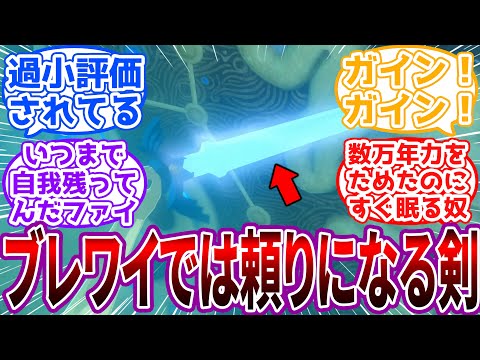
▶ Watch the original YouTube video
The Master Sword received dramatically different treatment in Breath of the Wild versus Tears of the Kingdom, reflecting a fundamental shift in Nintendo’s design philosophy for the Zelda series. Where BotW made the legendary blade just another breakable weapon, TotK restored it to true legendary status—sparking widespread discussion about what this change means for the franchise’s future.
What Happened
Nintendo made a significant design change to the Master Sword between Breath of the Wild (2017) and Tears of the Kingdom (2023). In BotW, the Master Sword was subject to the game’s universal durability system, breaking after approximately 30 strikes and requiring a 10-minute cooldown before automatically repairing. In TotK, the durability system was removed entirely—the Master Sword became a permanent, unbreakable weapon with the highest attack power in the game. This shift sparked considerable discussion among players and gaming communities about what the change signifies for the Zelda series.
Why It Matters
The Master Sword’s treatment is not merely a mechanical adjustment; it represents a philosophical pivot in how Nintendo approaches the Zelda franchise. BotW’s design reflected a deliberate choice to make all weapons mechanically equal, prioritizing player freedom and exploration. TotK’s reversal signals a return to classical Zelda principles—the idea that the legendary sword should feel legendary. This tension between innovation and tradition is central to understanding how major game franchises evolve, and the Master Sword’s journey illustrates how developer feedback and player expectations shape iterative design.
Background
The Zelda series has treated the Master Sword as a special weapon for nearly 30 years. In classics like Ocarina of Time (1998) and Majora’s Mask (2000), obtaining the Master Sword was a significant narrative milestone—a permanent, unbreakable tool that symbolized progression. Skyward Sword (2011) introduced the concept of an evolving sword that grew stronger through use, but it remained unbreakable once obtained.
When Breath of the Wild launched in 2017, it fundamentally reimagined the Zelda formula as an open-world game. Producer Eiji Aonuma stated that the team wanted players to feel free to choose any weapon based on personal preference. To achieve this, every weapon—including the Master Sword—was subject to durability and breakage. This was a deliberate design choice to encourage constant exploration and experimentation, preventing players from settling on a single “optimal” tool.
However, this innovation created cognitive dissonance for many players. The legendary sword, central to Zelda mythology, felt diminished by being treated identically to a wooden stick or rusty broadsword. Social media and gaming forums filled with comments expressing this disconnect: “It’s strange that the Master Sword breaks like any other weapon.”
Key Points
- BotW’s Design Philosophy: All weapons were mechanically equal, with universal durability and breakage. The Master Sword was strong but temporary, reflecting a “player freedom” approach where no single weapon was objectively superior.
- TotK’s Design Philosophy: The Master Sword became the sole unbreakable weapon with maximum attack power, returning to the classical Zelda principle that the legendary blade should be genuinely special and permanent.
- Player Reception: BotW players often described the Master Sword as “underwhelming” or “just okay,” while TotK players celebrated it as finally feeling like a true legendary weapon worthy of the narrative buildup.
- Design Intent: BotW prioritized experimental freedom and mechanical equality; TotK balanced that freedom with narrative and psychological satisfaction, allowing other weapons to remain viable while restoring the Master Sword’s iconic status.
- Broader Implication: The change signals a shift from “radical innovation” to “thoughtful evolution,” suggesting Nintendo learned that honoring series traditions while maintaining modern design principles yields stronger results.
- Comparative Context: Across the Zelda timeline, TotK’s Master Sword treatment aligns with pre-BotW titles, indicating a deliberate return to established franchise identity rather than continued experimentation.
Timeline
- 1998–2000: Ocarina of Time and Majora’s Mask establish the Master Sword as a permanent, unbreakable legendary weapon.
- 2011: Skyward Sword introduces an evolving sword mechanic while maintaining the unbreakable principle.
- 2017: Breath of the Wild launches with universal durability system, making the Master Sword breakable and subject to cooldown repairs.
- 2017–2023: Players express mixed reactions; veteran Zelda fans note discomfort with the Master Sword’s diminished status.
- 2023: Tears of the Kingdom releases with redesigned Master Sword—permanent, unbreakable, and mechanically superior.
- Post-Launch: Social media and gaming forums celebrate the change as a return to Zelda tradition.
Perspectives
The Innovation Perspective: BotW’s approach was bold and philosophically consistent. By making all weapons equal, the game genuinely empowered players to experiment without fear of “wasting” their best tool. This design encouraged exploration and discovery, allowing players to forge their own playstyle rather than following a predetermined optimal path. For new players unfamiliar with Zelda tradition, this freedom was exhilarating.
The Tradition Perspective: The Master Sword carries narrative and psychological weight accumulated over decades. In Zelda mythology, obtaining the legendary blade represents a major story milestone. When the sword breaks like any other weapon, that narrative significance diminishes. Players who grew up with Ocarina of Time or Majora’s Mask expected the Master Sword to feel special—to be a permanent reward for effort, not just another tool with an expiration date.
The Synthesis Perspective: TotK’s solution attempts to honor both viewpoints. The Master Sword is now genuinely special and permanent, satisfying narrative and psychological expectations. Simultaneously, other weapons remain viable and useful, preserving player freedom and experimentation. This middle ground suggests that innovation and tradition need not be mutually exclusive.
Community Reception: Across Twitter, Reddit, and gaming forums, the predominant response to TotK’s Master Sword redesign was positive. Comments like “Finally, the Master Sword feels like a legendary weapon” were common. Some players noted that the change likely resulted from listening to BotW player feedback. A smaller contingent appreciated BotW’s experimental approach, but the majority welcomed the return to classical design principles.
Insights
The Master Sword’s journey from BotW to TotK reveals several important truths about game design and franchise evolution.
First, tradition and innovation are not opposites. BotW proved that radical reimagining can create masterpieces. TotK proved that respecting established identity while incorporating modern design principles can be equally successful. The question is not whether to innovate or preserve, but how to do both simultaneously.
Second, psychological satisfaction matters as much as mechanical balance. In pure gameplay terms, BotW’s universal durability system was elegant and fair. Yet it created a persistent sense of wrongness for many players—the Master Sword simply did not *feel* legendary. TotK recognized that games are not purely mechanical systems; they are also emotional and narrative experiences. Restoring the Master Sword’s permanence and superiority satisfied players’ psychological expectations without breaking game balance.
Third, player feedback shapes iterative design. The widespread sentiment that BotW’s Master Sword was underwhelming likely influenced TotK’s redesign. Nintendo demonstrated willingness to reconsider experimental choices when player response indicated misalignment with franchise identity. This suggests a development culture that values both bold innovation and player expectations.
Fourth, the change reflects a broader industry pattern. Many franchises have faced similar tensions between radical reinvention and respectful evolution. TotK’s approach—maintaining the core innovations of BotW (open-world freedom, weapon variety, experimental gameplay) while restoring classical elements (the special status of the Master Sword)—represents a mature design philosophy that acknowledges both the value of what came before and the necessity of moving forward.
Finally, the Master Sword’s redesign is not a “correction” of BotW but rather a natural evolution. Both games are excellent; they simply reflect different design priorities. BotW prioritized radical freedom and mechanical equality. TotK prioritized balancing freedom with narrative significance. Neither approach is objectively superior—they represent different valid choices about what a Zelda game should be. The fact that Nintendo chose to shift priorities suggests confidence that the franchise can accommodate multiple design philosophies across different entries.