▶ Watch the original YouTube video
Gundam SEED FREEDOM’s New Trinity Weapons Shake the Fandom: Analysis of the Series’ Most Pivotal Shift
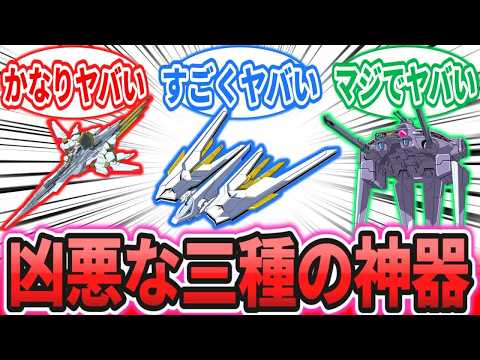
Gundam SEED FREEDOM introduces a game-changing concept: the “Cosmic Era’s Malevolent New Trinity Weapons,” a trio of mobile suits that fundamentally challenge the power dynamics established across two decades of the SEED franchise. This development has sparked intense debate among fans and marks a significant thematic evolution for the series.
What Happened
In Gundam SEED FREEDOM, the antagonistic Cosmic Era faction deploys three new mobile suits that represent a technological leap beyond the iconic Freedom, Justice, and Destiny Gundams that have defined the series. These new units possess overwhelming performance advantages, creating a scenario where the protagonists—Kira Yamato and Athrun Zala—face genuine inferiority in direct combat for perhaps the first time in the franchise’s history.
The introduction of these weapons has generated significant online discussion across Twitter, 5channel, and YouTube, with fans expressing a complex mixture of excitement about new narrative developments and anxiety about the fate of established characters.
Why It Matters
This development represents more than a simple escalation of mechanical power. It challenges a foundational assumption that has persisted throughout Gundam SEED: that individual pilot skill and determination can overcome technological disadvantages. By introducing enemies whose superiority cannot be bridged through personal excellence alone, the series poses a fundamental question about the nature of conflict, individual agency, and the limits of personal power.
The narrative shift also reflects broader trends in recent Gundam productions, which have increasingly questioned established series conventions. This approach mirrors the thematic deconstruction seen in Gundam: The Witch from Mercury, suggesting a deliberate industry-wide movement toward challenging viewer expectations.
Background
The Gundam SEED franchise began in 2002 as a landmark entry in the mecha anime genre, introducing the concept of “Coordinators”—genetically enhanced humans—and exploring themes of genetic discrimination and warfare. The original series established Freedom Gundam as the protagonist’s ultimate weapon, a symbol of individual will overcoming systemic oppression.
Gundam SEED DESTINY (2004-2005) complicated this narrative by introducing Destiny Gundam, a superior mobile suit piloted by antagonist Shin Asuka. However, that conflict ultimately reinforced the original series’ themes: individual determination and moral clarity still prevailed. The new Trinity Weapons in SEED FREEDOM represent a departure from this pattern, suggesting that moral superiority and personal skill may no longer guarantee victory.
Key Points
- Performance Superiority: The new Trinity Weapons demonstrably outperform Freedom, Justice, and Destiny across multiple specifications including beam output, armor thickness, and overall combat capability.
- Narrative Function: These units serve as a turning point in the film’s second half, forcing protagonists into genuine crisis situations rather than challenges they can overcome through skill and determination.
- Thematic Reversal: The concept of “Trinity Weapons” itself inverts series tradition—what were once the protagonists’ sacred tools are now embodied by the enemy faction.
- Fan Response Duality: Online reactions split between those excited by fresh narrative conflict and those concerned about the diminishment of established characters.
- Series Evolution: The development reflects a broader pattern in contemporary Gundam productions of deconstructing franchise conventions and challenging viewer assumptions.
- Thematic Deepening: The introduction raises questions about the relationship between technological advancement, moral legitimacy, and the possibility of non-violent conflict resolution.
Comparative Analysis: Power Dynamics Across the Franchise
The introduction of the new Trinity Weapons parallels but significantly diverges from previous power-scaling moments in the Gundam franchise. When Destiny Gundam appeared in SEED DESTINY, it represented superior technology paired with a capable pilot, but the narrative ultimately reasserted the original protagonists’ relevance through character development and moral clarity.
In contrast, the new Trinity Weapons appear designed to represent pure technological superiority divorced from pilot capability. This distinction echoes the approach seen in Gundam Unicorn, where new mobile suit technology was intrinsically linked to pilot ability, but diverges significantly from the character-driven power dynamics of Char’s Counterattack, where individual skill remained paramount.
The narrative structure suggests the series is moving toward a model where technological capability and individual excellence are decoupled—a thematic shift with significant implications for how the story can be resolved.
Perspectives
Fan Enthusiasm: Many viewers welcome the new conflict as a necessary evolution, arguing that the franchise had become predictable in its reliance on protagonist superiority. These fans appreciate the genuine tension created by enemies that cannot be overcome through established methods.
Character-Focused Concerns: Other segments of the fanbase express anxiety about the diminishment of Kira and Athrun’s narrative importance. These viewers worry that introducing overwhelmingly superior enemies risks reducing beloved characters to secondary roles.
Technical Analysis: Detailed discussions on specialized forums focus on specific mechanical specifications, with fans attempting to quantify the performance gap and speculate about how protagonists might overcome such disadvantages.
Thematic Interpretation: Analytically-minded viewers see the new Trinity Weapons as a deliberate exploration of themes regarding technological inequality, the limits of individual agency, and the possibility of non-military solutions to conflict.
Narrative Implications and Future Directions
The introduction of the new Trinity Weapons creates several possible narrative paths. The most optimistic interpretation suggests that protagonists will discover non-technological means of opposition—through cooperation, strategic thinking, or moral persuasion—thereby deepening the series’ thematic exploration.
Alternatively, the weapons may serve to reveal hidden complexities within the Cosmic Era faction itself, suggesting that technological superiority does not necessarily confer moral legitimacy or strategic wisdom. This approach would allow the narrative to explore whether superior technology can actually achieve the faction’s stated objectives.
A third possibility involves the revelation of previously unknown capabilities or alliances that allow protagonists to compete on more equal footing, though this would represent a more conventional narrative resolution.
Insights
The new Trinity Weapons represent a deliberate challenge to foundational assumptions about the Gundam SEED franchise. For two decades, the series has explored the tension between individual excellence and systemic oppression, consistently affirming that moral clarity and personal determination can overcome technological disadvantage. The introduction of enemies whose superiority cannot be bridged through these traditional means suggests a fundamental reconsideration of the series’ core themes.
This development reflects broader patterns in contemporary anime production, where established franchises increasingly question their own conventions. Rather than simply escalating power levels, SEED FREEDOM appears to be asking whether the frameworks that sustained previous narratives remain valid in new contexts.
The fan response—simultaneously excited and anxious—suggests that the creative team has successfully created genuine narrative uncertainty. Whether this uncertainty resolves into a satisfying thematic statement or devolves into conventional power-scaling remains to be seen, but the attempt itself represents a significant evolution for a franchise that has historically relied on established character dynamics.
Ultimately, the new Trinity Weapons function as more than mechanical upgrades; they are a narrative device through which the series poses fundamental questions: What is the relationship between power and legitimacy? Can individual excellence transcend technological limitation? What does victory mean when conventional superiority cannot be achieved? These questions suggest that SEED FREEDOM is attempting to mature its thematic concerns alongside its aging fanbase.