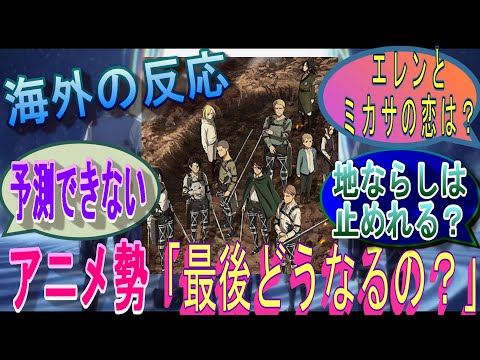
▶ Watch the original YouTube video
Attack on Titan Final Season Part 1: Why This Episode Shattered Global Audiences
The final season premiere of Attack on Titan delivered one of anime’s most devastating episodes, with the Rumbling sequence and Eren’s complete transformation leaving international viewers emotionally devastated. After 11 years and 131 episodes, the series reached a narrative crescendo that transcended typical anime storytelling and challenged fundamental questions about freedom, destiny, and moral compromise.
What Happened
Attack on Titan’s Final Season Part 1 aired the Rumbling arc, depicting Eren’s activation of the Founding Titan’s power to flatten the world beneath colossal titans. The episode showcased unprecedented animation quality from MAPPA studio, with the opening 15 minutes presenting one of anime’s most visceral and horrifying sequences. Simultaneously, the episode explored Eren’s complete psychological transformation from the idealistic teenager of season one into a figure willing to commit genocide in pursuit of his vision of freedom. The episode also featured Hange’s climactic sacrifice, a scene that diverged from the original manga to amplify the character’s thematic significance.
Why It Matters
This episode represents a watershed moment in anime storytelling. For over a decade, Attack on Titan has explored the tension between individual agency and predetermined fate—a theme that reaches its apex in this episode. The series challenges the traditional anime protagonist archetype by presenting a hero who may not be acting of his own volition, but rather as a vessel for forces beyond his control. The episode’s global impact demonstrates that contemporary anime audiences are prepared to engage with morally ambiguous narratives that reject simple heroism. Furthermore, the animation and direction set a new technical standard for the medium, with the Rumbling sequence achieving what few anime episodes accomplish: complete suspension of time perception through visual intensity.
Background
Attack on Titan debuted in April 2013 as a dark fantasy anime about humanity’s struggle against giant humanoid creatures called Titans. Over 11 seasons, the narrative evolved from a straightforward survival story into a complex exploration of political ideology, historical cycles, and existential philosophy. The series drew comparisons to Code Geass and Jujutsu Kaisen for its willingness to depict protagonists descending into moral darkness. However, Attack on Titan distinguishes itself through its interrogation of whether such descent represents genuine choice or cosmic inevitability. The Final Season Part 1 marks the culmination of this thematic journey, presenting Eren not as a villain by choice, but potentially as a tragic figure ensnared by the very power meant to liberate him.
Key Points
- The Rumbling Visualization: MAPPA’s animation of the Rumbling exceeded source material expectations, with international viewers reporting emotional shock at the sequence’s visceral depiction of mass destruction and suffering.
- Eren’s Psychological Dissolution: The episode presents Eren’s transformation from a freedom-seeking teenager into a figure willing to commit genocide, raising questions about whether his actions represent genuine choice or predetermined fate imposed by the Founding Titan.
- Hange’s Sacrifice: The episode expanded Hange’s death scene beyond the manga, presenting her final moments as a deliberate act of self-sacrifice that encapsulates her character arc of devotion to understanding Titans.
- Eren and Armin’s Fractured Bond: The episode depicts the irreversible breakdown of the friendship between Eren and Armin, suggesting that reconciliation may be impossible despite their shared history.
- Freedom Versus Destiny: The episode crystallizes the series’ central thematic tension: Eren’s pursuit of freedom may itself be a form of enslavement to Ymir’s curse and the Founding Titan’s predetermined path.
- Technical Achievement: The episode demonstrates animation techniques that maintain visual intensity throughout, creating a viewing experience where time perception becomes distorted—a rare achievement in anime production.
Timeline
- April 2013: Attack on Titan anime premieres, establishing the series’ core themes of freedom and survival.
- 2013-2023: Over 11 years, the narrative evolves from survival story to philosophical exploration of choice and destiny.
- Final Season Part 1 (2023): The Rumbling arc airs, presenting Eren’s complete transformation and the series’ thematic culmination.
- Post-Episode Reception: International audiences respond with shock and emotional devastation, with social media flooded with reactions to Hange’s death and the Rumbling’s scale.
Perspectives
International viewers expressed multiple interpretations of the episode. Many praised the animation quality and emotional impact, with comments like “I was shouting ‘what is happening’ for the first 15 minutes” and “I had to pause for several minutes to dry my eyes after Hange’s farewell.” These reactions emphasize the episode’s success in generating visceral emotional responses.
Other viewers focused on the philosophical dimensions, noting that “Eren and the Rumbling represent millennia of accumulated rage and hatred from Ymir’s enslavement,” suggesting the episode functions as an exploration of historical trauma and cyclical violence. This interpretation positions Eren not as a villain but as a tragic figure channeling forces beyond individual agency.
A third perspective emphasized character development, with fans expressing hope for redemption: “I really want Eren and Mikasa to have a happy ending,” indicating that despite Eren’s actions, audiences maintain emotional investment in his potential salvation. This perspective suggests viewers distinguish between Eren’s actions and his essential humanity.
Critical voices also emerged, arguing that “Eren’s actions cannot be justified,” maintaining that regardless of external forces or philosophical justifications, genocide remains morally indefensible. This perspective resists the narrative’s potential framing of Eren as a tragic victim of circumstance.
Insights
Attack on Titan Final Season Part 1 represents a maturation of anime as a narrative medium. The episode succeeds because it refuses easy moral resolution. Unlike Code Geass, where protagonist Lelouch achieves redemption through death, Attack on Titan leaves Eren’s moral status fundamentally ambiguous. This ambiguity—whether Eren acts from genuine choice or predetermined fate—mirrors classical tragic literature from Greek drama to Shakespeare, suggesting that contemporary anime can engage with philosophical complexity at the level of canonical literature.
The episode’s global impact demonstrates that international audiences have moved beyond seeking traditional heroic narratives. Instead, viewers engage with stories that interrogate the nature of freedom itself. The Rumbling sequence’s technical achievement proves that animation can convey psychological and philosophical concepts through pure visual expression, transcending dialogue and exposition.
Hange’s expanded death scene reveals the production team’s intentional choice to elevate secondary characters to thematic significance equal to the protagonist. This decision reinforces the series’ implicit argument that all individuals possess equal moral weight in historical processes—no single hero determines outcome, but rather collective human action shapes destiny.
The episode’s treatment of Eren’s transformation suggests that the series’ ultimate question is not “Will Eren be stopped?” but rather “What does freedom mean when the pursuit of freedom becomes enslavement?” This philosophical inquiry, combined with masterful animation and character development, positions Attack on Titan Final Season Part 1 as a watershed moment in anime history—a point where the medium proved capable of matching the thematic ambition and emotional depth of prestige television and literary fiction.