▶ Watch the original YouTube video
How Pokémon’s Official Cryptic Posts Ignite Fan Theories and Community Engagement
Pokémon’s official social media accounts have mastered the art of posting deliberately ambiguous content that sparks massive fan engagement and speculation. Drawing from 15 years of community observation, this analysis explores how strategic teaser posts activate fan psychology, drive multi-platform discussion, and represent a sophisticated modern marketing strategy that treats fans as active participants rather than passive consumers.
What Happened
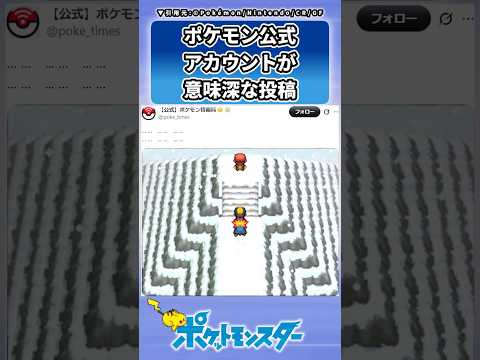
Pokémon’s official social media accounts—particularly on Twitter, Instagram, and YouTube—regularly post cryptic, deliberately ambiguous content designed to spark fan speculation and theory-crafting. These posts typically feature partial information such as character silhouettes, mysterious dialogue snippets, or fragmented teaser images that withhold complete details about upcoming announcements. When these posts go live, they generate thousands of replies within hours, trending across multiple platforms and spawning elaborate fan theories that persist for days or weeks until official announcements clarify the mystery.
The strategy has proven remarkably effective. A single teaser image can accumulate thousands of replies, trigger trending hashtags, and activate fan communities across Reddit, Twitter, YouTube, and dedicated forums. Fans respond with character analysis, story predictions, meta-commentary about the official strategy itself, and cross-platform information synthesis as they piece together clues distributed across different social channels.
Why It Matters
This phenomenon represents a significant shift in how major entertainment franchises interact with their audiences. Rather than simply broadcasting information to passive consumers, Pokémon’s approach treats fans as active collaborators in the content discovery process. This strategy has several important implications:
Community Activation: Cryptic posts serve as catalysts for large-scale community discussion and engagement, keeping the franchise at the center of fan discourse between major releases.
Psychological Engagement: The strategy leverages reward-system psychology—fans experience dopamine activation when attempting to solve puzzles and again when their theories prove correct or when official announcements arrive.
Multi-Platform Ecosystem: By distributing different information across different platforms, Pokémon ensures fans must actively engage with multiple official channels, increasing overall reach and engagement metrics.
Marketing Efficiency: This approach generates organic, user-created content and discussion that amplifies official messaging far beyond what traditional advertising could achieve, while appearing organic rather than promotional.
Background
Pokémon, which launched in 1996, has maintained an active fanbase across 27 years of continuous releases. The franchise’s social media strategy evolved significantly over the past decade. While official Pokémon accounts did not exist during the early 2000s—when information came primarily from gaming magazines and Nintendo’s official website—today these accounts function as central hubs for community interaction.
The cryptic posting strategy gained particular prominence around 2022 during the Scarlet and Violet announcement period, when a single teaser image generated thousands of replies and trended within 24 hours. This success demonstrated the effectiveness of deliberately withholding complete information and allowing fan imagination to fill the gaps.
The Pokémon community itself has matured significantly over two decades. It now encompasses multiple generations of players (from teenagers to players in their 50s and 60s), sophisticated analytical subcultures focused on lore, mechanics, and economics, and a generally constructive discussion culture that respects differing interpretations.
Key Points
- Strategic Ambiguity: Pokémon’s official posts intentionally withhold 30-40% of information while providing 60-70% clarity, creating the optimal balance for engagement without complete incomprehensibility.
- Multi-Angle Fan Response: Fan reactions fall into distinct categories: character psychology analysis, story prediction, meta-analysis of the official strategy itself, and cross-platform information synthesis.
- Psychological Activation: The strategy exploits “prediction uncertainty reward activation”—fans experience motivation to solve puzzles and anticipation of potential rewards when their theories prove correct.
- Community Maturity Factor: Pokémon’s success with this strategy depends partly on its unusually mature, multi-generational fanbase that engages in sophisticated, respectful discourse.
- Calculated Timing and Distribution: Official posts typically begin 1-2 weeks before major announcements, with different information distributed across different platforms to maximize cross-channel engagement.
- Industry Trend: While not invented by Pokémon, this strategy has become standard across major gaming and entertainment franchises, though Pokémon executes it with particular effectiveness.
Fan Response Patterns
Character Analysis Responses: Fans scrutinize ambiguous character expressions and poses, speculating about psychological states, hidden secrets, and character motivations. Single teaser images have generated over 3,000 analytical replies focused on character interpretation.
Story Prediction Responses: Fans use teaser content as evidence for predicting future narrative developments, particularly during new game announcement periods. These predictions often generate hundreds or thousands of supporting replies and shares.
Meta-Analysis Responses: More sophisticated fans analyze the official strategy itself—examining timing patterns, information distribution across platforms, and the psychological mechanisms behind the posts. Some fans have identified that Pokémon deliberately posts at times optimized for different global time zones.
Cross-Platform Synthesis: Fans combine information from Twitter, Instagram, YouTube, and official websites to construct more complete pictures, effectively requiring engagement across multiple channels.
Comparative Analysis with Other Major Franchises
Pokémon’s cryptic posting strategy differs from approaches used by other major entertainment franchises. Attack on Titan’s official posts tend toward emotional, nostalgic responses centered on important story moments. Jujutsu Kaisen focuses on new character visuals, triggering fan art creation and character appreciation responses. Fate employs puzzle-like complex teasers that generate logical, deep-analysis responses. Pokémon distinguishes itself through balancing accessibility for new fans with sufficient depth for sophisticated analysis, generating both large-scale engagement and sustained discussion over extended periods.
Psychological and Strategic Mechanisms
Reward System Activation: When fans encounter cryptic posts, their brains’ reward systems activate due to the expectation that valuable information might be hidden within. This expectation drives analysis. If theories prove correct, fans experience achievement satisfaction. If theories prove incorrect, new anticipation forms around the official announcement, creating continuous motivation to follow official channels.
Information Optimization: Analysis of posting patterns reveals that Pokémon maintains approximately 60-70% clear information while keeping 30-40% ambiguous. This ratio appears optimized for maximum engagement—too much clarity eliminates motivation to speculate, while too much ambiguity frustrates audiences.
Temporal Strategy: Official cryptic posts typically begin 1-2 weeks before major announcements, gradually escalating fan expectations and maximizing reaction intensity when actual announcements arrive.
Multi-Channel Distribution: By distributing different information across different platforms, Pokémon ensures fans must actively monitor multiple official channels, increasing overall platform engagement and preventing any single channel from monopolizing the conversation.
Community Insights from Social Media
Twitter Discourse: Mainstream Twitter responses celebrate fan “analysis teams” that successfully decode teaser information, with comments like “The Pokémon official teaser post again, and the analysis team is doing amazing work. Someone actually identified the new game’s setting from this image” appearing across multiple accounts. The decoding process itself has become entertainment.
Reddit Analysis: Subreddit r/pokemon regularly features posts analyzing every symbol, color, and text placement in teaser images, with top posts receiving thousands of upvotes. These posts demonstrate systematic, detailed analytical approaches to extracting meaning from ambiguous content.
YouTube Coverage: Multiple Pokémon analysis channels produce “thorough analysis of official cryptic posts” videos that consistently achieve hundreds of thousands of views, indicating substantial audience appetite for this content.
Forum Discussion: Dedicated discussion threads regularly accumulate hundreds to thousands of responses as fans debate interpretations, compare theories, and synthesize information across platforms.
Practical Guidance for Enhanced Engagement
Monitor Multiple Platforms: Pokémon distributes different information across Twitter, Instagram, YouTube, and official websites. Comprehensive monitoring of all channels provides more complete information than any single platform.
Compare Historical Patterns: Pokémon frequently repeats posting patterns. For example, new announcements typically follow clock or countdown-related posts by approximately one week. Recognizing these patterns enables prediction of announcement timing.
Engage with Analysis Communities: Twitter analysis accounts, Reddit communities, YouTube channels, and dedicated forums each offer different analytical perspectives. Participating in multiple communities exposes you to interpretations you might not independently develop.
Organize Posts Chronologically: When multiple cryptic posts appear, arranging them chronologically reveals the sequence in which information is deliberately revealed, exposing the official strategy’s structure.
Review Related Historical Content: When posts reference previous games or story elements, revisiting that content provides context that deepens interpretation of current teasers.
Broader Implications
Pokémon’s cryptic posting strategy represents a sophisticated evolution in franchise-community interaction. Rather than positioning fans as passive consumers receiving broadcast information, this approach treats fans as active participants capable of meaningful analysis and interpretation. The strategy succeeds because it respects fan intelligence, provides genuine opportunities for participation, and trusts community capability.
This approach has become increasingly common across major entertainment franchises, suggesting it represents an emerging industry standard. However, Pokémon’s particular success stems from several factors: a mature, multi-generational fanbase; 27 years of accumulated trust and credibility; a community culture that emphasizes constructive discussion; and sophisticated execution of timing, information distribution, and platform coordination.
One potential concern exists: as fan expectations escalate through repeated cryptic posts, actual announcements risk disappointing audiences if they fail to match speculative enthusiasm. Instances have occurred where excessive expectations preceded announcements, resulting in temporary community disappointment and negative sentiment shifts.
Despite this risk, Pokémon’s cryptic posting strategy represents a model worth studying across entertainment and technology industries. It demonstrates how respecting audience intelligence, providing meaningful participation opportunities, and leveraging community capability can create engagement far exceeding traditional marketing approaches. As digital media continues evolving, this community-centered approach to content strategy will likely become increasingly influential across the entertainment landscape.