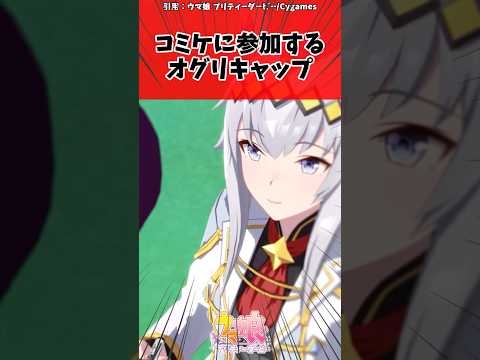
▶ Watch the original YouTube video
How Trainers React to Oguri Cap Participating in Comiket: A Deep Dive into Uma Musume Fandom Culture
A viral video showcasing trainers’ reactions to Oguri Cap attending Comiket—Japan’s largest doujinshi convention—reveals how Uma Musume characters transcend game boundaries through fan creativity. This phenomenon demonstrates the evolution of modern anime and gaming culture, where character personification and fan imagination create new forms of community engagement.
- What Happened
- Why It Matters
- Background
- Key Points
- The Affinity Between Oguri Cap and Comiket
- Three Dimensions of Fan Response
- Character Freedom and Doujinshi Culture
- The Evolution of Otaku Culture: From Consumption to Creation
- Industry Trend: Character-Centric Design
- Fan Reactions and Community Sentiment
- Insights: Character Personification as Cultural Evolution
- Practical Recommendations for Deeper Engagement
- Conclusion: The Future of Character-Fan Relationships
What Happened
A video compilation captures diverse reactions from Uma Musume trainers (players) to the creative premise of Oguri Cap—one of the game’s most beloved characters—participating in Comiket, Japan’s iconic biannual doujinshi (fan-created works) convention. The concept, rooted in fan creativity rather than official canon, has resonated strongly within the Uma Musume community, sparking widespread discussion about character autonomy and fan imagination.
Why It Matters
This phenomenon illustrates a fundamental shift in modern anime and gaming culture. Rather than confining characters to their original narratives, contemporary fan communities actively extend character presence into real-world spaces and events. The Comiket scenario demonstrates how games like Uma Musume deliberately foster character flexibility, enabling fans to imagine their favorite characters existing within the same cultural spaces they inhabit. This blurs the boundary between fictional and real-world communities, creating unprecedented forms of parasocial connection and creative engagement.
Background
Uma Musume Pretty Derby is a mobile game featuring anthropomorphized versions of real historical racehorses. Oguri Cap, based on the legendary 1980s Japanese racehorse of the same name, is characterized as energetic, sociable, and forward-thinking—traits that align naturally with active participation in cultural events. The game’s design emphasizes character interaction and development over linear storytelling, creating fertile ground for fan interpretation and creative expansion.
Comiket, held three times annually, is Japan’s largest convention for independent creators and fan works. It attracts hundreds of thousands of attendees and represents the heart of otaku culture. The concept of Uma Musume characters attending Comiket positions them not as distant fictional entities, but as participants in the same cultural ecosystem as their fans.
Key Points
- Character-Centric Design: Uma Musume prioritizes individual character personality and development over overarching narrative, making characters ideal subjects for fan creativity and expansion.
- Three Reaction Patterns: Fan responses fall into three categories: character consistency validation (Oguri Cap’s sociability makes Comiket participation feel authentic), imaginative extension (fans naturally envision scenarios the character would create), and community cohesion (shared participation in real-world events strengthens fan bonds).
- Official Tolerance of Fan Works: Uma Musume’s developers maintain a permissive stance toward fan-created content, similar to the Touhou Project model, which accelerates creative community growth.
- Dual-Layer Appeal: Characters are grounded in real historical racehorses, providing factual context that enriches fan interpretation while maintaining creative freedom.
- Time and Space Sharing: The Comiket scenario creates a sense that characters exist in the same temporal and spatial reality as fans, intensifying emotional connection.
- Industry Trend: The shift from story-centric to character-centric content design reflects broader changes in how diverse audiences engage with media.
The Affinity Between Oguri Cap and Comiket
Oguri Cap’s character design—energetic, socially adept, and forward-thinking—creates natural synergy with Comiket participation. Her established personality traits suggest she would actively engage in convention activities, making fan-created scenarios feel consistent with canonical characterization. This consistency is crucial: when fan interpretations align with established character traits, they gain legitimacy and broader acceptance within the community.
The Comiket setting also carries symbolic weight. By placing characters in Japan’s most recognizable otaku cultural space, fans signal that their beloved characters are not confined to game worlds but exist as members of the broader fan community. This represents an evolution from passive consumption to active co-creation of character identity.
Three Dimensions of Fan Response
Character Consistency: Fans recognize that Oguri Cap’s established personality makes her Comiket participation feel authentic rather than arbitrary. Her sociability and positive outlook align perfectly with active convention participation, creating a satisfying sense of character coherence.
Imaginative Extension: The Comiket scenario invites fans to extrapolate beyond official canon. Knowing Oguri Cap’s character, fans naturally imagine her specific actions, conversations, and interactions at the convention. This imaginative work deepens engagement and creates personalized narrative experiences.
Community Belonging: When characters participate in real-world cultural events, fans experience a powerful sense of shared space. The notion that Oguri Cap attends the same convention as the fan creates a fantasy of mutual recognition and belonging—a form of parasocial intimacy that strengthens community identity.
Character Freedom and Doujinshi Culture
Uma Musume’s exceptional suitability for fan creativity stems from its structural design. The game grounds characters in historical racehorses, providing factual scaffolding that supports imaginative expansion. Fans can research the real Oguri Cap’s history, then use that knowledge to inform creative interpretations of the character. This dual-layer structure—historical fact plus fictional personality—creates optimal conditions for fan engagement.
The game’s developers have adopted a permissive stance toward fan works, similar to successful precedents like Touhou Project. This official tolerance creates a virtuous cycle: fans feel encouraged to create, their creations circulate widely, and the expanded character interpretations drive renewed interest in the original game. The Comiket scenario exemplifies this dynamic perfectly.
The Evolution of Otaku Culture: From Consumption to Creation
Fifteen years ago, fan engagement centered on passive activities: watching, reading, purchasing, and discussing. Social media platforms, particularly Twitter, have fundamentally transformed fan culture by enabling instant creation and sharing. Contemporary fans are not merely consumers but active creators, generating fan art, fiction, and conceptual scenarios that expand canonical universes.
The Comiket participation concept represents this shift perfectly. It is not an official game feature but a fan-generated scenario that has achieved widespread acceptance. This demonstrates how modern fan communities function as collaborative creative spaces where fans and official creators engage in ongoing dialogue about character identity and narrative possibility.
Additionally, character presence has expanded beyond original media. Characters now appear in fan art, fiction, merchandise, collaborations, and conceptual scenarios that extend far beyond their source material. This expansion reflects a broader cultural phenomenon: the personification of characters as quasi-autonomous entities with agency and presence in multiple contexts.
Industry Trend: Character-Centric Design
Over the past five years, anime and gaming industries have shifted from story-centric to character-centric design. Games like Uma Musume emphasize character development and interaction over linear narrative progression. This reflects changing audience demographics and preferences: diverse fan bases with varied interests find greater satisfaction in character-driven content that allows personalized engagement rather than unified narrative experiences.
This trend also responds to practical market realities. Character-focused design accommodates broader audiences by allowing different fans to form attachments to different characters, each finding personal meaning in their preferred character’s personality and story. Uma Musume exemplifies this approach, with each character receiving detailed personality development and historical context.
Fan Reactions and Community Sentiment
Twitter responses to the Comiket scenario reveal predominantly positive sentiment. Fans express comments like “Oguri Cap would definitely be active at Comiket” and “Her personality suggests she’d be great at doujinshi sales.” These reactions demonstrate fans’ sophisticated understanding of character consistency and their pleasure in seeing that consistency extended into new contexts.
Notably, some fans reported feeling personally validated by the scenario, commenting that character participation in Comiket made their own convention attendance feel supported and celebrated. This reflects the powerful psychological mechanism of shared space: when beloved characters inhabit the same cultural venues as fans, it creates a fantasy of mutual recognition and community membership.
A minority of responses expressed concern about whether expanded character activity contradicts official canon. However, this concern appears unfounded given Uma Musume’s design philosophy, which explicitly accommodates character activity beyond strict game narrative boundaries.
Insights: Character Personification as Cultural Evolution
The Comiket scenario reveals a profound evolution in how fans relate to fictional characters. Characters are transitioning from purely fictional entities to quasi-autonomous beings that fans imagine inhabiting shared reality. This represents not escapism but a new form of community experience where fictional and real-world spaces merge.
This phenomenon parallels developments in VTuber culture, where streamers create real-time shared experiences with audiences. Similarly, Uma Musume characters gain presence through fan imagination and creative extension, creating temporal and spatial overlap between character and fan communities.
The sustainability of this model depends on careful balance: official creators must maintain enough canonical flexibility to accommodate fan creativity while preserving enough coherence to prevent character dissolution. Uma Musume’s approach—permitting fan works while maintaining official setting integrity—appears to achieve this balance successfully.
Looking forward, character activity expansion will likely accelerate. As fan communities mature and creative tools proliferate, characters will inhabit increasingly diverse contexts. This expansion represents not dilution of character identity but enrichment through collaborative interpretation—a fundamentally new relationship between creators, characters, and audiences.
Practical Recommendations for Deeper Engagement
For new Uma Musume players seeking richer engagement, research the historical racehorses underlying each character. Understanding Oguri Cap’s actual racing history enriches appreciation of her in-game personality and makes fan scenarios feel more meaningful. This historical grounding transforms character interaction from abstract gameplay into culturally informed creative engagement.
Actively consume fan-created content on Twitter and other platforms. Fan art, comics, and fiction reveal how experienced players interpret characters and expand their narratives. This consumption transforms passive gameplay into participatory community membership.
Develop multiple characters rather than focusing on a single favorite. This practice reveals each character’s distinct personality and makes comparative analysis possible, deepening overall game appreciation.
Consider attending Comiket or similar conventions. Direct participation in the cultural space that characters imaginatively inhabit creates powerful experiential understanding of why the Comiket scenario resonates so strongly with fans.
Conclusion: The Future of Character-Fan Relationships
Oguri Cap’s Comiket participation exemplifies a fundamental shift in contemporary media culture. Characters increasingly exist not as confined fictional entities but as participants in shared cultural spaces with their audiences. This represents the maturation of fan communities from passive consumption toward active co-creation of character identity and narrative.
Uma Musume demonstrates that this evolution need not compromise canonical integrity. By maintaining official setting coherence while permitting fan expansion, the game creates optimal conditions for creative community growth. The Comiket scenario—born entirely from fan imagination yet widely accepted as character-consistent—illustrates this balance perfectly.
As anime and gaming industries continue evolving, character-centric design and fan-enabled narrative expansion will likely become increasingly standard. The future belongs to properties that recognize fans not as passive consumers but as creative collaborators in ongoing character interpretation. Uma Musume has positioned itself at the forefront of this cultural transformation, creating a model that other properties will undoubtedly emulate.