▶ Watch the original YouTube video
Why Vegeta’s “That’s Not a Watch” Became a Dragon Ball Legend: Fan Reactions and Character Analysis
A single line from Vegeta in Dragon Ball—”That’s not a watch”—has become one of anime’s most enduring memes, revealing profound truths about character psychology, pride, and the gap between self-perception and reality. This analysis explores why this seemingly simple statement resonated so deeply with fans and what it reveals about one of anime’s most complex characters.
What Happened
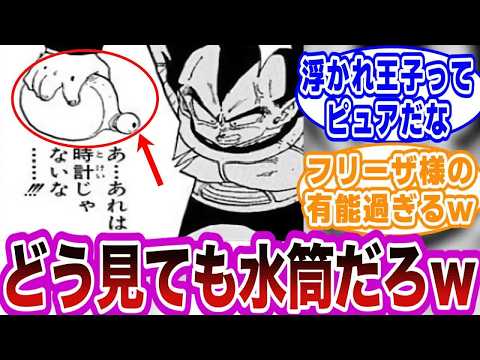
During Vegeta’s arrival on Earth in Dragon Ball, the Saiyan prince encounters a wristwatch and dismisses it with the statement, “That’s not a watch.” Rather than admitting unfamiliarity with Earth technology, Vegeta reinterprets the object entirely, preserving his pride through denial. This moment has since become a legendary internet meme, spawning countless references across anime communities and fan discussions.
Why It Matters
This single line encapsulates a fundamental truth about character development: believable characters are defined not by perfection, but by the contradictions they embody. Vegeta’s refusal to acknowledge his ignorance while simultaneously revealing it demonstrates a psychological defense mechanism that feels authentically human. The phrase has become iconic because it perfectly captures the tension between pride and vulnerability—a dynamic that resonates universally with audiences. Understanding why this moment resonated reveals deeper principles about what makes characters compelling in storytelling.
Background
Vegeta’s character arc in Dragon Ball represents one of anime’s most significant transformations. Introduced as an irredeemable villain—the ruthless Saiyan prince with no capacity for growth—Vegeta gradually reveals layers of complexity as the narrative progresses. His initial contempt for Earth and its inhabitants stems from his position as a cosmic emperor accustomed to dominance. When confronted with unfamiliar technology, Vegeta cannot simply admit ignorance; doing so would contradict his self-image as a superior being. Instead, he employs psychological defense mechanisms, reinterpreting reality to maintain his sense of superiority. This scene occurs during his early days on Earth, before his gradual integration into the cast and his eventual character development into a more nuanced, sympathetic figure.
Key Points
- Vegeta’s “That’s not a watch” represents a pivotal moment in his character development, marking the beginning of his transformation from pure villain to complex protagonist
- The statement functions as a psychological defense mechanism—a way to preserve pride while inadvertently revealing ignorance and vulnerability
- Creator Akira Toriyama deliberately employed character contradictions to create believable, relatable figures, with this scene exemplifying that philosophy
- The phrase became a meme because it perfectly encapsulates the universal human tendency to rationalize away uncomfortable truths rather than confront them directly
- Internet culture gravitates toward moments of “human failure” in otherwise powerful characters, making this scene ideal meme material
- The line demonstrates that character depth emerges not from perfection, but from the gap between self-perception and reality, and how characters respond to that gap
Timeline
- Original Scene: Vegeta encounters Earth technology upon arrival, dismisses the wristwatch with his iconic line
- Narrative Function: Early indicator of Vegeta’s psychological complexity and beginning of his character arc
- Meme Emergence: Approximately 10 years ago, the phrase began circulating on 2channel and other Japanese forums
- Global Recognition: The meme spread across Twitter, YouTube, and international anime communities, becoming a standard reference point in Dragon Ball discussions
- Ongoing Legacy: Continues to be referenced in character analysis discussions and anime psychology explorations
Perspectives
Fan Appreciation: Across Twitter, YouTube, and Reddit, the majority of fan responses celebrate the line as a perfect encapsulation of Vegeta’s pride and his inability to admit weakness. Fans recognize it as both comedic and psychologically astute, appreciating how it reveals character through action rather than exposition.
Critical Interpretation: Character analysts view the moment as exemplifying creator Akira Toriyama’s sophisticated understanding of human psychology. The scene demonstrates that contradictions—the gap between how characters see themselves and how they actually behave—create believability and emotional resonance. This principle parallels psychological concepts like cognitive dissonance and defense mechanisms.
Comparative Analysis: Similar character moments appear in other major anime. Eren Yeager from Attack on Titan exhibits comparable psychology, unable to accept his own powerlessness and instead reinterpreting it as world injustice. However, where Attack on Titan treats this as tragedy, Dragon Ball presents it with comedic timing, creating a different emotional impact. Roy Mustang from Fullmetal Alchemist similarly maintains pride while revealing vulnerability, insisting he’s fine despite obvious suffering.
Skeptical Viewpoint: Some viewers find the scene unnatural or struggle to understand Vegeta’s motivation, questioning why the character would make such an obviously false statement. However, this very confusion underscores the character’s complexity—truly comprehensible characters often feel less human than those whose contradictions create interpretive difficulty.
Insights
The enduring power of Vegeta’s “That’s not a watch” reveals fundamental truths about character-driven storytelling. First, character believability stems not from consistency or perfection, but from the presence of contradictions and how characters navigate them. Vegeta knows the object is a watch; his denial is not stupidity but psychological self-protection. This mirrors universal human behavior—the tendency to rationalize rather than confront uncomfortable truths.
Second, the scene demonstrates why internet culture gravitates toward such moments. Modern digital communities celebrate “human failure” in otherwise powerful figures—the gap between aspiration and reality, between self-image and actual behavior. This is why the phrase became a meme: it perfectly captures a relatable psychological truth in a single, quotable moment.
Third, the line functions as a turning point in Vegeta’s arc. While not explicitly transformative, it marks the beginning of his journey from irredeemable villain to complex character capable of growth. His inability to simply accept Earth’s technology foreshadows his eventual, grudging adaptation to Earth life. The scene is less about the watch and more about Vegeta’s first confrontation with a reality that doesn’t conform to his worldview.
Finally, this moment illustrates why Dragon Ball endures as a cultural touchstone. Beyond spectacular action sequences and grand narratives, the series succeeds because its characters feel authentically human—flawed, contradictory, and struggling with the gap between who they believe themselves to be and who they actually are. Vegeta’s journey from cosmic emperor to reluctant Earth resident, beginning with his refusal to acknowledge a simple wristwatch, encapsulates this principle perfectly. The phrase has become legendary not because it’s funny, but because it’s true—true to human nature, true to character psychology, and true to what makes storytelling resonate across generations.