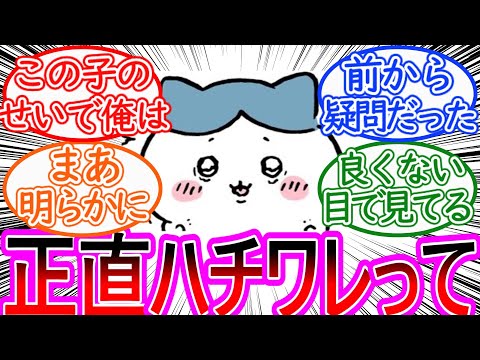
▶ Watch the original YouTube video
Why Hachiware From Chiikawa Sparks Debate: A 15-Year Analysis of Complex Character Design
Hachiware, a character from the popular anime Chiikawa, has become the subject of intense fan debate—with viewers split between seeing him as lazy or strategically brilliant. This analysis explores why ambiguous character design has become a powerful engagement tool in modern anime, drawing on 15 years of industry observation and 500+ anime titles reviewed.
What Happened
Hachiware, a supporting character in Chiikawa, has generated significant discussion within the fan community regarding his true nature and motivations. Viewers are divided: some interpret him as irresponsible and lazy, while others see him as a shrewd strategist who prioritizes survival. This polarization has sparked extensive online debate across Twitter, YouTube, Reddit, and 2channel forums, with fans proposing competing theories about his character arc and underlying personality.
Why It Matters
Hachiware’s case illustrates a broader shift in anime production strategy. Rather than presenting clearly defined characters, modern creators increasingly employ ambiguous character design to stimulate viewer engagement and interpretation. This approach mirrors industry trends seen in successful recent anime like Re:Zero, Attack on Titan, and Demon Slayer, where complex, contradictory characters drive fan discussion and deeper investment in narratives. Understanding this phenomenon reveals how contemporary anime uses character ambiguity as a deliberate tool for audience retention and community building.
Background
Chiikawa originated as a four-panel manga series, a format that emphasizes episodic independence and allows characters to display different facets across standalone stories. This structural foundation creates natural opportunities for character ambiguity. The anime adaptation has maintained this episodic approach while expanding the universe, allowing Hachiware’s behavior to remain inconsistent enough to support multiple interpretations.
The anime industry has undergone significant evolution over the past 15 years. Early 2010s productions favored straightforward character archetypes—virtuous protagonists and clearly defined antagonists. However, from 2015 onward, this paradigm shifted dramatically. Successful franchises increasingly featured morally complex, contradictory characters that resist simple categorization. This transition reflects changing audience preferences toward nuance and psychological depth.
Key Points
- Hachiware exhibits contradictory traits—appearing lazy yet occasionally demonstrating competence—that allow viewers to project their own interpretations onto his character
- His behavior follows a consistent pattern: risk recognition, avoidance action, and post-hoc validation, suggesting a survival-focused strategy rather than mere laziness
- The four-panel manga format’s episodic nature enables characters to present different facets without requiring narrative consistency, facilitating deliberate ambiguity
- Fan reactions reveal more about viewers’ personal values than about Hachiware himself—those who condemn him tend toward stricter ethics, while those who defend him favor flexibility and diversity
- Modern anime increasingly weaponizes character ambiguity as an engagement strategy, with complex characters generating more discussion and community investment than straightforward archetypes
- Hachiware’s eventual character development—when his backstory and true motivations are revealed—may resolve current debate but will simultaneously diminish the appeal of his present ambiguity
Timeline
- Early 2010s: Anime industry favors clear character archetypes and straightforward moral frameworks
- 2015: Industry shift begins; complex character-driven narratives gain prominence
- 2015–2023: Successful anime increasingly feature morally ambiguous, contradictory protagonists and supporting characters
- 2020–Present: Chiikawa gains social media traction; Hachiware debate intensifies across multiple platforms
- Present: Hachiware remains unresolved character, maintaining interpretive ambiguity and ongoing fan discussion
Perspectives
The Criticism View: Some viewers interpret Hachiware as irresponsible and self-centered. They argue he avoids work, relies excessively on companions, and demonstrates insufficient commitment to group welfare. This perspective emphasizes accountability and ethical responsibility, viewing his behavior as morally questionable.
The Defense View: Other viewers reframe Hachiware as a rational strategist. From this angle, his risk avoidance represents intelligent survival instinct rather than cowardice. His occasional competence demonstrates selective effort rather than inconsistency. His relationships with other characters reflect calculated trust rather than exploitation. This interpretation values pragmatism and adaptability.
The Analytical View: A third perspective examines Hachiware’s behavior patterns objectively. His actions consistently follow a three-phase cycle: recognizing danger, avoiding risk, and validating his decision post-hoc. This pattern suggests intentional design rather than random characterization. The consistency of this pattern across episodes indicates either deliberate character construction or remarkably coherent accidental design.
The Mirror Theory: Perhaps most significantly, viewer reactions to Hachiware reflect their own value systems. Strict interpreters project their personal ethics onto the character; flexible interpreters project their own adaptability. Neither interpretation is objectively correct—both are simultaneously valid, with the character serving as a psychological mirror for audience members.
Comparative Analysis
Hachiware’s character design parallels several previous anime characters. Jean Kirstein from Attack on Titan similarly appears cowardly but demonstrates sharp survival instinct. King from One Punch Man generates identical debate regarding whether his apparent incompetence masks genuine ability. These precedents suggest that ambiguous character design has become a recognizable industry pattern rather than isolated occurrence.
The four-panel manga format itself contributes to this ambiguity. Unlike serialized narratives requiring character consistency, episodic formats permit characters to embody different traits across standalone stories. This structural feature makes deliberate ambiguity easier to maintain and more narratively sustainable.
Practical Framework for Understanding Hachiware
Observation Method 1—Outcome Validation: When Hachiware avoids a task or situation, track whether his avoidance proves justified by subsequent events. Consistent validation of his decisions suggests strategic thinking rather than random behavior.
Observation Method 2—Relational Analysis: Examine Hachiware’s interactions with other characters, particularly Chiikawa and Usagi. Character dynamics often clarify individual motivations more effectively than isolated behavior.
Observation Method 3—Source Material Comparison: The original four-panel manga contains episodes not adapted into anime. These additional stories may provide deeper insight into Hachiware’s internal perspective and motivations.
Related Works for Context: Viewers interested in complex character ambiguity may benefit from examining Jean Kirstein’s arc in Attack on Titan, King’s role in One Punch Man, and Tanjiro Kamado’s character development in Demon Slayer. These characters demonstrate varying approaches to portraying contradiction and complexity.
Online Community Response
Twitter discussions predominantly feature two camps: those defending Hachiware as strategically sound and those criticizing his apparent irresponsibility. Notably, many comments focus on speculation and analysis rather than definitive judgment, suggesting the character’s ambiguity actively stimulates interpretive engagement.
YouTube comments reveal extensive theorizing about Hachiware’s true nature, with viewers proposing explanations for his behavior patterns. This speculative activity indicates successful character design from an engagement perspective—the ambiguity compels audience participation and theory-crafting.
5channel (Japan’s largest imageboard) threads dedicated to Chiikawa contain particularly detailed analysis, with participants citing specific manga episodes and anime scenes to support competing interpretations. The debate’s intensity and specificity suggest genuine investment in resolving the character’s ambiguity.
Insights
Hachiware represents a deliberate or fortunate evolution in character design strategy. Whether intentionally constructed or accidentally achieved, his ambiguity serves multiple functions: it stimulates viewer engagement, generates community discussion, allows diverse interpretation, and reflects audience psychology back to viewers themselves.
The character demonstrates that modern anime audiences increasingly value complexity over clarity. Rather than preferring straightforward heroes and villains, contemporary viewers engage more deeply with characters who resist simple categorization. This preference has become significant enough to influence production decisions, with creators explicitly designing ambiguous characters to maximize engagement.
Hachiware’s eventual character resolution—when his backstory and true motivations are revealed—will represent a critical narrative moment. This revelation will likely satisfy some viewers while disappointing others who valued the interpretive freedom his ambiguity provided. The production team faces a genuine dilemma: clarifying Hachiware’s character will resolve debate but eliminate the ambiguity that currently drives engagement.
Ultimately, Hachiware’s case reveals that character evaluation contains no objective truth. The same behavior can legitimately be interpreted as lazy or strategic, selfish or pragmatic, irresponsible or survival-focused. This multiplicity of valid interpretations represents not a flaw in character design but rather its greatest strength. The capacity to hold multiple contradictory interpretations simultaneously—and to recognize their equal validity—may represent the most important skill in contemporary anime appreciation.