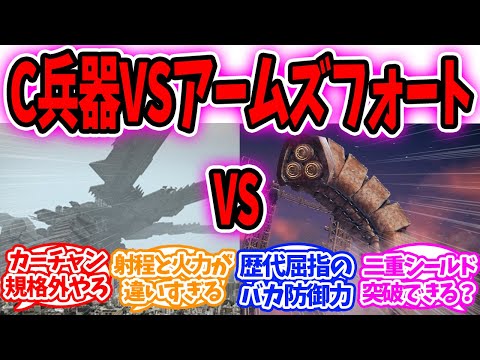
▶ Watch the original YouTube video
Armored Core 6 C-Weapons vs. Arms Fort: Why FromSoftware’s Design Philosophy Divides Players
Armored Core 6 players have criticized C-weapons as underpowered against the Arms Fort boss, sparking debate about game balance. A veteran FromSoftware analyst argues the disparity reflects intentional design philosophy rather than a balance failure, drawing parallels to similar controversies in Dark Souls and Elden Ring.
What Happened
In Armored Core 6, players have discovered that C-weapons deal significantly lower damage to the Arms Fort boss compared to A-weapons. While A-weapons can defeat the boss in approximately 30 seconds, C-weapons require roughly 2 minutes and 30 seconds—a five-fold difference in damage output. This disparity has sparked widespread criticism online, with players labeling C-weapons as “trash tier” and questioning the game’s balance design.
Why It Matters
The C-weapon controversy reflects a broader tension in modern gaming culture. As information about optimal builds spreads rapidly through streaming platforms and social media, players increasingly converge on single “meta” solutions, dismissing alternative options as inferior. This dynamic raises questions about how developers balance player choice with mechanical diversity, and whether FromSoftware’s historical design philosophy—which embraces meaningful differences between options—remains viable in an era of instant information sharing.
Background
FromSoftware has a documented history of intentionally creating performance disparities between equipment options. Producer Hidetaka Miyazaki has stated in interviews that “game balance means all choices have meaning, not that all choices are equal.” This philosophy shaped Dark Souls 3, where small shields were initially criticized as weak but proved tactically superior for skilled players. Similar debates emerged around magic in Elden Ring, which some players considered overpowered until the community recognized the design intent behind different playstyles.
Armored Core 6 appears to follow this same design approach, where C-weapons are not necessarily weak but rather designed to encourage different tactical approaches than high-damage alternatives.
Key Points
- C-weapons require approximately 150 shots to defeat Arms Fort, compared to 30 shots for A-weapons
- Players report C-weapons are ineffective in PvP environments where damage output directly determines competitive viability
- Online communities have labeled C-weapons as “trash” or “unusable,” despite the fact that they can technically complete missions
- FromSoftware’s historical design philosophy prioritizes meaningful choice over mechanical equality across all options
- Rapid information dissemination through streaming platforms may prevent players from discovering alternative tactical applications for C-weapons
- The Arms Fort boss HP appears calibrated around A-weapon performance rather than representing a universal difficulty standard
Design Philosophy Comparison
Examining FromSoftware’s previous titles reveals a consistent pattern. In Dark Souls 3, large swords were perceived as dominant while small shields faced criticism. However, small shield users who invested time in mastering the mechanics discovered superior tactical advantages. The same pattern emerged in Elden Ring, where magic was initially condemned as overpowered until players recognized the difficulty curve and resource management requirements of magic-focused builds.
AC6’s C-weapon situation mirrors these precedents. The weapons are not objectively broken—they function as intended—but they require different tactical approaches than players accustomed to high-damage weapons expect.
The Information Age Problem
A critical factor distinguishing AC6 from earlier FromSoftware titles is the speed of information dissemination. During the Dark Souls era (2010s), players had time to experiment and discover unconventional strategies before optimal builds became common knowledge. Today, within days of AC6’s release, the community had identified “meta” builds, relegating all other options to perceived irrelevance.
This represents a shift in gaming culture rather than a failure by developers. Players no longer have the luxury of extended trial-and-error periods; instead, they face immediate social pressure to adopt established optimal strategies.
PvP Environment Considerations
In player-versus-player combat, C-weapons demonstrably underperform compared to high-damage alternatives. However, this reflects a fundamental truth about competitive environments: when all players operate under identical conditions, raw damage output becomes the primary determining factor. This does not necessarily indicate poor balance design; rather, it highlights how different game modes (PvE vs. PvP) create different balance requirements.
Notably, some players have successfully used C-weapons in PvP, suggesting the weapons remain viable for skilled operators willing to adopt unconventional tactics.
Practical Guidance for C-Weapon Users
For players interested in using C-weapons effectively, several tactical adjustments prove valuable. First, abandon the expectation of defeating enemies quickly; instead, adopt a “time-efficient elimination” strategy that leverages C-weapons’ typically superior rate-of-fire. Second, prioritize armor and mobility balance over raw damage output, as C-weapon users must actively avoid damage rather than absorb it. Third, study Armored Core 5, where C-weapons occupy a more central role in viable strategies, providing insight into the weapon category’s intended applications.
Perspectives
Player Criticism: Online communities argue that C-weapons are objectively underpowered and represent a balance failure. The five-fold damage disparity against Arms Fort is cited as evidence that C-weapons are not viable alternatives but rather inferior options that no rational player would select.
Design Intent Analysis: Examining FromSoftware’s historical patterns and documented design philosophy suggests the disparity reflects intentional differentiation rather than oversight. The fact that C-weapons can complete all content—albeit more slowly—indicates the weapons remain viable, not broken.
Cultural Context: The controversy reflects broader gaming culture shifts. Rapid information sharing has eliminated the discovery phase that previously allowed players to find value in unconventional strategies before meta consensus formed.
Insights
The AC6 C-weapon debate transcends simple balance discussion; it represents a fundamental tension between developer intent and player culture. FromSoftware has consistently designed games where equipment choices carry meaningful trade-offs rather than universal superiority hierarchies. However, modern gaming’s information ecosystem prevents players from discovering these trade-offs independently.
Future FromSoftware patches will reveal their response to this dynamic. If they increase C-weapon damage, it signals a philosophical shift toward mechanical equality. If they add tactical advantages to C-weapons without increasing raw damage, it indicates commitment to their established design philosophy while acknowledging the information-age context.
Ultimately, the C-weapon controversy illuminates how gaming culture has evolved. The question is no longer whether developers have balanced their games correctly, but whether modern information distribution allows players to discover and appreciate the balance designers intended.