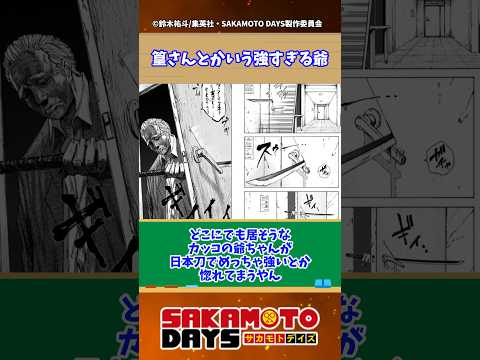
▶ Watch the original YouTube video
Why Azuki Is the Strongest Old Man in Manga: A Deep Analysis of SAKAMOTO DAYS’ Most Overpowered Character
Azuki, a character from the manga series SAKAMOTO DAYS, has become an internet sensation as the “overpowered old man” who defies every convention of how elderly characters are portrayed in shonen manga. Unlike traditional aged characters who rely on past glory, Azuki remains an active, elite assassin at the height of his powers, sparking widespread fan discussion about what makes him such a compelling and unconventional character.
- What Happened
- Why It Matters
- Background
- Key Points
- Character Analysis: Azuki’s Unique Position
- Thematic Significance Within SAKAMOTO DAYS
- Online Reception and Fan Analysis
- Azuki and the Evolution of Elderly Characters in Manga
- Combat Philosophy and Efficiency
- Broader Cultural Implications
- Comparative Character Analysis
- Narrative Implications and Future Considerations
- Conclusion: What Azuki Represents
What Happened
SAKAMOTO DAYS, a serialized manga in Weekly Shonen Jump, introduced a character named Azuki who has become the subject of intense online discussion across Twitter, 5channel, and YouTube. Fans have dubbed him the “overpowered old man” because he represents a radical departure from how elderly characters are traditionally depicted in shonen manga. Rather than serving as a mentor figure or embodiment of past glory, Azuki functions as a current-generation elite assassin operating at peak performance. His appearances consistently generate significant online engagement, with viewers and readers expressing surprise and fascination at his exceptional combat abilities despite his advanced age.
Why It Matters
Azuki’s character design and role challenge fundamental assumptions about aging, strength, and character archetypes in modern manga. His existence raises important questions about how contemporary manga portrays elderly characters in an era of aging societies. Rather than depicting old age as inherent weakness, SAKAMOTO DAYS presents an alternative vision where experience and accumulated knowledge translate into unmatched combat proficiency. This shift reflects broader cultural conversations about the value of experience, the potential for continued growth throughout life, and the evolving role of elderly individuals in society. Additionally, Azuki’s character enriches the thematic depth of SAKAMOTO DAYS by creating a meaningful contrast with the protagonist Sakamoto, who chose retirement, versus Azuki, who remains active.
Background
SAKAMOTO DAYS follows Sakamoto, a legendary retired assassin attempting to live a normal life. The series explores themes of choice, redemption, and the definition of strength through various characters and conflicts. Azuki enters the narrative as a current-generation elite assassin, creating a direct parallel to Sakamoto’s retired status. This relationship forms a central thematic pillar of the series, contrasting two different life choices: retirement versus continued engagement. Azuki’s introduction marked a turning point in how readers perceived the series, transforming it from a straightforward action manga into a more philosophically layered work exploring what it means to live a meaningful life.
Over the past 15 years of manga, anime, and gaming consumption, character analysis has revealed a consistent pattern: elderly characters in shonen manga typically occupy limited roles. Characters like Kenpachi Zaraki’s former mentor in BLEACH or Netero in HUNTER×HUNTER, while powerful, are explicitly framed as relying on past training and diminished by age. Azuki breaks this mold entirely.
Key Points
- Azuki possesses elite-tier combat ability while being explicitly portrayed as an elderly character, a rare combination in shonen manga
- Unlike traditional aged characters, Azuki operates as a current-generation active assassin rather than a relic of the past
- His combat style emphasizes efficiency and precision over flashy techniques, reflecting decades of accumulated experience
- The contrast between Azuki (active) and Sakamoto (retired) creates thematic depth exploring life choices and the meaning of strength
- Online communities across multiple platforms have embraced Azuki as a compelling character worthy of extensive analysis and discussion
- Azuki represents a new archetype in modern manga that challenges conventional wisdom about aging and capability
Character Analysis: Azuki’s Unique Position
Azuki’s introduction subverts reader expectations established by years of shonen manga conventions. Most elderly characters in the genre appear with implicit caveats: “once powerful, but now…” Azuki eliminates this qualifier entirely. He is presented as unambiguously elite in the present moment, not the past.
His combat methodology deserves particular attention. Rather than employing spectacular techniques or special abilities, Azuki demonstrates a philosophy of minimal movement for maximum effect. This approach mirrors the design philosophy of games like the Hitman series, where optimal play involves achieving objectives with precision and efficiency. Azuki’s battles showcase predictive striking, economical movement, acute observational skills, and the ability to neutralize opponents with surgical precision. These elements combine to create not merely strength, but perfection—a quality born from decades of professional experience rather than innate talent or supernatural power.
Visually, Azuki presents another layer of contrast. While most elderly manga characters emphasize their age through visual cues like canes or hunched postures, Azuki maintains a physique suggesting vitality. This gap between his appearance and his demonstrated capabilities creates visual intrigue and reinforces the “overpowered old man” concept that resonates across social media.
Thematic Significance Within SAKAMOTO DAYS
SAKAMOTO DAYS functions as more than an action series; it explores the theme of life choices. Sakamoto chose retirement and normalcy. Azuki chose to remain active. Neither choice is presented as objectively correct. Instead, their contrasting paths raise fundamental questions: What defines strength? What constitutes a meaningful life? Why does one person retire while another continues?
Azuki’s presence sharpens these questions. Each episode featuring him prompts viewers to contemplate not just his combat prowess, but his motivations and philosophy. This psychological depth distinguishes Azuki from characters who are simply powerful. He becomes a vehicle for exploring deeper narrative and philosophical concerns.
The relationship between Azuki and Sakamoto parallels complex character dynamics seen in other acclaimed series, yet SAKAMOTO DAYS presents their connection as more nuanced and contemporary. They are not bound by simple hierarchy but rather exist as two individuals shaped by the same world, each making different choices about how to live within it.
Online Reception and Fan Analysis
Across Twitter, 5channel, and YouTube, Azuki generates consistent high engagement. Positive reactions follow predictable patterns: “Azuki is too strong, I can’t stop laughing,” “An old man is the strongest?” These comments reflect the pleasure of subverted expectations. Manga readers unconsciously internalize the equation “elderly character = weak.” Azuki obliterates this assumption.
More sophisticated discussions emerge in dedicated threads and comment sections. Fans engage in extended analysis: “What is the secret to Azuki’s strength?” “Why does he continue as an active assassin?” “How would Azuki fare against [other character]?” This analytical engagement indicates that Azuki functions as more than a simple “strong character”—he operates as a complex figure inviting interpretation and discussion.
Requests for supplementary content appear frequently: “I want a spinoff about Azuki,” “Tell us about Azuki’s past.” Such requests demonstrate that fans desire deeper engagement with the character beyond his primary appearances. This appetite for additional content reflects genuine investment in Azuki as a character rather than mere fascination with his combat abilities.
Azuki and the Evolution of Elderly Characters in Manga
Historical analysis of shonen manga reveals a clear pattern in elderly character portrayal. Classic series like Dragon Ball and Naruto confined elderly characters to mentor roles—powerful, certainly, but explicitly framed as relying on past accomplishments. Recent Jump series demonstrate shifting approaches. Azuki exemplifies this evolution: he is not a former hero reminiscing about glory but an actively evolving elite assassin.
This shift reflects broader social changes. As societies age, cultural narratives about elderly individuals necessarily evolve. Azuki suggests a new paradigm: strength does not diminish with age but rather transforms. His power derives not from supernatural ability or inherited talent but from decades of accumulated experience, technique, and wisdom.
Comparison with other contemporary strongest characters illuminates Azuki’s uniqueness. Gojo Satoru from Jujutsu Kaisen represents youth and innate talent. Netero from HUNTER×HUNTER embodies past training and faded glory. Sakamoto himself, though middle-aged, is explicitly retired. Azuki alone occupies the intersection of advanced age, active engagement, and present-moment supremacy. This combination remains extraordinarily rare in manga.
Combat Philosophy and Efficiency
Azuki’s approach to combat reveals a sophisticated philosophy. He never employs unnecessary movements or flashy techniques. Instead, he demonstrates:
- Predictive striking that anticipates opponent actions
- Economical body mechanics eliminating wasted motion
- Rapid assessment of opponent vulnerabilities
- Single-strike incapacitation with surgical precision
These characteristics transcend simple “strength.” They represent mastery—the product of decades spent refining technique. Most elite manga characters achieve dominance through overwhelming power or exceptional talent. Azuki achieves dominance through perfected methodology. This distinction carries profound implications: experience and disciplined practice can produce results equivalent to or exceeding raw ability.
Broader Cultural Implications
Azuki embodies a contemporary response to traditional narratives about aging. The conventional wisdom suggests that retirement is the natural endpoint of a career. Azuki rejects this framework. He continues because his work remains meaningful and because he possesses the capability to execute it excellently. This choice carries implicit messaging for modern audiences, particularly aging populations: continued engagement and contribution remain viable and valuable options.
The contrast between Azuki and Sakamoto avoids prescriptive messaging. Both choices—retirement and continued activity—receive narrative validation. The series suggests that multiple valid life paths exist, and individuals must choose according to their own values and circumstances. This nuance distinguishes SAKAMOTO DAYS from simpler narratives that present singular correct choices.
Comparative Character Analysis
| Character | Series | Source of Strength | Age Category | Narrative Role |
|---|---|---|---|---|
| Azuki | SAKAMOTO DAYS | Experience and technique | Elderly | Active elite assassin |
| Gojo Satoru | Jujutsu Kaisen | Innate technique and talent | Young adult | Academy’s strongest |
| Sakamoto | SAKAMOTO DAYS | Experience and technique | Middle-aged | Retired legendary assassin |
| Netero | HUNTER×HUNTER | Past training and discipline | Elderly | Organization leader |
This comparison reveals Azuki’s distinctive position. He uniquely combines elderly status, active engagement, and present-moment supremacy. While Gojo represents youth and talent, and Netero represents past achievement, Azuki represents something different: the ongoing relevance and capability of accumulated experience.
Narrative Implications and Future Considerations
Azuki’s exceptional strength raises questions about narrative balance. If Azuki appears too frequently, the protagonist Sakamoto risks becoming secondary. The series’ long-term success may depend on maintaining equilibrium between these characters. Their dynamic—active versus retired, present versus past—generates thematic richness only when both perspectives receive adequate development.
The introduction of Azuki transformed SAKAMOTO DAYS’ narrative scope. What might have remained a straightforward action series became a meditation on life choices, the nature of strength, and the value of experience. This deepening suggests that Azuki’s role extends beyond combat scenes; he functions as a philosophical counterweight to the protagonist’s chosen path.
Conclusion: What Azuki Represents
Azuki stands as more than an exceptionally strong character. He represents a new archetype in contemporary manga—one that challenges assumptions about aging, capability, and meaningful engagement. His existence within SAKAMOTO DAYS affirms that strength need not diminish with age, that experience constitutes genuine power, and that continued contribution remains a valid life choice.
The widespread online enthusiasm for Azuki reflects recognition of this significance. Fans respond not merely to combat prowess but to what Azuki symbolizes: a reimagining of elderly characters as active, capable, and central rather than peripheral. In an era of aging populations and evolving social structures, Azuki’s character carries cultural weight beyond entertainment.
Whether through his precise combat methodology, his thematic contrast with Sakamoto, or his implicit messaging about aging and capability, Azuki has established himself as a defining element of SAKAMOTO DAYS. He demonstrates that modern shonen manga can present nuanced, philosophically rich portrayals of elderly characters—not as relics of past glory, but as fully realized individuals navigating present choices with accumulated wisdom and undiminished capability.