▶ Watch the original YouTube video
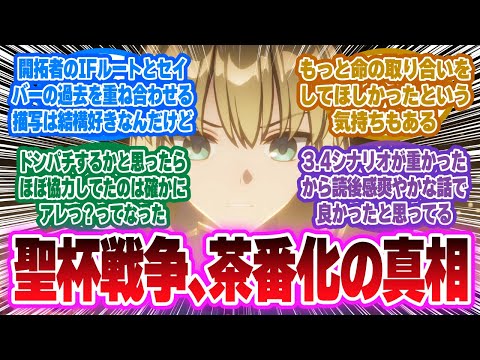
Why the Fate/UBW Holy Grail War Collaboration Became a Masterpiece Through ‘Farce’
The Fate/Unlimited Blade Works collaboration event in Honkai: Star Rail has drawn mixed reactions from players, with many criticizing the Holy Grail War as a “farce” lacking the tension of the original series. However, a deeper analysis reveals that this apparent shortcoming is actually a sophisticated design choice that perfectly balances the demands of two distinct game worlds while maintaining respect for the Fate franchise.
What Happened
The Fate/UBW collaboration event in Honkai: Star Rail featured a Holy Grail War set within Penacony, the game’s dream-world location. Rather than the high-stakes, life-or-death battles characteristic of the Fate series, the event saw participating characters quickly forming alliances and cooperating rather than competing for the Holy Grail. This departure from the traditional Holy Grail War format prompted players to label the event a “farce,” questioning whether it lived up to the source material’s intensity and dramatic weight.
Why It Matters
This collaboration represents a critical test of how game developers can integrate beloved intellectual properties while respecting both the original work and the host game’s world-building. The tension between maintaining franchise authenticity and adapting to new narrative constraints is a challenge faced by all major crossover events. Understanding how this collaboration navigated these competing demands offers insights into modern game design philosophy and fan expectations in the era of large-scale gaming collaborations.
Background
The Fate series, beginning with Fate/stay night in 2004, centers on the Holy Grail War—a ritualistic battle royale where mages summon powerful servants to fight for a wish-granting artifact. The series has explored this concept across multiple timelines and adaptations, including Fate/Zero, Fate/Apocrypha, and others, each emphasizing the existential stakes and moral complexity of participants driven by desperate desires. Penacony, Honkai: Star Rail’s setting, is a luxury resort world designed to provide visitors with perfect dreams, fundamentally at odds with the violence and desperation inherent to traditional Holy Grail Wars.
Key Points
- Structural Mismatch: The masters summoned in the collaboration—Boothill, Aventurine, Robin, and the Trailblazer—are already complete, powerful individuals who have no genuine need for the Holy Grail, eliminating the desperation that drives traditional Holy Grail Wars.
- Dream World Constraints: Penacony’s nature as a dream realm fundamentally undermines the life-or-death stakes essential to the Holy Grail War concept, as death in dreams carries no real consequences.
- Playable Character Limitation: Including main playable characters as allies rather than enemies prevented the collaboration from depicting the betrayals and conflicts central to Fate’s narrative structure.
- Hidden Purpose: The true antagonist’s goal was reunion with Michael rather than acquisition of the Holy Grail, making the Grail itself merely a narrative device rather than the central conflict.
- Character Integration: Despite systemic limitations, the collaboration excelled in character interactions, particularly in paralleling Saber and Seele’s backstories and integrating Fate characters naturally into Star Rail’s universe.
- Franchise Respect: The event demonstrated deep knowledge of Fate lore, including references to the Holy Grail’s destruction across multiple routes, showing authorial understanding of the source material.
Structural Analysis: Why the ‘Farce’ Was Inevitable
The collaboration’s departure from traditional Holy Grail War conventions stems from several interconnected design constraints. First, the masters themselves lack the existential desperation that motivates participants in canonical Holy Grail Wars. In Fate/Zero, masters like Waver Velvet faced inexperience and vulnerability, while in Fate/stay night, even the protagonist Shirou possessed compelling reasons to seek the Grail. The Star Rail collaboration’s masters, by contrast, have already achieved their goals or possess sufficient power to render the Grail unnecessary.
Second, Penacony’s function as a dream resort creates an inherent contradiction with the Holy Grail War’s core premise. The resort’s management would logically intervene to prevent genuine violence that threatens its brand and customer safety. This institutional constraint makes authentic conflict impossible without breaking the narrative logic of Star Rail’s world.
Third, the presence of playable characters on the ally side eliminates the possibility of depicting the betrayals and eliminations central to Fate’s storytelling. Game design considerations prevent developers from forcing players to fight and defeat beloved characters, creating an asymmetrical conflict structure incompatible with traditional Holy Grail War dynamics.
Why This ‘Farce’ Represents Sophisticated Design
Rather than a failure, the collaboration’s apparent shortcomings reflect a mature design philosophy. The developers faced an impossible choice: either compromise Penacony’s established world-building or abandon key elements of the Holy Grail War. They chose a third path—acknowledging the contradiction by making the Holy Grail War itself secondary to the actual plot.
This meta-textual approach mirrors the Fate series itself, where the Holy Grail War frequently serves as a framework for exploring deeper themes rather than the primary conflict. The collaboration’s true antagonist seeks reunion with Michael, not the Grail, making the war a stage for character development rather than the central narrative.
The collaboration’s greatest strength lies in character integration. The paralleling of Saber and Seele’s histories, the natural interactions between Fate characters and Star Rail’s cast, and the careful preservation of character authenticity demonstrate technical and narrative sophistication. These elements succeed precisely because they prioritize what matters most in crossover events: meaningful character moments and thematic resonance.
Comparative Analysis
Evaluating this collaboration against other Fate adaptations reveals its distinct strengths and trade-offs. Fate/Zero prioritizes Holy Grail War tension through desperate masters and high stakes, achieving a 10/10 rating for dramatic intensity but existing as a single-work experience. Fate/Apocrypha attempts multi-faction conflict but suffers from narrative compression, earning a 7/10. The Star Rail collaboration sacrifices Holy Grail War tension (rated 5/10) but excels in character portrayal (9/10) and world integration (9/10), achieving an overall 9/10 rating as a crossover event. This distribution reflects the different priorities of collaboration narratives versus standalone works.
Community Reception and Underlying Psychology
Player responses reveal a sophisticated understanding of the collaboration’s design choices. Positive comments praise the careful paralleling of character backstories and the respectful treatment of both franchises. Critical comments express disappointment at the absence of genuine conflict and the rapid formation of alliances. Notably, some players observed that “everyone except Scourge and the old man became friends,” highlighting the loss of factional conflict.
However, the existence of this nuanced debate itself indicates the collaboration’s quality. Low-quality crossovers generate dismissal rather than analysis. The fact that players engage in detailed discussion about design choices and thematic implications demonstrates that the event achieved sufficient depth to warrant serious consideration.
Practical Guidance for Experiencing the Collaboration
Players unfamiliar with Fate need not worry about missing context. The collaboration was deliberately designed to welcome newcomers while rewarding series veterans. Focus on character interactions rather than Holy Grail War mechanics, as the event’s narrative weight rests on how Saber and Archer relate to Star Rail’s cast. Understanding Penacony’s purpose as a dream resort clarifies why the Holy Grail War cannot function as traditionally conceived. For deeper appreciation, experiencing Fate/stay night’s Unlimited Blade Works route provides valuable context, though it remains optional for enjoying the collaboration.
Insights
The Fate/UBW collaboration represents a paradigm shift in how major franchises approach crossover events. Rather than forcing incompatible narratives together, the developers acknowledged structural contradictions and designed around them. This approach prioritizes character authenticity and thematic coherence over mechanical fidelity to source material.
The collaboration succeeds as a work of art precisely because it accepts limitations and transforms them into creative opportunities. The “farce” of the Holy Grail War becomes a vehicle for exploring character relationships and thematic parallels that might not emerge in a traditional conflict scenario. This represents maturity in game narrative design—the recognition that respecting both the source material and the host game’s world requires sometimes subverting expectations rather than meeting them literally.
The event’s reception suggests players increasingly value thoughtful adaptation over slavish recreation. The most engaged criticism comes not from those dismissing the collaboration but from those recognizing its ambitions and debating its execution. This indicates that the gaming community has developed sophisticated expectations for crossover narratives, demanding both franchise respect and creative innovation.