▶ Watch the original YouTube video
Why Suletta Killed Someone in Gundam SEED FREEDOM: A 15-Year Fan’s Analysis of Tragedy and Moral Complexity
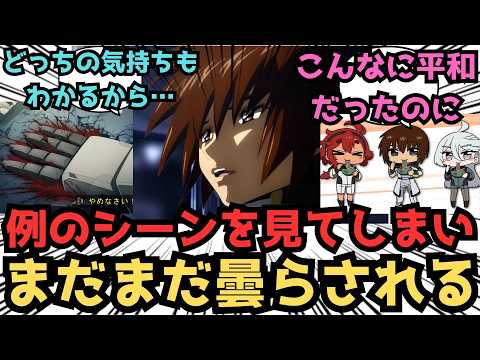
In a shocking crossover moment in Super Robot Wars Y, Suletta Mercury kills a person while piloting the Aerial mobile suit—witnessed by Kira Yamato himself. This scene represents a tragic convergence of rescue training, military necessity, and emotional misunderstanding that leaves all parties morally compromised, despite no one being truly at fault.
What Happened
In Super Robot Wars Y, a crossover featuring characters from Mobile Suit Gundam SEED and Mobile Suit Gundam: The Witch from Mercury, Suletta Mercury makes a critical decision while piloting the Aerial mobile suit. When Miorine faces immediate danger, Suletta eliminates the threat through lethal force—a choice that appears coldly calculated and emotionally detached to observers. Kira Yamato witnesses this act, and Miorine, despite being rescued, reacts with horror and rejection upon learning how she was saved. This moment creates a cascade of psychological damage across all three characters, each responding from their own moral framework.
Why It Matters
This scene encapsulates a fundamental question in modern anime storytelling: what happens when multiple parties act with complete moral justification, yet the outcome remains tragic? The moment demonstrates how context, training, and perspective can create situations where no one is wrong, yet everyone suffers. For long-time Gundam fans, this represents the franchise’s most sophisticated exploration of moral relativism—a theme that has evolved significantly since the original SEED series aired over two decades ago. The scene also highlights how rescue operations and military combat, though superficially similar, operate under fundamentally different ethical frameworks.
Background
Suletta Mercury is the protagonist of Mobile Suit Gundam: The Witch from Mercury, a series that aired in 2022-2023. Unlike typical mobile suit pilots who are trained as soldiers, Suletta received specialized training as a rescue worker. Her mother, Prospera, prioritized protecting Ericht above all else, instilling in Suletta a value system centered on preserving life through swift, decisive action. This background is crucial: Suletta’s instinct is not to destroy enemies as a soldier would, but to eliminate threats as a rescue professional would—with clinical efficiency and emotional compartmentalization.
Kira Yamato, the protagonist of the original Gundam SEED series, has spent his entire arc learning that “good intentions often lead to catastrophic consequences.” He has repeatedly experienced situations where his attempts to save people resulted in unintended tragedy. This trauma has made him perpetually uncertain, what fans call his “cloudiness”—a state of moral doubt that defines his character.
Miorine Rembran, Suletta’s partner, has just survived a terrorist attack. She is psychologically vulnerable and hypersensitive to violence. When she learns that her rescuer killed someone to save her, the cognitive dissonance triggers deep rejection.
Key Points
- Suletta’s action was logically sound rescue protocol: As a trained rescue worker, Suletta prioritized eliminating the immediate threat to Miorine’s life. In time-critical rescue scenarios, hesitation can be fatal. Her decision was professionally correct.
- The soldier-versus-rescuer distinction is critical: A soldier eliminates enemies as part of their duty. A rescuer must achieve objectives with minimal collateral damage. Suletta occupied both roles simultaneously, creating moral ambiguity.
- Kira’s witnessing creates a second tragedy: Kira understands that Suletta’s action was justified, but he also knows from painful experience that justified actions can cause unforeseen harm. His “cloudiness” deepens.
- Miorine’s rejection is psychologically valid: Having just survived violence, Miorine cannot reconcile being saved through lethal force. Her trauma makes her unable to accept the method, even if the outcome was her survival.
- Suletta’s emotional suppression masks internal conflict: Suletta appears unmoved by killing, but this reflects her professional training to maintain composure during rescue operations. She is internally processing the act, but cannot show it without destabilizing Miorine.
- No party is morally culpable, yet all suffer: This is the scene’s defining tragedy—perfect justification across all perspectives, yet complete mutual misunderstanding and emotional damage.
The Moral Framework Collision
The core of this tragedy lies in conflicting definitions of “correctness.” For Suletta, correctness means “preserving the life of the person I’m protecting through the fastest, most certain method available.” For Miorine, correctness means “being saved without additional violence.” For Kira, correctness means “understanding that good intentions often produce bad outcomes.”
Suletta’s training as a rescue worker taught her to compartmentalize emotion. In emergency situations, a rescuer’s visible distress can cause panic in the person being rescued. Therefore, Suletta maintains composure and even brightness in her demeanor after the killing. To Miorine, this appears as callousness—as if Suletta feels nothing about taking a life. In reality, Suletta is deeply affected but cannot show it without undermining the rescue operation.
This gap between internal experience and external presentation creates the tragedy’s core mechanism. Miorine interprets Suletta’s composed exterior as moral indifference, leading her to reject her rescuer. Suletta, unable to express her true emotional state without destabilizing Miorine, cannot defend herself. Kira, observing this dynamic, recognizes it as a repeat of his own painful pattern: good action producing bad consequences.
Kira’s Role: The Witness to Inevitable Tragedy
Kira Yamato’s presence as a witness is not incidental—it is the narrative’s most sophisticated choice. Throughout the SEED franchise, Kira has learned that his best intentions frequently backfire. He attempted to save Stella, only to watch her die in an explosion orchestrated by his enemies. He tried to protect his friends, only to see them killed. This accumulated trauma has made Kira hyperaware of how justified actions can produce unjustified suffering.
When Kira witnesses Suletta’s killing, he immediately understands two things: first, that Suletta’s action was tactically and morally sound; second, that this justified action is about to cause severe psychological damage to Miorine. Kira recognizes the pattern because he has lived it. This recognition deepens his “cloudiness”—his existential uncertainty about whether right action can ever truly be right if it produces suffering.
Miorine’s Perspective: Trauma and Rejection
Miorine’s reaction, while appearing harsh, is psychologically coherent. She has just survived a terrorist attack. Her nervous system is in a heightened state of threat detection. When she learns that her rescuer killed someone, her trauma response activates. The fact that the killing was necessary and justified becomes irrelevant to her emotional processing—her brain registers only that violence was used, and that violence is now associated with her rescuer.
Furthermore, Miorine is characterized as someone with intense convictions and equally intense reactions. She does not process information neutrally; she forms strong interpretations and responds with corresponding intensity. Upon learning of the killing, she interprets Suletta’s composed demeanor as proof that Suletta is morally untroubled by taking life. This interpretation, though incorrect, feels absolutely true to Miorine in her traumatized state.
The tragedy deepens because Miorine’s rejection is not irrational—it is a predictable psychological response to trauma. She is not wrong to feel disturbed. She is only wrong in her interpretation of Suletta’s internal state.
Insights: The Tragedy of Justified Action
This scene represents the apex of modern Gundam storytelling’s central theme: that moral complexity often precludes simple resolution. In earlier anime eras, narratives typically operated on a good-versus-evil binary. Contemporary Gundam works, particularly from the 2020s onward, increasingly explore scenarios where multiple parties hold legitimate moral positions that are fundamentally incompatible.
Suletta’s killing is not a moral failure—it is a professional success that produces moral catastrophe. She saved Miorine’s life through the most efficient means available. By any rescue professional’s standard, her action was correct. Yet this correctness generates suffering for everyone involved.
The scene also illustrates how professional training can create psychological distance from the consequences of one’s actions. Suletta’s rescue training taught her to suppress emotional reaction in order to maintain operational effectiveness. This adaptation, which is psychologically healthy in emergency contexts, becomes pathological when interpreted by trauma-affected observers as moral indifference.
For long-term Gundam fans, this moment represents the franchise’s maturation. The original SEED series explored whether soldiers could maintain their humanity in warfare. The Witch from Mercury explored whether rescue workers could maintain their effectiveness while preserving their emotional integrity. This crossover scene suggests that the answer to both questions is “imperfectly”—and that this imperfection is not a character flaw but an inherent feature of operating under conflicting moral frameworks.
The broader implication is that modern storytelling increasingly recognizes that tragedy often emerges not from moral failure but from moral success—from people doing exactly what their training and values dictate, only to discover that their rightness produces suffering in others. This is perhaps the most mature form of tragedy available to contemporary narrative: not the tragedy of evil, but the tragedy of incompatible goods.
What Comes Next
The critical question for future narrative development is whether Suletta can communicate her internal emotional state to Miorine. If Suletta can articulate that she is deeply affected by the killing, despite her composed exterior, reconciliation becomes possible. If she cannot—if her professional training prevents her from expressing vulnerability—then the tragedy becomes permanent.
Kira’s role in this resolution remains uncertain. As a character defined by his inability to prevent tragedy, Kira may either serve as a mediator who helps both parties understand each other’s perspectives, or he may become another casualty of the scene’s emotional fallout, his “cloudiness” deepening into something more destructive.
Ultimately, this scene asks viewers to sit with moral discomfort. It refuses to provide the satisfaction of clear right and wrong. Instead, it presents a situation where everyone is justified, everyone is harmed, and everyone’s suffering is legitimate. This is perhaps the most honest portrayal of real-world moral complexity that the Gundam franchise has yet achieved.