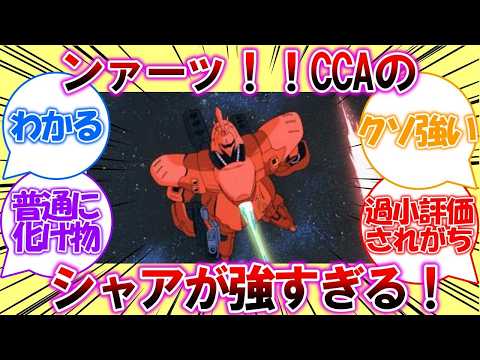
▶ Watch the original YouTube video
Why Char Aznable Is Overpowered in Char’s Counterattack: A 15-Year Gundam Fan Analysis
After 15 years of following the Gundam franchise, fans continue to debate why Char Aznable appears dramatically more powerful in Char’s Counterattack compared to earlier series. This deep dive explores the psychological, technical, and mechanical factors that explain Char’s seemingly overwhelming strength in the film.
What Happened
Char Aznable’s performance in Char’s Counterattack presents a stark contrast to his earlier appearances in Mobile Suit Gundam, Zeta Gundam, and Gundam ZZ. In the film, Char demonstrates unprecedented piloting mastery, executing simultaneous Funnels and beam rifle attacks while engaging Amuro Ray’s Unicorn Gundam. This dramatic power surge has sparked extensive debate within the Gundam community about whether Char received a sudden power boost or whether his true capabilities were finally unleashed.
Why It Matters
Understanding Char’s apparent power escalation reveals fundamental truths about character development in the Gundam franchise. The question of Char’s strength goes beyond simple power scaling—it touches on how psychological state, mechanical compatibility, and piloting technique interact to define a character’s combat effectiveness. For longtime Gundam fans, this analysis clarifies the distinction between a pilot’s inherent ability and their actual battlefield performance, a distinction that director Yoshiyuki Tomino has deliberately maintained throughout the series.
Background
Char Aznable has been Amuro Ray’s primary rival since the original Mobile Suit Gundam. Throughout the series, Char was generally perceived as a highly skilled pilot but ultimately inferior to Amuro. However, director Yoshiyuki Tomino has stated that Char was actually stronger than Amuro from the beginning of the original series. This discrepancy between the director’s intent and fan perception forms the core of the ongoing debate. By Char’s Counterattack, Char pilots the Sazabi, a mobile suit specifically designed to maximize his piloting abilities, and fights under the banner of his “Newtype evolution” ideology, which provides him with psychological certainty absent in his earlier appearances.
Key Points
- Psychological Liberation: Char’s conviction in his “Newtype evolution” ideology removes the internal conflict that previously limited his performance, allowing him to operate at full capacity.
- Machine Compatibility: The Sazabi is purpose-built for Char’s piloting style, unlike the Hizack or Dijeh he previously commanded, enabling him to fully express his technical capabilities.
- Advanced Technique Demonstration: Char’s simultaneous operation of Funnels and beam rifle attacks showcases Newtype ability combined with exceptional cognitive processing and piloting skill.
- Director’s Intent: Tomino’s statements suggest Char was always stronger than Amuro in pure piloting technique, but psychological factors prevented him from demonstrating this superiority until Char’s Counterattack.
- Relative Strength Analysis: Char’s power should be understood not as a sudden increase but as the full manifestation of abilities previously constrained by doubt and internal conflict.
- Comparative Pilot Analysis: Unlike other Gundam protagonists who rely heavily on machine performance, Char’s strength derives primarily from individual piloting technique and Newtype ability.
Char’s Strength: A Structural Analysis
The Illusion of Doubt-Free Strength
The common interpretation that “Char without doubt is strong” oversimplifies his character. Char’s internal conflict is not merely a psychological weakness but a fundamental aspect of his personality structure. In Char’s Counterattack, Char does not eliminate his doubts; rather, he transforms them into ideology. His “Newtype evolution” doctrine provides ideological justification for his ambitions, converting internal conflict into external purpose. This ideological framework enables his full performance, distinguishing him fundamentally from Amuro, who derives certainty from internal conviction rather than external justification.
Funnel Operation and Simultaneous Combat
Char’s ability to operate Funnels while simultaneously engaging in direct combat represents a qualitative leap in demonstrated capability. This dual-operation capacity requires exceptional cognitive processing and represents an advanced application of Newtype ability. Most pilots face a binary choice between Funnel operation and direct piloting; Char transcends this limitation entirely. This capability, more than any other single factor, creates the impression that Char has become “overpowered.”
Machine Performance and Pilot Technique Interaction
The Sazabi is explicitly designed as Char’s personal machine, engineered to maximize his piloting technique. This differs fundamentally from the Hizack or Dijeh, which were general-purpose high-performance units. The Sazabi’s design specifically accommodates Char’s combat style, removing the mechanical constraints he faced in previous conflicts. In Zeta Gundam, Char piloted the Hizack—a capable but not specialized machine—and frequently appeared limited by its capabilities. The Sazabi eliminates these constraints, allowing Char to fully express his technical mastery.
Char Versus Amuro: Relative Strength
The proposition that “in 100 engagements, Char would win 50” reflects a nuanced understanding of their relative capabilities. However, this analysis requires a crucial caveat: both pilots must operate under identical psychological conditions. In Char’s Counterattack, the psychological disparity is significant. Char fights with ideological conviction, while Amuro fights amid fundamental uncertainty about his purpose. This psychological asymmetry may represent the decisive factor in their final confrontation. Pure piloting technique may favor Char, while Newtype ability manifestation may favor Amuro. The film’s outcome suggests that Newtype ability, when fully expressed, supersedes technical mastery.
The Paradox of Frontal: Perfection as Weakness
Frontal, the Char clone introduced in Mobile Suit Gundam Unicorn, is explicitly designed as “Char without the pathetic elements.” Frontal appears to represent a perfected version of Char, yet evidence suggests he is actually weaker. This paradox reveals that Char’s apparent weaknesses—his doubt, conflict, and ambition—are paradoxically sources of his strength. Frontal’s elimination of these elements creates a superficially perfect but fundamentally diminished version of Char. In Gundam’s narrative logic, the strongest characters consistently possess internal conflict that they transcend rather than eliminate. Frontal’s pursuit of perfection ironically renders him weaker than the flawed original.
Comparative Pilot Analysis
| Pilot | Strength Source | Machine Dependency | Psychological Impact |
|---|---|---|---|
| Char (Counterattack) | Advanced piloting technique + Newtype ability | Moderate | Extremely significant |
| Amuro (Counterattack) | Newtype ability + piloting technique | Low | Moderate |
| Heero Yuy (Wing) | Piloting technique + machine performance | High | Low |
| Kira Yamato (SEED) | Newtype-like intuition + machine performance | High | Moderate |
Perspectives
Fan consensus within the Gundam community reflects several coherent interpretations. The dominant view holds that Char experienced not a sudden power increase but rather the liberation of previously constrained abilities. This interpretation aligns with director Tomino’s statements regarding Char’s inherent superiority to Amuro from the series’ beginning. A secondary perspective emphasizes the Sazabi’s role, arguing that machine compatibility represents the decisive factor in Char’s apparent power surge. A third perspective focuses on psychological factors, noting that Char’s ideological conviction in Char’s Counterattack removes the internal hesitation visible in earlier appearances. These perspectives are not mutually exclusive; rather, they represent complementary aspects of a unified explanation.
Additional fan observations note that Char’s survival in Zeta Gundam while piloting the Hizack against superior machines like the Zeta Gundam and Double Zeta already demonstrated exceptional capability. This observation reframes the question: Char was always extraordinarily skilled, but Char’s Counterattack represents the first instance where his full capability receives complete expression.
Insights
Char Aznable’s apparent power escalation in Char’s Counterattack reflects a sophisticated narrative approach to character development. Rather than simply increasing a character’s power level, director Tomino orchestrated the removal of psychological constraints that previously limited Char’s performance. This approach demonstrates that in Gundam’s thematic framework, internal conflict and ideological conviction fundamentally shape combat effectiveness. Char’s strength in Char’s Counterattack represents not enhancement but liberation—the full manifestation of capabilities that existed but remained suppressed by doubt and internal contradiction.
The broader implication extends beyond Char’s individual character arc. The Gundam franchise consistently portrays strength as multifaceted, encompassing piloting technique, machine compatibility, Newtype ability, and psychological state. Characters who achieve dominance do so through the integration of these elements, not through superiority in any single dimension. Char’s Counterattack illustrates this principle through Char’s final confrontation with Amuro: technical mastery and ideological conviction prove insufficient against Amuro’s superior Newtype manifestation, suggesting that spiritual or transcendent ability ultimately supersedes mechanical and technical factors.
For the Gundam franchise moving forward, Char’s character arc establishes a template for complex rival characters—figures whose internal contradictions generate dramatic tension and whose growth involves not the elimination of conflict but its transformation into purposeful action. This complexity distinguishes Gundam’s approach to antagonist characterization from simpler power-scaling narratives, contributing to the franchise’s enduring appeal to audiences seeking thematically sophisticated mecha storytelling.