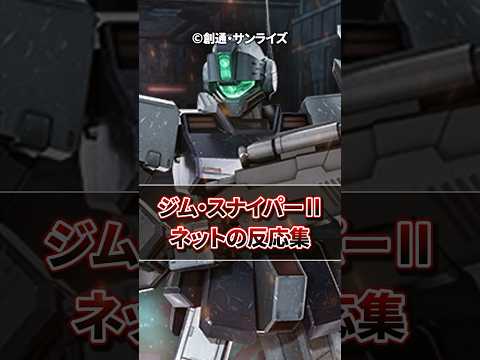
▶ Watch the original YouTube video
Why Gundam Battle Operation 2’s GM Sniper II Is Universally Condemned: A 6-Year Analysis
The GM Sniper II in Gundam Battle Operation 2 has become synonymous with poor unit selection, drawing consistent criticism across social media and gaming communities. After six years and over 2,000 hours of gameplay, one veteran analyst reveals the fundamental design flaws that make this sniper-class mobile suit unviable in the game’s fast-paced combat system.
What Happened
The GM Sniper II, a ranged support unit designed as a sniper-type mobile suit in Gundam Battle Operation 2, has earned a reputation as a “trap unit” that players actively avoid. Across Twitter, 5channel forums, and YouTube comment sections, the unit receives overwhelmingly negative feedback, with players describing it as “unusable,” “a liability to the team,” and “not worth its cost.” The criticism has remained consistent for over six years, suggesting a systemic design problem rather than temporary balance issues.
Why It Matters
The GM Sniper II’s failure illuminates a fundamental contradiction in Gundam Battle Operation 2’s game design: the title markets itself as a comprehensive Gundam experience with diverse unit roles, yet its core mechanics actively penalize sniper-class gameplay. This disconnect between unit identity and functional viability raises broader questions about game balance, role diversity, and the developer’s design philosophy. For players seeking varied playstyles, the unit’s failure represents a missed opportunity for meaningful tactical diversity.
Background
Gundam Battle Operation 2 launched in 2018 as a smartphone-based MOBA-style Gundam game. The GM Sniper II was designed as a long-range support unit, following the sniper archetype established in the original Gundam anime series. However, the game’s map design, combat mechanics, and team structure have evolved in ways that fundamentally undermine sniper-class effectiveness. Unlike other Gundam games such as Gundam Online, where snipers could operate safely from rear positions at extended distances, Battle Operation 2’s maps compress combat into close-quarters engagements where ranged specialists lose their tactical advantage.
The unit’s problems are not recent. Since launch, the GM Sniper II has received minimal balance adjustments despite widespread player dissatisfaction. Meanwhile, other low-cost units received fire power enhancements in 2021 updates, but the GM Sniper II was notably excluded, suggesting the developers may have deemed the sniper role fundamentally incompatible with the game’s design philosophy.
Key Points
- Movement Speed Deficit: The GM Sniper II moves 15-20% slower than comparable cost-tier units, leaving it vulnerable when enemies close distance—a frequent occurrence in Battle Operation 2’s compressed combat ranges.
- Damage Output Mismatch: Despite being a sniper unit, the GM Sniper II lacks the one-shot killing power expected of the archetype. Players report requiring 3-4 shots to eliminate targets, allowing enemies to retaliate before the unit can secure kills.
- Map Design Incompatibility: Battle Operation 2’s maps average 200m × 200m, forcing enemy encounters at 50-150m ranges. This distance is too close for sniper tactics to function effectively, unlike larger maps in games such as Apex Legends (1km × 1km+).
- Limited Viable Positions: Players report only 2-3 effective sniper positions per map, and enemy teams recognize these spots, concentrating forces there and eliminating the unit’s positional advantage.
- Role Ambiguity: In 6v6 team combat, the sniper’s rear-guard positioning creates numerical disadvantage at the front line, forcing rapid team deterioration. The unit lacks a clearly defined tactical purpose within the game’s team structure.
- Scoring System Penalties: Battle Operation 2 distributes kill credit based on damage contribution. Multi-shot kills result in score fragmentation, further reducing the GM Sniper II’s reward potential compared to high-burst-damage units.
Timeline
- 2018: Gundam Battle Operation 2 launches; GM Sniper II functions as intended with map distances supporting sniper gameplay.
- 2018-2020: Gradual map redesigns and enemy placement adjustments compress combat distances, reducing sniper effectiveness.
- 2021: Major balance update grants fire power enhancements to multiple low-cost units; GM Sniper II excluded from adjustments.
- 2021-2024: GM Sniper II remains unchanged; player criticism intensifies and solidifies into community consensus.
- 2024: Unit achieves status as universally recognized “trap unit” with minimal usage in competitive and casual play.
Perspectives
Player Community Perspective: The overwhelming consensus across social platforms is that the GM Sniper II represents poor unit design. Players describe selecting it as a liability to teammates and actively warn new players to avoid it. This feedback is not temporary frustration but a six-year-consistent evaluation, indicating structural rather than temporary problems.
Game Design Perspective: The developers’ decision to exclude the GM Sniper II from balance updates suggests they recognize the sniper role as fundamentally incompatible with Battle Operation 2’s design. Rather than redesigning maps or team mechanics to accommodate snipers, the developers appear to have accepted the unit’s non-viability as a consequence of their core design philosophy prioritizing close-range team combat.
Franchise Perspective: From a Gundam series standpoint, the GM Sniper II’s failure represents a disconnect between source material identity and game mechanics. The unit’s canonical role as a sniper is betrayed by gameplay systems that make sniping ineffective, creating cognitive dissonance for franchise fans expecting authentic role representation.
Comparative Analysis: Other weak units in Battle Operation 2, such as the Zaku Flipper, receive less intense criticism because their roles (close-range melee combat) align with the game’s core mechanics. The GM Sniper II’s unique notoriety stems not from being weak in absolute terms, but from being weak in a way that contradicts its stated purpose. This expectation-reality gap amplifies player frustration beyond what raw performance numbers would suggest.
Insights
The GM Sniper II’s universal condemnation reveals a critical design principle in Gundam Battle Operation 2: the game prioritizes a single playstyle—close-range team combat—at the expense of tactical diversity. While this focus has created a commercially successful title with an established player base, it has simultaneously eliminated meaningful role variety. The sniper archetype, fundamental to tactical shooters and team-based games, cannot function within Battle Operation 2’s compressed maps and team structure.
The developers’ apparent decision to leave the unit unbalanced rather than redesign systems to support it suggests a deliberate choice: maintaining the game’s established identity takes priority over accommodating alternative playstyles. This is a defensible design decision from a business perspective—major system overhauls risk alienating existing players—but it comes at the cost of excluding players who prefer sniper-based gameplay.
The GM Sniper II ultimately serves as a symbol of Battle Operation 2’s design constraints. It is not a failed unit that needs minor adjustments; it is a unit that exposes the game’s fundamental incompatibility with sniper-class mechanics. Fixing it would require redesigning maps, adjusting team composition dynamics, and restructuring scoring systems—changes so extensive they would constitute a different game.
For players determined to use the GM Sniper II, the practical solution is to abandon the sniper identity entirely and reposition the unit as mid-range support fire. This workaround acknowledges the game’s design reality while salvaging minimal utility from an otherwise non-viable unit. However, this compromise solution underscores the core problem: a unit designed as a sniper cannot function as a sniper in its own game.
Practical Recommendations for GM Sniper II Users
Reframe Unit Purpose: Treat the GM Sniper II as mid-range support rather than a true sniper. Position yourself behind the front line to provide supplementary fire rather than attempting rear-guard sniping, which the map design does not support.
Map Selection: The unit performs marginally better on larger maps such as Geofrontier and Port Base. Avoid tight urban maps and indoor environments where close-range combat dominates.
Unit Alternatives: Consider GM Cannon or GM Light Armor as superior alternatives depending on your desired role. These units’ capabilities align more closely with Battle Operation 2’s actual gameplay mechanics.
Future Outlook
The probability of the GM Sniper II receiving meaningful balance improvements remains low. Implementing genuine sniper viability would require introducing new maps with extended sightlines, creating game modes that reward ranged tactics, or substantially redesigning team mechanics—all changes that would disrupt the established player base and contradict the game’s core design philosophy.
The GM Sniper II will likely remain a cautionary example in Battle Operation 2’s community: a unit whose canonical identity conflicts irreparably with its game’s mechanical reality. Its continued non-viability serves as a reminder that game design involves difficult tradeoffs, and sometimes maintaining a game’s core identity requires accepting that certain playstyles—and the units that embody them—cannot be accommodated.