▶ Watch the original YouTube video
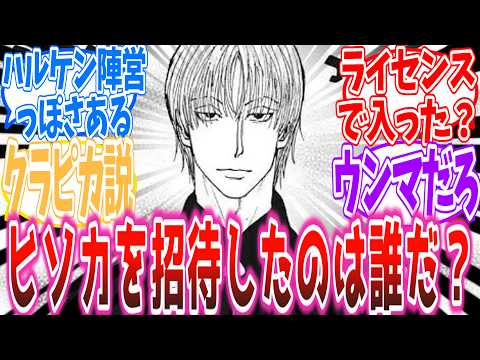
The Hisoka Mystery: Why Hunter x Hunter Fans Can’t Stop Debating Who Invited Him to Floor 1
After 15 years, one of Hunter x Hunter’s smallest details has become one of its biggest mysteries: who invited the enigmatic character Hisoka to the first floor of the Heavens Arena? Despite the original manga offering no clear explanation, fan communities across Twitter, Reddit, and forums continue to debate multiple theories, revealing how creator Yoshihiro Togashi’s deliberate ambiguity has become the series’ most compelling storytelling technique.
What Happened
In the Heavens Arena arc of Hunter x Hunter, Hisoka appears on Floor 1 of the tournament without clear explanation of how he got there. Unlike typical participants who begin at lower floors and work their way up, Hisoka’s placement on Floor 1 is never explicitly justified in the original manga. This seemingly minor detail has spawned years of fan theories and ongoing debate across multiple online platforms, with no official resolution from creator Yoshihiro Togashi.
Why It Matters
This unresolved mystery exemplifies a broader creative strategy in Hunter x Hunter: intentional narrative ambiguity that keeps fans engaged long after initial consumption. Rather than diminishing the series’ appeal, the lack of explanation has paradoxically deepened fan investment, generating sustained discussion and analysis across communities worldwide. The mystery also reflects Hisoka’s core character trait—his fundamental unpredictability and inscrutability—making the unknown invitation thematically consistent with his portrayal as a character whose true nature remains elusive.
Background
The Heavens Arena arc introduces viewers to the tournament structure and serves as a crucial character development section early in the series. Hisoka, one of the story’s most compelling and dangerous characters, appears without backstory or explanation of his motivations for entering the tournament. The series, which began airing in 2008, has maintained this narrative ambiguity for over 15 years, with the original manga never providing clarification on this point. Togashi’s irregular publication schedule has further extended the mystery, as new chapters remain infrequent and the series remains incomplete.
Key Points
- No Official Explanation Exists: The original manga provides no definitive answer about who invited Hisoka to Floor 1, leaving the question entirely unresolved.
- Multiple Competing Theories: Fan communities have developed three primary theories: the Netero Theory (Hunter Association Chairman invited him), the Ging Theory (Gon’s father invited him), and the Self-Registration Theory (Hisoka registered himself).
- Thematic Consistency: Hisoka’s mysterious origins align perfectly with his characterization as unpredictable and fundamentally unknowable, strengthening rather than weakening his character design.
- Active Online Discourse: Twitter hashtags, Reddit threads, 4chan boards, and YouTube comment sections continue generating new theories and analyses monthly.
- Strategic Narrative Choice: The ambiguity appears intentional, reflecting Togashi’s creative philosophy of leaving mysteries unresolved to stimulate ongoing fan engagement and discussion.
- Comparison to Other Series: Unlike Attack on Titan (which resolves its core mysteries) or Bleach (which gradually reveals character backstories), Hunter x Hunter maintains permanent narrative gaps.
Timeline
- 2008: Hunter x Hunter anime begins airing; Heavens Arena arc introduces Hisoka without explanation of his Floor 1 placement.
- 2008-2015: Original manga continues serialization; no clarification provided regarding Hisoka’s invitation.
- 2015-Present: Dedicated fan discussion threads establish themselves on multiple platforms; theories proliferate and evolve.
- Ongoing: Irregular manga publication continues; mystery remains unresolved with no indication of future resolution.
Perspectives
The Netero Theory suggests that Hunter Association Chairman Netero, known for identifying exceptional talent, directly invited Hisoka to Floor 1. Supporters point to Netero’s demonstrated ability to recognize potential and his role in selecting Hunter Exam proctors. However, the manga contains limited direct references to Netero discussing Hisoka, weakening this theory’s textual support.
The Ging Theory proposes that Gon’s father, Ging, invited Hisoka for unknown reasons. This theory appeals to fans because Ging is characterized as unpredictable and mysterious, making such an action consistent with his personality. However, like the Netero Theory, this lacks explicit textual evidence.
The Self-Registration Theory argues that Hisoka registered himself on Floor 1, possibly because tournament staff recognized his exceptional strength and granted him an exception to the normal progression system. This explanation is the most straightforward but requires assuming the Heavens Arena made an exception to its standard procedures.
The Intentional Ambiguity Perspective suggests that Togashi deliberately left this detail unexplained as a creative choice, using narrative gaps to maintain character mystique and stimulate ongoing fan engagement rather than as an oversight or unfinished plot point.
Insights
The Hisoka invitation mystery reveals a fundamental shift in how modern serialized fiction engages audiences. Rather than resolving all narrative questions, Togashi has adopted a strategy of permanent ambiguity that paradoxically increases rather than decreases fan investment. This approach contradicts traditional storytelling wisdom that values complete narrative closure.
The sustained discussion across multiple platforms demonstrates that unresolved mysteries can function as effective community-building tools. Fans continue analyzing the series not despite unanswered questions, but because of them. Each new theory generates discussion, drawing readers back to the original text and encouraging deeper engagement with character psychology and narrative structure.
Hisoka’s characterization as fundamentally unknowable makes his mysterious origins thematically appropriate. If the manga revealed that Netero invited him, Hisoka would become “the talent Netero recognized”—a defined role that contradicts his essential nature as an unpredictable, independent force. The mystery preserves his character integrity by maintaining his complete independence from external validation or explanation.
The comparison with other long-running series suggests that Togashi’s approach represents a deliberate creative philosophy rather than negligence. While Attack on Titan and Bleach eventually clarify their central mysteries, Hunter x Hunter maintains permanent narrative gaps. This distinction defines the series’ unique relationship with its audience: readers are invited to participate in ongoing interpretation rather than await definitive answers.
Looking forward, the probability of this mystery being resolved appears low. The manga’s irregular publication schedule, combined with Togashi’s apparent commitment to narrative ambiguity, suggests the question may remain unanswered indefinitely—or even after the series concludes. In this context, the mystery itself has become the story’s most valuable asset, generating perpetual engagement and discussion that keeps Hunter x Hunter relevant across generations of fans.