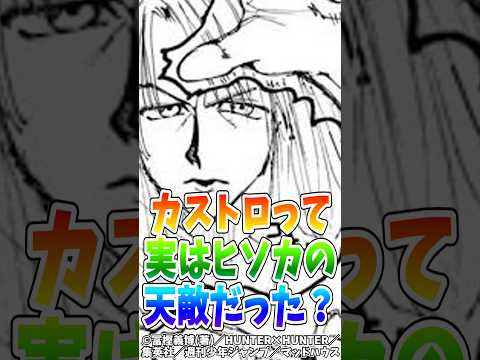
▶ Watch the original YouTube video
Is Kastro Actually Hisoka’s Weakness? A Deep Analysis of Hunter x Hunter’s Most Debated Battle
A long-standing theory in the Hunter x Hunter fan community suggests that Kastro could have been Hisoka’s natural counter, sparking debate about ability matchups versus psychological warfare. This analysis examines the evidence behind the “Kastro as Hisoka’s weakness” theory and explores why it has persisted for over a decade.
What Happened
During the Heavens Arena arc of Hunter x Hunter, Hisoka faces off against Kastro in a match that has become one of the most analyzed battles in the series. While Hisoka emerges victorious, fan communities have long debated whether Kastro’s Double Face ability—which allows him to create a duplicate of himself—could theoretically counter Hisoka’s Bungee Gum technique. This debate has evolved into the broader “Kastro as Hisoka’s natural enemy” theory, which continues to generate discussion across social media platforms and anime forums.
Why It Matters
This debate reflects a fundamental question about how Hunter x Hunter operates as a narrative: does victory depend primarily on ability matchups, or does psychological warfare and character understanding play the decisive role? The Kastro versus Hisoka match serves as a case study for understanding the series’ philosophy on combat, character development, and the nature of strength itself. For fans seeking deeper engagement with the series, this analysis reveals how the show balances tactical ability interactions with psychological depth.
Background
The Heavens Arena arc introduced multiple fighters with distinct abilities, each designed to explore different combat philosophies. Hisoka, portrayed as a highly skilled fighter with exceptional observational abilities, relies on his Bungee Gum technique—a power that allows him to create elastic, adhesive strings from his aura. Kastro, by contrast, uses Double Face, an ability that creates a perfect duplicate of himself, theoretically allowing him to overwhelm opponents through misdirection and numerical advantage.
The match between these two characters became significant because it demonstrated that raw ability strength does not guarantee victory. Hisoka’s triumph over Kastro was not achieved through superior power alone, but through his capacity to analyze his opponent’s psychology and identify weaknesses in real time. This established a pattern that would recur throughout the series: understanding your opponent matters as much as—if not more than—the abilities you possess.
Key Points
- Theoretical Matchup: Kastro’s Double Face ability appears theoretically effective against Hisoka’s Bungee Gum, as it could obscure Hisoka’s vision and create confusion through duplication.
- Psychological Advantage: Hisoka’s victory stemmed from his superior psychological insight rather than raw ability superiority. He read Kastro’s emotional state and exploited his desperation to win.
- Fan Community Split: Online reactions vary significantly across platforms—Twitter users often acknowledge the theory’s merit, while 5channel users emphasize psychological factors, and YouTube commenters engage in hypothetical scenarios.
- Series Philosophy: Hunter x Hunter consistently prioritizes psychological warfare and tactical understanding over pure ability strength, a theme evident across multiple arcs.
- Temporary Advantage: During the match, Kastro did achieve moments of superiority, fueling speculation that different circumstances could have altered the outcome.
- Narrative Purpose: The match was designed to establish Hisoka’s true strength: his ability to understand and predict opponent behavior rather than overwhelming power.
Comparative Analysis: Ability Matchups Across Anime
| Series | Battle Scenario | Deciding Factor | Importance of Ability Matchup |
|---|---|---|---|
| Hunter x Hunter (Hisoka vs Kastro) | Vision Denial vs Elastic Technique | Psychological Understanding | Moderate |
| JoJo’s Bizarre Adventure Part 5 (Ghiaccio vs Mista) | Weather Control vs Gunfire | Ability Matchup and Environment | High |
| Demon Slayer (Tanjiro vs Akaza) | Water Breathing vs Blood Demon Art | Psychological Resolve and Determination | Low |
| Attack on Titan (Eren vs Zeke) | Attack Titan vs Beast Titan | Strategy and Psychological Superiority | Low |
Perspectives
The “Ability Matchup” Perspective: Supporters of the Kastro weakness theory argue that Double Face creates a legitimate tactical problem for Hisoka. By obscuring which duplicate is real, Kastro could theoretically prevent Hisoka from effectively deploying Bungee Gum. This view emphasizes that ability interactions matter significantly in determining combat outcomes.
The “Psychological Warfare” Perspective: Critics of the theory point out that Hisoka’s victory demonstrates the primacy of psychological insight. Hisoka recognized Kastro’s emotional desperation and used it against him. From this viewpoint, no ability matchup can overcome superior understanding of an opponent’s mental state and decision-making patterns.
The “Hypothetical” Perspective: A third group of fans engages in counterfactual analysis, asking what would have happened if Kastro had maintained emotional composure or if circumstances had been slightly different. This perspective acknowledges both the theoretical validity of the matchup and the actual outcome, treating the battle as a near-miss scenario.
Why the “Weakness Theory” Persists
The Kastro-as-weakness theory has endured for over a decade due to several psychological and narrative factors. First, Hunter x Hunter’s emphasis on ability matchups throughout the series naturally leads fans to analyze combat encounters through this lens. Second, Kastro occupies the position of the “underdog,” and audiences are drawn to imagining scenarios where underdogs could overcome stronger opponents. Third, the match itself contains moments where Kastro achieves temporary advantage, providing textual support for the theory.
Additionally, the theory reflects a broader fan tendency toward “what if” thinking. Anime communities frequently engage in hypothetical matchup analysis, and the Kastro-Hisoka battle provides fertile ground for this type of speculation because the outcome, while decisive, was not entirely one-sided.
Creator Intent and Narrative Design
Based on the narrative structure of the Heavens Arena arc, creator Yoshihiro Togashi appears to have designed this match to accomplish three specific goals. First, to establish Hisoka’s true nature: not as an overwhelmingly powerful fighter, but as someone with exceptional analytical and psychological abilities. Second, to demonstrate that in Hunter x Hunter, ability alone does not determine victory—understanding and adaptation are equally crucial. Third, to contribute to the arc’s larger philosophical exploration of what “strength” actually means.
The match serves as a microcosm of the series’ overall approach to combat: victory belongs not necessarily to the one with the superior ability, but to the one with superior understanding of their opponent and themselves.
Implications for Series Evolution
As Hunter x Hunter has progressed, character abilities have evolved and new combat philosophies have emerged. The validity of the “Kastro as weakness” theory may shift as the series continues, similar to how ability matchups that seemed definitive in earlier arcs have been recontextualized by later developments. This suggests that the theory should be understood as a snapshot of analysis based on information available at a specific point in the narrative, rather than a permanent assessment.
How to Appreciate This Battle
For viewers engaging with this match for the first time or revisiting it, several approaches enhance understanding. First, focus on the psychological dynamics between the characters rather than ability mechanics alone. The true complexity of the battle emerges through analyzing how Hisoka and Kastro think, not merely what they can do. Second, examine the broader context of Kastro’s character arc and emotional state leading into the match. His desperation to defeat Hisoka directly influences his decision-making and tactical choices. Third, compare this match to other battles in the Heavens Arena arc to understand how each confrontation explores different aspects of combat philosophy.
Related works that explore similar themes include the Tanjiro versus Akaza battle in Demon Slayer and various encounters in JoJo’s Bizarre Adventure, all of which balance ability matchups with psychological and emotional dimensions.
Fan Community Reactions Across Platforms
Twitter: Multiple tweets express the view that “the Kastro weakness theory actually has merit,” with users emphasizing the theoretical effectiveness of Double Face against Bungee Gum.
5channel (Japanese imageboards): Discussions tend toward the perspective that “Kastro was simply weaker and lost due to psychological factors,” reflecting a more analytically critical approach common on these platforms.
YouTube Comments: Hypothetical statements like “if Kastro had remained calmer” dominate, indicating that viewers engage primarily through counterfactual reasoning.
Critical Voices: A consistent minority perspective argues that “ability matchups alone do not determine victory,” grounding this position in the series’ established emphasis on psychological warfare and tactical adaptation.
Insights
The persistence of the “Kastro as Hisoka’s weakness” theory reveals important truths about how audiences engage with narrative combat. Fans naturally gravitate toward ability-based analysis because it provides a concrete framework for understanding power dynamics. However, the theory’s incompleteness—its failure to account for psychological factors—demonstrates that anime combat narratives operate on multiple levels simultaneously.
Hunter x Hunter’s approach suggests that true strength emerges not from ability superiority alone, but from the integration of ability, psychological insight, tactical adaptation, and self-awareness. The Kastro-Hisoka match exemplifies this principle: Hisoka prevails not because Bungee Gum is inherently superior to Double Face, but because Hisoka understands both his opponent and himself more completely.
This battle remains compelling precisely because it resists simple resolution. The theoretical validity of the matchup theory coexists with the psychological reality of Hisoka’s victory, creating productive tension that invites repeated analysis and reinterpretation. That ambiguity—the sense that under different circumstances, outcomes might have differed—is what sustains engagement with the material over time.
Ultimately, the debate surrounding Kastro and Hisoka reflects a deeper question about the nature of strength itself: Is it determined by what you can do, or by your understanding of what you and your opponent can do? Hunter x Hunter’s answer, demonstrated through this and countless other encounters, is that the latter proves decisive.