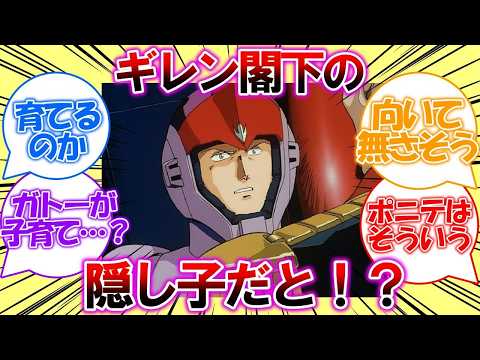
▶ Watch the original YouTube video
Mobile Suit Gundam’s Hidden Child-Rearing Scenario: Fan Reactions and Deep Analysis
A viral alternate-universe scenario imagining Gato raising Delaz’s hidden children—Gremy and the Puru series—has captivated Gundam fans worldwide. This “what-if” story explores how hardened soldiers transform when thrust into parenthood, revealing deeper character dimensions and sparking thoughtful fan discourse about love, duty, and human nature.
- What Happened
- Why It Matters
- Background
- Key Points
- Character Analysis: Gato as Parent
- The Children: Gremy and Puru
- The Supporting Cast: Kelly and Kalius
- Narrative Tension: Canon vs. Alternate Reality
- Fan Perspectives and Community Response
- Comparative Analysis: Parent-Child Relationships Across Gundam
- Production Possibilities and Narrative Structure
- Broader Implications for Gundam Themes
- Conclusion: The Scenario’s Significance
What Happened
An alternate-universe scenario has emerged within the Gundam fan community depicting a scenario where Gato, a hardened military officer from Mobile Suit Gundam 0083, becomes the primary caregiver for Gremy and the Puru series—the hidden children of Delaz. In this “if” story, Gato is joined by fellow soldiers Kelly and Kalius in raising these children, creating an unconventional family unit. The scenario explores how these battle-hardened soldiers navigate the challenges of parenthood while maintaining their military identities.
Why It Matters
This scenario resonates deeply with Gundam fans because it transcends typical fan fiction. Rather than focusing solely on mecha combat, it examines fundamental human themes: how individuals shaped entirely by warfare respond when confronted with civilian responsibility, how love and duty intersect, and whether personal relationships can transform a soldier’s worldview. The scenario challenges the series’ core narrative by asking whether Gremy’s eventual rebellion would carry different meaning if born from a loving home rather than military indoctrination. This reflects the Gundam franchise’s enduring thematic focus on the conflict between parental expectations and children’s autonomy.
Background
The Gundam franchise has consistently explored parent-child relationships as a lens for examining larger conflicts between personal desires and societal duty. Mobile Suit Gundam 0083 presents Gato as an unwavering military loyalist devoted entirely to Delaz’s cause, with minimal character development outside his role as a soldier. Gremy and the Puru series are artificially created or specially trained individuals who lack conventional childhood experiences, having been raised in isolated colonies under military conditions. This scenario reimagines these characters outside their canonical roles, asking what would happen if they experienced a normal family dynamic.
Key Points
- Core Premise: Gato becomes primary caregiver for Gremy and Puru, with Kelly and Kalius providing additional parental support in an all-male household.
- Character Transformation: The scenario forces Gato to confront his humanity beyond military duty, revealing emotional depth previously unexplored in canon material.
- Psychological Complexity: Gremy and Puru, lacking conventional childhood experiences, must learn family bonds and emotional attachment for the first time.
- Narrative Paradox: The scenario creates tension with canon events—if Gremy grew up in a loving home, how does this reshape the meaning of his eventual rebellion?
- Fan Engagement: Community responses demonstrate sophisticated character analysis, with fans recognizing how external circumstances reshape identity and relationships.
- Thematic Resonance: The scenario embodies Gundam’s recurring theme of love versus duty, suggesting that even deep affection cannot always prevent tragedy or predetermined choices.
Character Analysis: Gato as Parent
Gato’s transformation from soldier to caregiver represents the scenario’s emotional core. As a character defined entirely by military loyalty and mission completion, Gato initially appears incapable of nurturing. However, the scenario suggests that unexpected responsibility catalyzes profound personal growth. The image of Gato adopting a ponytail hairstyle—a detail fans noted as resembling practical parenting styles—symbolizes his psychological shift from soldier to guardian. Small moments, such as ensuring the children eat well, reveal how military discipline transforms into paternal care. This mirrors patterns seen across the Gundam franchise, where characters like Mu La Flaga and Orga Itsuka demonstrate that soldiers can develop genuine emotional bonds when circumstances demand it.
The Children: Gremy and Puru
Gremy and the Puru series present unique challenges as subjects of parental care. Gremy, despite possessing an adult body and advanced intellect, lacks conventional emotional development. The Puru series exist in an even more ambiguous state—biologically adult but psychologically infantile, having been created or trained specifically for military purposes. In this scenario, exposure to family life becomes transformative. Rather than viewing each other as tools or subordinates, they experience sibling-like bonds and learn the concept of unconditional care. This psychological development raises profound questions: does a loving upbringing fundamentally alter a person’s trajectory, or do deeper programming and inherited duty ultimately override nurture?
The Supporting Cast: Kelly and Kalius
The inclusion of Kelly and Kalius as co-parents adds crucial complexity. Rather than a single father figure, the children benefit from multiple adult perspectives. Kalius, described by fans as a “historical witness,” carries knowledge of Delaz’s true intentions and can provide context about their heritage without ideological indoctrination. Kelly offers emotional flexibility that complements Gato’s military rigidity. This multi-adult household structure mirrors real-world family dynamics where extended family members contribute to child-rearing. The scenario suggests that diverse parental influences—Gato’s discipline, Kelly’s adaptability, and Kalius’s wisdom—create a more balanced developmental environment than any single caregiver could provide.
Narrative Tension: Canon vs. Alternate Reality
The scenario’s most intellectually compelling aspect involves its relationship to canonical events. In Mobile Suit Gundam 0083, Gremy eventually leads a rebellion against the Earth Federation, ostensibly continuing Delaz’s legacy. The alternate scenario asks: if Gremy experienced parental love and emotional security, would his rebellion carry different meaning? Would it represent a conscious choice to honor his heritage, or a tragic inevitability despite—or because of—his upbringing? Fan commentary suggests the latter interpretation: that love and security actually enable Gremy’s autonomy, allowing him to make deliberate choices rather than acting from trauma or indoctrination. This reframes his rebellion not as predetermined fate but as a conscious decision, making it simultaneously more tragic and more meaningful.
Fan Perspectives and Community Response
Community reactions reveal sophisticated thematic engagement. Fans recognized that Gato’s hypothetical willingness to visit family restaurants or engage in mundane parenting activities represents profound character development. Comments like “What would Gato do if Gremy cried asking for his mother?” demonstrate fans grappling with the tension between military stoicism and parental compassion. The scenario’s popularity suggests that Gundam audiences value character-driven narratives exploring human relationships as much as mecha combat sequences. Fan responses also indicate recognition that this scenario represents a universal human experience—the transformation that occurs when individuals assume unexpected responsibility for others’ wellbeing.
Comparative Analysis: Parent-Child Relationships Across Gundam
This scenario fits within a broader Gundam tradition of exploring unexpected parental relationships. Mobile Suit Gundam SEED features Mu La Flaga’s protective role toward Cagalli, balancing military duty with familial responsibility. Mobile Suit Gundam UC depicts Banagher Links and Audrey Burn developing emotional bonds within peaceful moments away from warfare. Mobile Suit Gundam: Iron-Blooded Orphans shows Orga Itsuka transitioning from peer to parental figure for younger soldiers. Each iteration explores how warfare disrupts normal developmental processes and how individuals respond when forced to provide care despite lacking conventional training. The Gato scenario represents the logical extreme of this pattern: soldiers with no civilian experience suddenly responsible for children with no conventional upbringing.
Production Possibilities and Narrative Structure
If this scenario were developed into an official side story, it would require balancing two distinct narrative modes: intimate domestic drama and the looming shadow of Delaz’s legacy. The scenario would likely function as a tragedy—not because the parenting fails, but because success cannot prevent predetermined outcomes. A hypothetical 12-episode series might depict the children’s gradual emotional development, Gato’s psychological transformation, and the slow emergence of ideological conflict as the children mature and confront their heritage. Each episode could explore specific parenting challenges while gradually building toward the inevitable moment when duty and love diverge. This structure would transform the scenario from heartwarming family story into meditation on how even the deepest bonds cannot always prevent tragedy.
Broader Implications for Gundam Themes
This scenario crystallizes the Gundam franchise’s central thematic concern: the collision between personal relationships and historical inevitability. The series has consistently suggested that individual love and connection, while profoundly meaningful, cannot always override larger systemic forces or deeply ingrained identity. If Gremy rebels despite—or because of—experiencing parental love, it suggests that human agency operates within constraints. The scenario implies that nurture shapes how individuals make choices but does not determine which choices they make. This represents a mature philosophical position: acknowledging both the transformative power of love and the reality that love alone cannot resolve fundamental conflicts between duty, heritage, and personal autonomy.
Conclusion: The Scenario’s Significance
The Gato child-rearing scenario resonates because it asks essential questions about human nature and transformation. It suggests that soldiers can become parents, that artificial beings can experience genuine family bonds, and that love and duty need not be mutually exclusive—even when they ultimately lead to tragedy. The scenario honors the Gundam franchise’s commitment to exploring human relationships while maintaining the series’ tragic sensibility. Rather than offering easy answers about redemption through family, it proposes that meaningful relationships can coexist with inevitable conflict. For fans, the scenario represents an opportunity to imagine depth in characters typically defined by military function, recognizing that every soldier carries untapped potential for emotional connection. Whether this scenario ever becomes official canon remains uncertain, but its impact on fan discourse demonstrates that Gundam audiences value sophisticated character exploration as much as spectacular mecha action.