▶ Watch the original YouTube video
The Unicorn Gundam ‘Overpowered’ Debate: Why Mobile Suit Gundam UC Challenges Series Conventions
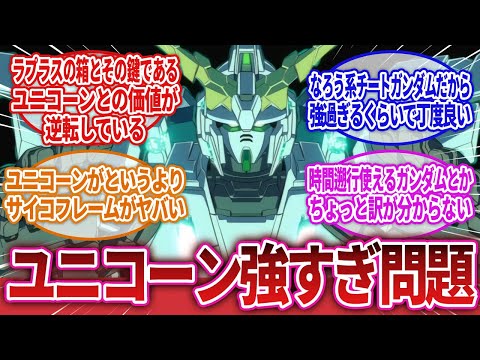
Mobile Suit Gundam UC has sparked intense online debate over whether its protagonist mecha, the Unicorn Gundam, is too powerful compared to other units in the series. This analysis explores how the show’s design choices reflect a fundamental shift in how the Gundam franchise portrays Newtype abilities and pilot development.
What Happened
Since its 2010 release, Mobile Suit Gundam UC has generated sustained criticism from fans and online communities regarding the overwhelming combat performance of the Unicorn Gundam. The primary complaint centers on a perceived imbalance: the mobile suit’s capabilities far exceed those of contemporary enemy units, while protagonist Banagher Links lacks the pilot skill and character development typically expected in Gundam series. This disparity has fueled ongoing discussions across platforms including Twitter, 5channel, and YouTube, with viewers divided between those who accept the design as a necessary expression of Newtype power and those who view it as a departure from core Gundam principles.
Why It Matters
The Unicorn Gundam controversy represents a critical juncture in the Gundam franchise’s evolution. For over four decades, the series has centered on the relationship between pilot growth and mobile suit performance—a core narrative principle established in the original Mobile Suit Gundam. Gundam UC’s departure from this formula raises fundamental questions about how the franchise should portray superhuman Newtype abilities and whether mechanical superiority can substitute for character development. Understanding this debate illuminates how subsequent Gundam productions, including Mobile Suit Gundam: The Witch from Mercury, have responded to and learned from UC’s design choices.
Background
Mobile Suit Gundam UC, based on Harutoshi Fukui’s original novel, was released as an OVA series beginning in 2010. The narrative follows Banagher Links, a civilian teenager who becomes the pilot of the Unicorn Gundam, a mobile suit equipped with Psychoframe technology that responds directly to Newtype consciousness. Unlike previous Gundam protagonists such as Amuro Ray or Kamille Bidan, Banagher enters combat driven by personal motivation—protecting the Eon princess Mineva—rather than military duty or ideological conviction. The Unicorn’s Psychoframe system represents a technological evolution in how Newtype abilities are physically manifested, allowing the machine to respond to pilot intention with unprecedented responsiveness and combat effectiveness.
The broader context involves industry trends of the 2010 era. Following perceived missteps in Mobile Suit Gundam SEED DESTINY, production teams sought to differentiate protagonist mobile suits through enhanced visual spectacle and combat dominance. However, Gundam UC’s approach—granting overwhelming mechanical superiority to an underdeveloped pilot—diverged significantly from the balanced approach seen in earlier series like Mobile Suit Gundam, Gundam Z, and Gundam 00.
Key Points
- Performance Disparity: The Unicorn Gundam’s combat capabilities exceed contemporary enemy units by a factor of five or more, creating a power gap unprecedented in mainline Gundam series.
- Pilot-Mecha Imbalance: Banagher Links demonstrates minimal character growth throughout the 13-episode series, yet the Unicorn’s Psychoframe system allows him to achieve overwhelming combat success regardless of pilot skill.
- Newtype Physicalization: The series represents a deliberate shift toward expressing abstract Newtype abilities—intuition, spatial awareness, precognition—as concrete mechanical performance enhancements.
- Franchise Precedent Violation: Traditional Gundam narratives emphasize pilot development as central to combat effectiveness; Gundam UC prioritizes mechanical transcendence over character arc.
- Online Community Polarization: Internet discourse reveals a fundamental split between viewers who accept the design as thematically necessary and those who view it as a violation of Gundam series identity.
- Influence on Subsequent Works: Later Gundam productions, particularly Mobile Suit Gundam: The Witch from Mercury, appear to have incorporated lessons from UC’s design imbalance, achieving better equilibrium between pilot growth and mechanical capability.
Comparative Analysis: Protagonist Mobile Suit Performance Across Gundam Series
| Series Title | Protagonist Mobile Suit | Performance Gap vs. Contemporary Enemies | Pilot Development Arc | Balance Assessment |
|---|---|---|---|---|
| Mobile Suit Gundam | RX-78-2 Gundam | Moderate (approximately 2x Zaku performance) | Substantial growth from Episode 1 to Episode 43 | Excellent |
| Mobile Suit Gundam Z | PMX000 Zeta Gundam | Moderate (comparable to Hanbra’bi) | Kamille’s psychological development central to narrative | Excellent |
| Mobile Suit Gundam SEED | GAT-X105 Strike Gundam | Moderate-High (approximately 3x Ginn performance) | Kira’s growth progresses gradually throughout series | Good |
| Mobile Suit Gundam 00 | GN-001 Gundam Exia | High (GN Drive technological superiority) | Setsuna’s development integral to thematic progression | Good |
| Mobile Suit Gundam UC | RX-0 Unicorn Gundam | Extremely High (5x or greater vs. contemporary units) | Banagher demonstrates minimal growth; relies on mechanical capability | Problematic |
Perspectives
Supportive Interpretation: Proponents argue that the Unicorn’s overwhelming power serves a necessary narrative function. They contend that Newtype abilities, as abstract concepts in earlier series, required physical manifestation to remain dramatically relevant. The Psychoframe system provides this manifestation, allowing viewers to witness Newtype transcendence as concrete combat superiority. From this perspective, Banagher’s passivity becomes thematically appropriate—he is not a warrior but a conduit through which Newtype consciousness operates the machine.
Critical Interpretation: Critics maintain that the design violates fundamental Gundam principles. They argue that the franchise’s core appeal derives from watching pilots grow into their machines’ capabilities, creating tension between human limitation and mechanical potential. When a machine performs at maximum effectiveness regardless of pilot skill, this tension dissolves. Furthermore, they note that Banagher’s lack of development contradicts the psychological depth characteristic of Gundam protagonists, resulting in reduced emotional investment.
Structural Analysis: A third perspective frames the Unicorn’s power not as error but as deliberate artistic choice reflecting industry trends circa 2010. Production teams sought visual differentiation and spectacle to attract contemporary audiences. Gundam UC represents an experimental approach to this goal—one that prioritized mechanical transcendence over character development. Subsequent series, including Mobile Suit Gundam: The Witch from Mercury, appear to have learned from this experiment, achieving greater balance between pilot growth and mechanical capability.
Online Community Response
Twitter Discourse: From 2020 through 2023, recurring posts characterized the Unicorn Gundam as “no longer a Gundam, merely an invincible robot.” This criticism intensified during the 2022-2023 broadcast of Mobile Suit Gundam: The Witch from Mercury, with commenters noting that the newer series appeared to consciously address UC’s design imbalances.
5channel Discussion Threads: Long-running debate threads in Gundam forums consistently raise three core criticisms: (1) Banagher’s growth rate fails to match the Unicorn’s capabilities; (2) Psychoframe mechanics lack clear definition, appearing to conveniently enhance power as narrative demands; (3) the series prioritizes Newtype mythology over traditional Gundam storytelling. These arguments have persisted for over a decade, suggesting fundamental rather than superficial concerns.
YouTube Comment Sections: Gundam UC-related videos consistently feature polarized comments with minimal middle ground. Notably, the absence of neutral perspectives suggests the work generates strong affective responses rather than measured assessment—viewers tend toward either enthusiastic acceptance or substantial criticism.
Influence on Subsequent Gundam Productions
Mobile Suit Gundam NT: This follow-up series intensified UC’s approach, depicting Newtype abilities as near-supernatural phenomena. The result generated increased criticism, suggesting that doubling down on UC’s design philosophy did not resolve underlying concerns.
Mobile Suit Gundam: The Witch from Mercury: This recent series demonstrates apparent course correction. Protagonist Suletta Mercury pilots the mobile suit Aerial, which possesses genuine combat advantages. Critically, however, Suletta’s personal development arc parallels and complements the machine’s capabilities. The pilot-mecha relationship achieves equilibrium absent in Gundam UC, suggesting the production team deliberately learned from UC’s perceived imbalances.
Insights
The Unicorn Gundam “overpowered” controversy ultimately reflects not a flaw but a deliberate creative choice—one with both artistic merit and demonstrable limitations. The series represents an experimental approach to expressing Newtype transcendence through mechanical superiority rather than pilot development. This choice successfully visualizes abstract metaphysical concepts as concrete combat performance, providing a novel interpretation of Gundam’s core mythology.
However, the design sacrifices the emotional resonance traditionally generated by watching protagonists grow into their machines’ potential. By divorcing mechanical capability from pilot skill, Gundam UC reduces narrative tension and complicates viewer identification with Banagher Links. This trade-off appears intentional but ultimately problematic for sustaining engagement across a 13-episode narrative arc.
The broader significance lies in how subsequent productions have responded. Mobile Suit Gundam: The Witch from Mercury’s approach—granting mechanical advantages while maintaining rigorous pilot development—suggests the franchise has synthesized UC’s lessons. Rather than viewing UC as failure, it functions as necessary experimentation within the franchise’s evolution. The series posed the question: “Can mechanical transcendence substitute for character development?” The answer, demonstrated by audience response and subsequent production choices, appears to be “no.”
This trajectory illustrates how franchise development operates through iterative refinement. Gundam UC’s willingness to challenge series conventions, despite generating sustained criticism, ultimately strengthened the franchise by forcing producers to articulate why pilot-mecha balance matters narratively. In this sense, the “overpowered” Unicorn Gundam served the franchise’s long-term health by clarifying its core values through their temporary violation.