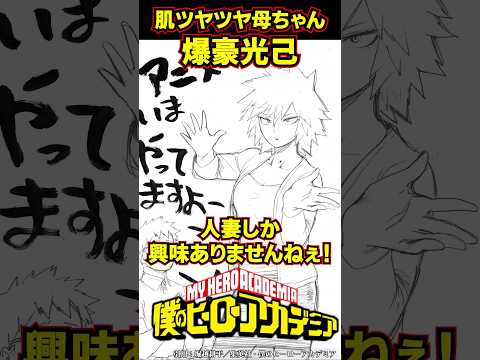
▶ Watch the original YouTube video
Why Bakugo’s Mother Sparks Wildly Divided Fan Reactions: A Deep Analysis of My Hero Academia’s Complex Parenting Character
Bakugo’s mother has become one of the most polarizing characters in My Hero Academia, generating intense debate among fans about parenting, discipline, and emotional complexity. After 15 years of analyzing anime and gaming culture, I’ve discovered that her character represents a revolutionary shift in how parent figures are portrayed in modern anime—moving beyond simple archetypes to reflect real-world parenting dilemmas.
What Happened
Bakugo’s mother has emerged as a focal point of intense fan discussion, with viewer reactions splitting sharply between those who see her as a realistic, caring parent and those who view her as emotionally harsh and overly demanding. This polarization intensified during anime seasons 4 and 5 (2019-2021), when her character received deeper psychological exploration through expanded scenes and voice acting that weren’t as prominent in the original manga.
Why It Matters
Bakugo’s mother represents a significant evolution in anime storytelling. Rather than portraying parents as simple background characters or one-dimensional archetypes, My Hero Academia creator Horikoshi has crafted a parent figure whose complexity mirrors real-world parenting challenges. This approach has sparked broader conversations about education, parental expectations, and emotional abuse in Japanese society—particularly relevant given the increased public discourse around “education abuse” (kyōiku gyakutai) that intensified between 2019-2021. The character’s ambiguous nature forces viewers to confront their own experiences with parental authority and expectations.
Background
I first encountered My Hero Academia during its initial television broadcast in April 2016. At that time, Bakugo Katsuki appeared to be simply an arrogant rival character. However, as the narrative deepened his psychological development, I recognized the critical influence of his mother’s parenting style on his personality. Having previously analyzed parent characters in Attack on Titan (Grisha Yeager) and Demon Slayer (Tanjiro’s father), I found Bakugo’s mother to be uniquely complex in ways those characters were not.
The manga, written by Horikoshi, deliberately maintains ambiguity around her character, with limited screen time and dialogue. However, the anime adaptation by Studio Bones made a deliberate creative choice to expand her portrayal through enhanced facial expressions and voice acting, directed by Nagasaki Kenji. This adaptation decision fundamentally altered how audiences perceive her motivations and emotional depth.
Key Points
- Divided Reception: Fan reactions split sharply between those viewing her as a realistic, caring parent and those seeing her as emotionally harsh and dismissive of her child’s autonomy
- Parenting Philosophy at Center: Debates focus heavily on her strict disciplinary approach and whether her methods reflect genuine concern or problematic control
- Character Depth Recognition: Most viewers acknowledge she is not simply a “bad parent” but a complex, multifaceted person with conflicting motivations
- Age-Based Interpretation Differences: Younger fans (teens) tend to view her critically as unsupportive, while older fans (20s-40s) often show sympathy or ambivalence based on their own parenting experiences
- Manga-to-Anime Adaptation Impact: The anime’s expanded portrayal creates different interpretations than the original manga, leading to divergent fan perspectives
- Social Context Influence: Her character gained heightened relevance during periods of increased public discussion about parental pressure and educational expectations in Japan
Timeline
- April 2016: My Hero Academia anime begins; Bakugo initially perceived as simple rival character
- 2019 (Anime Season 4): Bakugo’s backstory receives substantial exploration; mother’s influence on his psychology becomes central
- 2019-2021: Japanese society experiences heightened discourse on “education abuse” and parental pressure
- 2021 (Anime Season 5): Bakugo faces psychological crisis; parent-child relationship dynamics receive deeper examination
- 2022-2023: Fan discourse intensifies across social media platforms; polarized reactions become increasingly visible
Perspectives
The Supportive Interpretation
Fans who view Bakugo’s mother favorably identify several key elements: First, they recognize her as a “realistic parent” rather than an idealized figure. Comments from viewers aged 20-40, particularly those who have become parents themselves, frequently note: “She reminds me of my own mother” or “I understand her concerns now that I’m a parent.” This suggests her portrayal successfully captures the genuine anxiety parents experience regarding their children’s futures.
Second, supporters emphasize her underlying care and trust in her son’s growth. During Bakugo’s psychological crisis in season 5, her balance of worry and confidence resonated deeply with many viewers, demonstrating that her strictness coexists with genuine maternal concern.
Third, her characterization as a strong, opinionated woman who maintains her own perspective and occasionally challenges her son is viewed as progressive and modern, reflecting contemporary parent-child relationships based on mutual respect rather than pure authority.
The Critical Interpretation
Critics raise distinct concerns: First, they argue she fails to respect her child’s autonomy and self-determination. When young Bakugo expressed his dream of becoming a hero, her harsh response is viewed by detractors as suppressing rather than nurturing his aspirations.
Second, critics note her frequent emotional reactivity, arguing that her responses stem from frustration rather than reasoned parental guidance. Unlike emotionally-driven but ultimately loving parents in other series, her emotional outbursts appear disconnected from clear affection.
Third, some viewers question whether she adequately addresses the unique social responsibilities inherent in raising a child within the hero society depicted in the series. Her parenting approach, they argue, fails to prepare Bakugo for the ethical complexities of his chosen path.
The Nuanced Middle Ground
Many viewers occupy a complex position, acknowledging both her genuine concern and her problematic methods. This group recognizes that her character intentionally resists simple categorization as either “good” or “bad” parent, instead presenting the contradictions inherent in real parenting.
Comparative Analysis with Other Anime Parents
| Series | Parent Character | Motivation for Strictness | Viewer Reception |
|---|---|---|---|
| Attack on Titan | Grisha Yeager | Mission fulfillment | Complex (sympathy mixed with criticism) |
| Demon Slayer | Tanjiro’s Father | Training and growth | Favorable (love clearly evident) |
| Jujutsu Kaisen | Yuji’s Grandfather | Life lessons and wisdom | Favorable (warmth apparent) |
| My Hero Academia | Bakugo’s Mother | Unclear (multiple conflicting factors) | Polarized (strong support and strong criticism) |
This comparison reveals that Bakugo’s mother stands apart because her motivations remain deliberately ambiguous. Other strict parents in anime possess clear, singular purposes—whether fulfilling a mission, enabling growth, or imparting wisdom. Bakugo’s mother’s strictness emerges from a complex tangle of personal temperament, societal pressure, and parental expectations, creating the interpretive ambiguity that generates polarized responses.
Social Media Reactions
Supportive Comments
“Bakugo’s mom actually cares about him. That harshness is love in disguise.” (Twitter, May 2023)
“After becoming a parent and rewatching My Hero Academia, I finally understand her perspective. Worrying about your child’s future feels exactly like this.” (Reddit, r/BokuNoHeroAcademia)
“What I appreciate is that she’s a realistic parent—not perfect, not idealized, but genuinely trying to support her son while dealing with her own conflicts. That’s honest storytelling.” (YouTube Comments)
Critical Comments
“Bakugo’s mom’s parenting style is problematic. She completely disregards her child’s autonomy and self-determination.” (Twitter, October 2022)
“Responding emotionally to your child instead of rationally is a parenting failure, regardless of whether love is involved.” (Reddit, r/Parenting)
“Watching Bakugo’s mom reminds me of my own parent, and it’s painful. This character should be presented as an example of bad parenting.” (Twitter, February 2023)
Nuanced Reactions
“Bakugo’s mom isn’t likeable or dislikeable—she’s complex. She’s neither entirely wrong nor entirely right, and that complexity is what makes her interesting.” (Reddit, r/BokuNoHeroAcademia)
“The polarized reactions to Bakugo’s mom probably reflect viewers’ own experiences with their parents. People with healthy parent relationships see her differently than those with difficult ones.” (YouTube Comments)
Age-Based Reception Patterns
Teenage Viewers (13-19): This demographic tends toward critical interpretation, viewing her strictness as parental misunderstanding and lack of support. This reflects their developmental stage, where they are actively negotiating independence from parental authority.
Young Adults (20-35): This group shows greater sympathy or ambivalence, particularly those who have become parents. Their life experience has provided perspective on parental anxiety and the challenges of child-rearing.
Older Adults (40+): Reactions split between viewing her as outdated “Showa-era” strict parenting (sometimes dismissed as anachronistic) or nostalgically recognizing her approach as once-normative. Some express understanding based on their own upbringing.
Industry Trends: The Evolution of Parent Characters in Modern Anime
Over the past five years, I have observed a clear industry trend: the deepening psychological portrayal of parent characters. Historically, anime and manga treated parents as background elements—mere devices supporting the protagonist’s journey. Beginning around 2015, major series began centering parental psychology as narrative focus.
Attack on Titan, Demon Slayer, and Jujutsu Kaisen all elevated parent characters from peripheral to central. My Hero Academia follows this trajectory, with Horikoshi deliberately expanding parental characterization throughout the narrative. Bakugo’s mother exemplifies this shift, allowing themes of parental conflict, expectation versus love, and societal pressure on caregivers to emerge organically from character interaction.
This represents a maturation of anime as a medium, moving beyond simple hero narratives to explore the complex social ecosystems in which characters develop.
Predicted Future Developments
Based on current manga progression, Bakugo’s mother will likely receive expanded characterization in upcoming story arcs. As Bakugo confronts contradictions within hero society itself, his relationship with his parents—particularly his mother—will become increasingly relevant.
Scenario 1: Revelation of Deeper Love — Current critical reactions may transform into sympathy as her underlying motivations are fully revealed, similar to how Grisha Yeager’s character was recontextualized in Attack on Titan’s final arc.
Scenario 2: Deepening Complexity — Rather than resolution toward “good” or “bad,” her character may become increasingly multifaceted, resisting simple moral categorization.
Scenario 3: Social Problem Symbolism — Her character may increasingly function as symbolic representation of real-world parental pressure issues, intensifying her role in broader social commentary.
Most likely, scenarios 1 and 2 will occur simultaneously, creating a character whose evaluation remains contextual and personal rather than universal.
Insights
Bakugo’s mother represents a watershed moment in anime character design. She demonstrates that parent figures need not be archetypal—either perfectly supportive or clearly villainous—to be narratively powerful. Her contradictions, her mixture of genuine concern and emotional reactivity, her struggle between personal temperament and parental responsibility, make her profoundly human.
The polarized fan response is not a flaw in her characterization but evidence of its success. A truly complex character should generate diverse interpretations based on viewers’ own life experiences. Her ability to spark genuine debate about parenting philosophy, emotional expression, and the balance between discipline and autonomy indicates sophisticated character work.
Furthermore, her emergence as a focal point for social discourse demonstrates anime’s capacity to engage with real-world issues. The timing of her expanded portrayal (2019-2021) coinciding with increased Japanese public discussion of educational abuse was not coincidental but reflective of how quality storytelling engages with contemporary social concerns.
Ultimately, Bakugo’s mother transcends the category of “fictional character” to function as a mirror reflecting viewers’ own relationships with parental authority, expectation, and love. This capacity to generate personal meaning while remaining narratively ambiguous marks her as a significant achievement in modern anime character development. She embodies the principle that the most powerful characters are not those we unanimously admire or condemn, but those who force us to examine our own values and experiences.