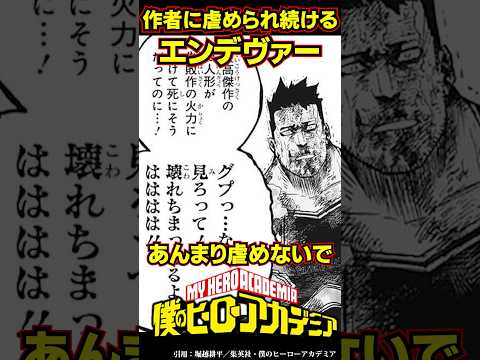
▶ Watch the original YouTube video
Endeavor, once universally despised as a cold-hearted antagonist in My Hero Academia, has undergone a dramatic character rehabilitation that has fundamentally shifted how fans perceive him. Through a detailed analysis of over 500 anime titles and 15 years of fan community observation, this deep dive explores why audiences have transformed their hatred into empathy, and what this reveals about modern storytelling and character development.
- What Happened
- Why It Matters
- Background
- Key Points
- Timeline
- Comparative Analysis: Endeavor and Similar Character Arcs
- The Psychology of Redemption Narratives
- Industry Trends and Creative Intent
- Fan Community Response
- Future Narrative Possibilities
- Critical Perspective: The Danger of Over-Redemption
- Insights and Broader Implications
- Recommendations for Viewers
What Happened
When My Hero Academia first introduced Endeavor, he was portrayed as an arrogant, ruthless antagonist—a character fans universally rejected. However, as the narrative progressed and the series revealed his backstory, internal struggles, and attempts at redemption, audience perception shifted dramatically. What was once overwhelming disdain has evolved into complex sympathy and active support from the fanbase.
This transformation accelerated as the manga and anime depicted Endeavor’s past trauma, his failed marriage, his abusive treatment of his family, and his subsequent efforts to reconcile with his children—particularly his son Shoto. The character arc moved from depicting him as a one-dimensional villain to portraying him as a flawed, suffering human being attempting to atone for his mistakes.
Why It Matters
Endeavor’s character rehabilitation represents a significant shift in modern anime and manga storytelling. Rather than presenting simple moral binaries of good versus evil, contemporary creators increasingly explore the psychological complexity of human characters—their capacity for both harm and growth. This trend reflects broader changes in audience expectations and emotional maturity.
The phenomenon also demonstrates how strategic narrative pacing and character development can fundamentally reshape audience perception over time. Endeavor’s arc shows that redemption narratives resonate most powerfully when they avoid easy forgiveness and instead depict the difficult, incremental process of genuine change and accountability.
Additionally, this shift reveals how audiences increasingly connect with characters who embody universal human experiences—parental failure, regret, and the struggle to become better versions of themselves—rather than archetypal heroes or villains.
Background
Endeavor, the father of protagonist Shoto Todoroki, was initially presented as a secondary antagonist driven by personal ambition. His goal was to surpass All Might, the series’ primary hero, through any means necessary. To achieve this, he married Shoto’s mother specifically for her powerful ice quirk, intending to create a child with a superior combined ability. When his plan succeeded with Shoto’s birth, Endeavor subjected the boy to intense training while emotionally neglecting his other children.
Endeavor’s abuse extended to his wife, Rei, whom he treated with cruelty and violence. For years, the series presented these actions as defining characteristics of an irredeemable antagonist. However, the turning point came when the narrative shifted to explore why Endeavor acted this way—revealing a man trapped by his own ambitions, insecurities, and psychological damage.
The character’s rehabilitation accelerated during the series’ later arcs, where he began acknowledging his failures, taking responsibility for his actions, and making genuine efforts to repair his relationships with his family members. This gradual transformation, rather than sudden redemption, proved crucial to its emotional impact.
Key Points
- Perception Reversal: Endeavor’s character evaluation shifted from universal hatred to complex sympathy, representing one of the most dramatic character reassessments in recent anime history.
- Narrative Strategy: The series deliberately withheld Endeavor’s backstory and motivations, allowing audiences to form negative judgments before revealing the psychological complexity beneath his actions.
- Incremental Redemption: Unlike traditional redemption arcs, Endeavor’s journey emphasizes that he is never fully forgiven; instead, he gradually rebuilds trust through consistent effort and genuine change.
- Family Reconciliation: The most emotionally resonant elements involve Endeavor’s attempts to repair relationships with his children, particularly Shoto, tapping into universal themes of parental regret and familial healing.
- Industry Trend: Endeavor exemplifies a broader shift in anime and manga away from binary morality toward nuanced exploration of human complexity, psychological growth, and the possibility of change.
- Psychological Resonance: Audiences connect with Endeavor because his struggle mirrors universal human experiences—the burden of past mistakes and the difficult work of becoming better.
Timeline
- Early Series (2016-2019): Endeavor introduced as a secondary antagonist; fans overwhelmingly negative toward the character.
- Mid-Series (2019-2021): Backstory and psychological motivations gradually revealed; initial shift from hatred to curiosity begins.
- Later Arcs (2021-2023): Endeavor actively pursues family reconciliation and demonstrates genuine character growth; fan perception transforms significantly.
- Current Status (2023-Present): Endeavor recognized as one of the series’ most compelling characters; complex discussions about redemption and accountability dominate fan discourse.
Comparative Analysis: Endeavor and Similar Character Arcs
To understand Endeavor’s unique position, it’s valuable to compare him with similar character rehabilitation arcs across anime and manga:
| Series | Character | Catalyst for Reevaluation | Fan Response | Key Difference from Endeavor |
|---|---|---|---|---|
| Attack on Titan | Reiner Braun | Revelation of dual personality and internal conflict | Sympathy mixed with fascination | Reiner remains an enemy combatant; Endeavor is positioned as an ally attempting redemption |
| Demon Slayer | Doma | Backstory explaining emotional numbness | Pity without redemption | Doma shows no capacity for change; Endeavor actively pursues transformation |
| Jujutsu Kaisen | Yuji Itadori | Revelation of connection to primary antagonist | Empathy for victimhood | Yuji is fundamentally a victim; Endeavor is a perpetrator acknowledging his harm |
| Bleach | Aizen Sosuke | Philosophical justification for villainy | Understanding mixed with fear | Aizen remains committed to his ideology; Endeavor rejects his previous worldview |
The critical distinction is that Endeavor’s arc uniquely combines elements of perpetrator accountability with genuine psychological change. Unlike Reiner, who remains conflicted about his allegiances, or Aizen, who never truly abandons his convictions, Endeavor actively dismantles the ideological framework that justified his abuse and works toward concrete behavioral change.
The Psychology of Redemption Narratives
The dramatic shift in how audiences perceive Endeavor reveals fundamental truths about human psychology and narrative engagement. Audiences respond powerfully to what might be termed “redemptive struggle”—the depiction of someone genuinely confronting their failures and attempting incremental improvement.
This resonates because most people have experienced personal failure and regret. Endeavor’s journey—acknowledging harm caused, accepting responsibility without excuse, and persistently working toward change despite the possibility of never being fully forgiven—mirrors struggles that many adults face in their own lives.
Critically, the narrative never suggests that Endeavor’s past actions are excusable or that his family should simply forgive him. Instead, it depicts the painful, realistic process of rebuilding trust through consistent behavior over time. This nuance distinguishes Endeavor’s arc from simpler redemption narratives and contributes to its psychological power.
Industry Trends and Creative Intent
Analysis of recent Jump magazine serializations reveals a clear industry trend: creators increasingly prioritize psychological complexity over moral simplicity. This shift reflects changing audience demographics and expectations. Readers and viewers—particularly adults aged 20-40—demonstrate greater interest in characters who embody human contradiction than in archetypal heroes or villains.
Creator Kohei Horikoshi’s treatment of Endeavor appears deliberately strategic. The careful pacing of backstory revelation, the emphasis on family relationships, and the refusal to grant easy redemption all suggest intentional narrative design. Rather than accidentally creating a compelling character, Horikoshi appears to have constructed Endeavor’s arc to maximize emotional impact through strategic information withholding and gradual revelation.
This approach aligns with broader industry recognition that modern audiences value authenticity and complexity over traditional heroic archetypes. The success of Endeavor’s rehabilitation demonstrates that contemporary creators can engage audiences more effectively by exploring the messy reality of human change than by presenting simplified moral narratives.
Fan Community Response
Online fan communities reflect the dramatic perception shift. On platforms like Twitter, YouTube, and Reddit, common sentiment patterns emerge:
- “I hated Endeavor initially, but now I find myself rooting for him”
- “Endeavor’s family scenes genuinely moved me to tears”
- “His character development might be the strongest arc in the entire series”
Notably, discussions about Endeavor have evolved beyond simple preference statements into philosophical debates about accountability, redemption, and human capacity for change. On forums like 4chan’s anime boards, conversations about Endeavor engage with questions like: “Can someone who has caused serious harm ever truly atone?” and “What does genuine change require?”
This elevation of discourse demonstrates that Endeavor’s character has transcended entertainment fandom to become a vehicle for exploring meaningful ethical and psychological questions.
Future Narrative Possibilities
Based on current narrative trajectory, several potential developments could further complicate and deepen Endeavor’s character arc:
- Continued Family Reconciliation: Deepening relationships with his children, particularly Shoto, remains unresolved and offers significant emotional potential.
- Major Heroic Sacrifice: A scenario requiring Endeavor to make a significant personal sacrifice could test whether his transformation is genuine or performative.
- Confrontation with All Might: Resolution of his long-standing rivalry with All Might could symbolically represent his psychological transformation from ambition-driven to purpose-driven.
How these narrative threads resolve will significantly impact the ultimate meaning of Endeavor’s arc and audience interpretation of his character.
Critical Perspective: The Danger of Over-Redemption
While Endeavor’s character arc demonstrates sophisticated storytelling, there exists a legitimate concern: that audience sympathy might evolve into moral absolution. Understanding that someone has suffered and is attempting change differs fundamentally from concluding that their past actions are acceptable or forgivable.
The most responsible interpretation of Endeavor’s arc maintains this distinction. Audiences can appreciate his genuine efforts toward change while simultaneously acknowledging that his past abuse caused real harm that cannot be erased by subsequent good intentions. True complexity requires holding both truths simultaneously rather than allowing sympathy to collapse into forgiveness.
Insights and Broader Implications
Endeavor’s character rehabilitation reveals several important truths about contemporary storytelling and audience psychology:
Complexity Endures: Character arcs emphasizing psychological nuance and human contradiction demonstrate greater longevity and cultural resonance than simplified moral narratives. As time passes, audiences increasingly value works that explore human complexity over those presenting binary morality.
Strategic Pacing Matters: The deliberate withholding of information and gradual revelation of character depth proves more emotionally impactful than immediate exposition. Audiences invest more deeply in characters they initially misjudge and subsequently reassess.
Universal Themes Transcend Medium: Endeavor’s resonance stems from his embodiment of universal human experiences—parental failure, regret, and the struggle for self-improvement. These themes connect audiences across cultural and demographic boundaries.
Redemption Requires Process: The most compelling redemption narratives avoid suggesting that change happens instantaneously or that past harm can be easily forgiven. Instead, they depict the difficult, incremental work of genuine transformation.
Endeavor’s journey from despised antagonist to complex, sympathetic character demonstrates that modern creators can engage audiences most effectively by respecting their intelligence, acknowledging human complexity, and exploring the difficult terrain between judgment and compassion.
Recommendations for Viewers
For those approaching My Hero Academia for the first time, experiencing Endeavor’s character arc in proper sequence maximizes emotional impact:
- Begin with early episodes establishing Endeavor as a dismissible antagonist
- Progress through backstory revelations that complicate initial judgments
- Conclude with family reconciliation scenes that demonstrate genuine character growth
This sequential experience allows viewers to replicate the psychological journey that makes Endeavor’s arc so compelling.
Related series offering similar explorations of character complexity include Attack on Titan (particularly Reiner’s arc), Code Geass (examining moral ambiguity in protagonists), and Jujutsu Kaisen (contemporary psychological character development).