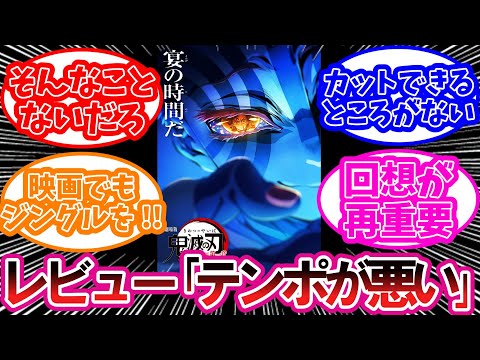
▶ Watch the original YouTube video
Demon Slayer Entertainment District Arc Movie: Fan Reactions to Pacing Criticism
The Demon Slayer Entertainment District Arc film has sparked debate among viewers regarding its narrative pacing and structural choices. While some fans praise the film’s faithful adaptation of the source material, others critique the frequent scene transitions and extended internal monologues that slow down the action sequences.
What Happened
The Demon Slayer Entertainment District Arc movie, released in 2021, has become the subject of significant fan discussion regarding its pacing and narrative structure. Critics point to the film’s approximately 155-minute runtime and its attempt to balance multiple character storylines—including protagonist Tanjiro, supporting characters Nezuko, Zenitsu, and Inosuke, alongside the Sound Hashira Tengen Uzui and antagonists Daki and Gyutaro—as sources of structural tension. The film incorporates numerous flashback sequences and internal monologues that some viewers feel disrupt the flow of action sequences.
Why It Matters
This debate reflects a broader challenge in anime film adaptation: the fundamental tension between maintaining narrative pacing and preserving the psychological depth of the source material. The Entertainment District Arc represents a departure from the previous Mugen Train film, which focused on a single character and avoided pacing issues. Understanding how studios navigate this trade-off illuminates the creative decisions behind major anime adaptations and shapes expectations for future Demon Slayer films, including the Swordsmith Village Arc and Hashira Training Arc.
Background
Demon Slayer’s anime adaptation has achieved unprecedented commercial and critical success since its 2019 television debut. The Mugen Train film (2020) became a global box office phenomenon, establishing high expectations for subsequent theatrical releases. The Entertainment District Arc, adapted from the original manga’s weekly serialization, presents a more complex narrative structure than its predecessor, featuring multiple interconnected character arcs and emotional beats that require careful balance in a theatrical format.
The original manga is characterized by rich psychological descriptions and detailed internal monologues across multiple characters. Translating this literary depth into visual media while maintaining theatrical pacing presents a fundamental creative challenge. The film’s 155-minute runtime must accommodate character development, action sequences, and emotional resonance across numerous storylines simultaneously.
Key Points
- Viewer opinions on the film’s pacing are sharply divided, with some appreciating the psychological depth and others finding the frequent scene transitions disruptive
- Extended internal monologues and flashback sequences—particularly during combat scenes—are identified as primary pacing concerns by critics
- The Entertainment District Arc’s multi-character focus creates structural challenges distinct from the single-character focus of the Mugen Train film
- The original manga’s narrative structure, emphasizing psychological introspection, inherently translates to slower pacing when adapted for film
- Despite pacing criticisms, the film maintains high overall quality ratings, suggesting that production values and emotional impact compensate for structural concerns for many viewers
- Fan responses indicate that the pacing issue may represent a minority viewpoint, with many viewers reporting that they did not experience pacing problems
Structural Analysis: The Adaptation Trade-off
The Entertainment District Arc film exemplifies a recurring pattern in anime adaptations: the inverse relationship between narrative pacing and source material fidelity. When studios prioritize pacing, they typically condense or eliminate character development scenes, psychological introspection, and supporting character arcs. Conversely, when studios prioritize faithful adaptation, they necessarily extend runtime and increase scene density, potentially creating the perception of slower pacing.
The film’s production team faced a binary choice: either streamline the narrative for theatrical pacing or preserve the psychological complexity of the source material. Evidence suggests they chose the latter approach, likely influenced by the Mugen Train film’s success, which demonstrated audience appreciation for faithful, character-focused adaptation.
Scenes that exemplify this choice include the flashback sequences for antagonists Daki and Gyutaro, the extended portrayal of character reactions to Shinobu’s death, and Tanjiro’s psychological journey toward achieving the transparent world technique. Each of these sequences would likely be condensed or eliminated in a pacing-prioritized adaptation, but their inclusion enriches character dimensionality and emotional resonance.
Comparative Context
Analysis of similar anime film adaptations reveals a consistent pattern:
| Title | Release Year | Pacing Issues | Structural Approach | Fan Reception |
|---|---|---|---|---|
| Mugen Train Arc | 2020 | Minimal | Single-character focus | Exceptionally high |
| Entertainment District Arc | 2021 | Reported by some viewers | Multiple characters and parallel storylines | High with noted debate |
| Jujutsu Kaisen Movie | 2021 | Minimal | Single-episode focus | Exceptionally high |
| Attack on Titan Films | 2014-2015 | Reported by viewers | Multiple characters and storylines | Moderate with discussion |
This pattern demonstrates that pacing concerns consistently emerge when films attempt to balance multiple character arcs and narrative threads within a single theatrical release. Films that narrow their focus—either to a single protagonist or a contained episode—avoid these issues entirely.
Perspectives
Supportive Viewpoint
Supporters of the film’s structural choices emphasize that the extended psychological sequences enhance character understanding and emotional impact. They note that voice acting performances, particularly in introspective scenes, elevate the viewing experience beyond what pacing metrics alone would suggest. Many viewers report that they did not experience pacing problems, suggesting that the film’s structure may not negatively impact the majority audience. Additionally, supporters argue that the film’s refusal to cut significant source material demonstrates respect for the original work and its fanbase.
Critical Viewpoint
Critics acknowledge the film’s quality while maintaining that the frequent scene transitions and internal monologues disrupt narrative momentum. They argue that the film attempts to compress content designed for episodic television into a theatrical format, resulting in tonal whiplash. Some viewers specifically note that important emotional moments—such as Shinobu’s death—receive insufficient time for emotional resonance before the narrative moves to the next scene. Critics suggest that a more aggressive editorial approach would have improved the theatrical experience without necessarily compromising the story’s essence.
Analytical Perspective
From a structural standpoint, the pacing debate reflects the inherent limitations of theatrical adaptation. The original manga’s narrative architecture, built around weekly serialization with multiple ongoing character threads, does not naturally compress into a 155-minute film. The production team’s decision to preserve psychological depth over pacing represents a conscious value judgment: that character complexity and emotional authenticity matter more than streamlined narrative flow.
Industry Trends in Psychological Visualization
The Entertainment District Arc film reflects a broader trend in contemporary anime production: the increasing emphasis on visualizing internal psychological states. Since approximately 2018, anime studios have invested significantly in translating literary introspection into visual language through techniques including slow-motion sequences, visual metaphors, and layered sound design.
The film’s depiction of Tanjiro’s achievement of the transparent world technique exemplifies this approach. Rather than simply showing the technique’s physical effects, the sequence combines slow-motion cinematography with internal monologue to externalize the character’s psychological breakthrough. This represents a maturation of anime as a medium, moving beyond literal adaptation toward interpretive visualization of internal states.
Viewer Reception Analysis
Fan commentary reveals nuanced perspectives that complicate simple pacing critiques. Many viewers acknowledge pacing concerns while simultaneously reporting that they did not personally experience them as problematic. This suggests that individual tolerance for introspective sequences varies significantly and that pacing perception may depend on viewer familiarity with the source material and personal preferences regarding narrative rhythm.
Notably, some viewers observe that the original manga’s narrative structure—characterized by extensive internal monologue and psychological description—naturally produces slower pacing when adapted for visual media. This observation suggests that pacing criticism may reflect the inherent properties of the source material rather than adaptation failures.
A significant observation from viewer responses is that despite pacing criticisms, the film maintains strong overall approval ratings. This suggests that other elements—including animation quality, voice acting, emotional resonance, and visual spectacle—effectively compensate for structural concerns for the majority of viewers.
Insights
The Entertainment District Arc film represents an honest confrontation with the fundamental challenges of anime adaptation. The pacing debate is not a failure of execution but rather a visible manifestation of the creative tension inherent in translating serialized manga into theatrical cinema.
The production team’s decision to prioritize psychological depth and source material fidelity over streamlined pacing reflects confidence in the audience’s appreciation for character complexity. This approach proved commercially successful and critically acclaimed, suggesting that the perceived pacing trade-off may not significantly impact viewer satisfaction for the broader audience.
The film’s treatment of antagonist backstories—particularly the extended flashback sequences for Daki and Gyutaro—demonstrates how the pacing “problem” directly enables character dimensionality. These sequences transform antagonists from simple obstacles into psychologically complex characters with understandable motivations. This transformation would be impossible in a pacing-optimized adaptation.
Looking forward, the Entertainment District Arc film establishes a template for how Demon Slayer adaptations will likely approach future theatrical releases. The Swordsmith Village Arc, Hashira Training Arc, and Final Battle Arc will presumably face similar structural challenges. The success of the Entertainment District Arc suggests that studios may continue prioritizing narrative depth over pacing optimization, establishing a consistent adaptation philosophy.
Ultimately, the pacing debate illuminates a broader question: what constitutes successful adaptation? Is it technical pacing efficiency, or is it the preservation of the source material’s emotional and psychological essence? The Entertainment District Arc film answers this question through its creative choices, suggesting that emotional authenticity and character depth represent higher priorities than streamlined narrative flow.