▶ Watch the original YouTube video
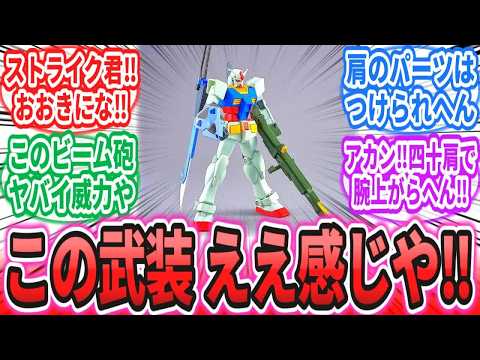
In Gundam SEED FREEDOM, protagonist Amuro Ray equips the Striker Pack—a weapon system from an entirely different timeline. The scene has sparked intense debate across fan communities, blending technical analysis with emotional nostalgia and raising questions about how modern Gundam storytelling bridges decades of franchise history.
What Happened
In the theatrical release of Gundam SEED FREEDOM, Amuro Ray’s RX-78-2 Gundam is shown equipped with the Striker Pack, a modular weapon system originally designed for the Strike Gundam from the Cosmic Era timeline. This marks a rare instance of cross-timeline equipment integration in the Gundam franchise, where mobile suits from fundamentally different technological eras share compatible weaponry.
Why It Matters
This scene represents a significant shift in how the Gundam franchise approaches its multiple timelines. For over two decades, the Universal Century (UC) and Cosmic Era (CE) universes existed as separate, incompatible technological systems. Amuro’s use of CE-era equipment signals that the franchise is moving toward a more integrated multiverse approach, challenging long-held fan assumptions about which timeline’s technology is “superior” and legitimizing the Cosmic Era as equally canonical to the original Universal Century.
Background
The Gundam franchise spans multiple timelines with distinct technological frameworks. The Universal Century, home to Amuro Ray and the original Gundam, relies on nuclear fusion reactors and is constrained by Minovsky particle interference. The Cosmic Era, introduced in Gundam SEED (2002), features a different power system where mobile suits draw energy directly from generators, theoretically enabling unlimited beam fire. For nearly 20 years, these systems remained isolated from one another in the narrative canon. The appearance of cross-timeline equipment integration in a theatrical film—considered part of official canon—marks a departure from this tradition.
Key Points
- Cross-Timeline Equipment: Amuro’s RX-78-2 Gundam operates Striker Pack weaponry designed for Cosmic Era mobile suits, blending two incompatible technological frameworks
- Power System Incompatibility: The UC’s nuclear fusion reactor and CE’s generator-based system function on entirely different principles, raising questions about how the Striker Pack’s infinite-fire capability would function on Amuro’s machine
- Weight and Mobility Concerns: The RX-78-2 weighs approximately 74 tons while the Strike Gundam weighs 43 tons, creating practical questions about equipment compatibility and operational efficiency
- Character Consistency Issues: Amuro historically prefers lightweight, simple armaments, making the Striker Pack’s heavy modular weapons seemingly inconsistent with his established piloting style
- Symbolic Legitimacy: The scene implicitly validates the Cosmic Era as equally canonical to the Universal Century, resolving a 20-year debate within the fan community about timeline hierarchy
- Industry Trend Reflection: The integration mirrors broader anime industry trends toward cross-franchise and cross-timeline collaborations, previously limited to games like Super Robot Wars
Technical Analysis
Fan reactions have centered on three primary concerns. First, the power system incompatibility: Cosmic Era weapons rely on generator-direct energy supply, theoretically enabling unlimited ammunition, while Universal Century systems are constrained by finite reactor output and Minovsky particle interference. Second, the weight differential raises questions about whether the RX-78-2’s frame can efficiently handle equipment designed for a lighter mobile suit. Third, the Striker Pack’s large modular weapons contradict Amuro’s established preference for streamlined, responsive armaments—a characteristic developed across multiple UC-era films and series.
However, fan discussions also acknowledge that Amuro has historically adapted to unconventional weapons when tactically necessary, suggesting his piloting skill transcends equipment limitations. This interpretation frames the scene not as a technical inconsistency but as a demonstration of pilot mastery overcoming mechanical constraints.
Fan Perspectives
Online reactions divide into three categories. The first embraces the scene as a symbolic moment of franchise maturation, celebrating the acknowledgment that both timelines possess equal narrative legitimacy. The second focuses on technical contradictions, debating energy output, weight distribution, and operational feasibility with detailed specifications. The third examines character consistency, questioning whether Amuro would realistically choose such heavy weaponry given his established combat philosophy.
Notably, many fans express simultaneous appreciation and skepticism—acknowledging technical problems while finding the scene emotionally resonant. This suggests modern Gundam audiences prioritize narrative symbolism alongside mechanical plausibility, a shift from earlier fan communities that emphasized strict technical consistency.
Historical Context
When Gundam SEED premiered in 2002, significant fan resistance emerged, with many questioning whether the Cosmic Era represented “true” Gundam. The Universal Century was considered the canonical standard, and CE’s different technological framework was viewed by some as incompatible with franchise continuity. Over two decades, this divide gradually softened as both timelines accumulated substantial narrative history and fan investment. The Striker Pack scene represents the franchise’s official acknowledgment that this division was artificial—that both timelines coexist within an expanded Gundam multiverse.
Broader Industry Implications
This development reflects accelerating trends in anime and gaming toward cross-timeline and cross-franchise integration. Games like Gundam Battle Operation and Super Robot Wars have long featured equipment and character combinations impossible within individual franchise timelines. By incorporating such integration into theatrical canon, Gundam SEED FREEDOM signals that what was once considered fan-fiction territory is becoming mainstream storytelling practice. This suggests future Gundam projects will increasingly embrace multiverse narratives and cross-timeline collaborations.
Insights
The Striker Pack scene succeeds because it addresses a fundamental tension within the modern Gundam fanbase: the desire for both nostalgic continuity with the original Universal Century and genuine investment in newer timelines like the Cosmic Era. By having Amuro—the franchise’s most iconic character—legitimize CE technology through direct use, the narrative resolves a 20-year legitimacy debate without requiring either timeline to be subordinate to the other.
The intense technical discussion surrounding the scene reveals that contemporary Gundam audiences have evolved beyond simple emotional responses. Fans simultaneously demand narrative coherence, character consistency, and technical plausibility while remaining willing to suspend disbelief for symbolically significant moments. This represents a maturation of fan discourse, where criticism and appreciation coexist rather than conflict.
Looking forward, this scene likely marks a turning point in Gundam storytelling. The franchise appears to be transitioning from isolated timeline narratives toward an integrated multiverse model where cross-timeline interaction becomes normalized. Whether future installments can resolve the technical contradictions raised by fans—or whether audiences will continue accepting them as acceptable narrative trade-offs—will determine whether this approach becomes a franchise standard or remains a one-time theatrical spectacle.