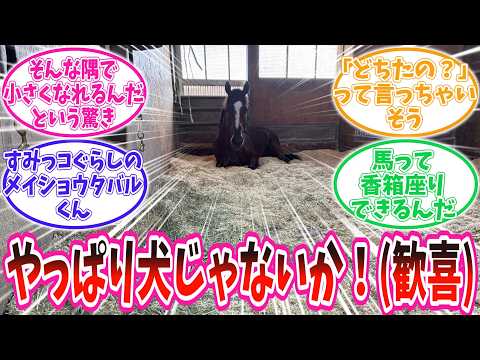
▶ Watch the original YouTube video
An unexpected convergence between the beloved comfort character franchise Sumikko Gurashi and a racehorse named Meishou Tabaru has sparked creative fan engagement across online communities. This phenomenon reveals how modern otaku culture transcends traditional boundaries, blending fictional characters with real-world subjects through fan-created content and social media platforms.
What Happened
Sumikko Gurashi characters—the gentle, corner-dwelling mascots created by San-X in 2012—have been paired with Meishou Tabaru, an actual racehorse, by online fans. This unlikely combination has generated widespread fan reactions, creative interpretations, and cross-community engagement between anime enthusiasts and horse racing fans. The fusion demonstrates how contemporary fan culture creates new meanings by combining elements from entirely different cultural domains.
Why It Matters
This phenomenon illustrates a significant shift in how modern fandom operates. Rather than remaining confined to single franchises or communities, fans increasingly engage in “hybrid fandom”—simultaneously enjoying multiple content types and creating novel combinations. The Sumikko Gurashi and Meishou Tabaru fusion exemplifies how social media platforms enable rapid cross-pollination between disparate communities, creating new forms of creative expression. This trend reflects broader changes in how audiences interact with and reinterpret existing media and cultural objects.
Background
Sumikko Gurashi is a comfort character franchise centered on the philosophical concept of finding peace in quiet corners. Each character possesses distinct personality traits and backstories—for example, Tonkatsu fears being deep-fried, while Penguin? questions its own identity. The franchise has cultivated a devoted global fanbase since its 2012 debut.
In horse racing culture, horse names carry significant weight and influence fan perception. Meishou Tabaru’s distinctive name made it a natural target for fan creativity and reinterpretation. The horse’s unique characteristics and racing style provided material for fans to construct narratives and draw parallels with character traits.
This convergence became possible through the infrastructure of modern social media—Twitter, Pixiv, YouTube, and other platforms where fan communities share creative works instantaneously across traditional boundaries.
Key Points
- Sumikko Gurashi characters have been creatively linked with Meishou Tabaru, a real racehorse, by online fan communities
- The fusion demonstrates how contemporary fans engage in cross-domain creative reinterpretation, combining fictional and real-world subjects
- Horse racing enthusiasts and character franchise fans have found common ground through this unexpected pairing
- Fan-created humor emerges from matching character traits with racing horse characteristics and performance styles
- This phenomenon represents a new form of fan-driven creative expression that blurs boundaries between reality and fiction
- The trend reflects the rise of “hybrid fandom,” where audiences simultaneously engage with multiple content types and communities
The Mechanics of Cultural Fusion
The combination of Sumikko Gurashi and Meishou Tabaru operates through parallel “characterization” practices. Horse racing fans traditionally analyze and personify horses based on their racing styles, bloodlines, and behavioral traits—essentially creating character narratives around real animals. Sumikko Gurashi characters, conversely, are designed with distinct personalities and philosophical underpinnings. When these two characterization systems intersect, fans gain new material for creative play.
This mirrors earlier fan culture phenomena, such as the “Kantai Collection” franchise, which transformed historical warships into characters, enabling fans to construct original narratives and settings. Similarly, the Sumikko Gurashi and Meishou Tabaru fusion provides existing characters with new contexts, allowing fans to engage in creative reinterpretation without creating entirely original works.
The role of social media infrastructure cannot be overstated. Fifteen years ago, fan-created content existed in isolated communities with limited cross-pollination. Today, platforms like Twitter, TikTok, and YouTube enable rapid sharing and viral spread of fan creations across previously separate audiences, accelerating the emergence of unexpected cultural combinations.
Perspectives
Supportive Interpretation: Many fans view this fusion positively as a creative expression of “meta-awareness”—the ability to simultaneously recognize something as fiction while engaging with it sincerely. This represents sophisticated fan engagement that extends existing intellectual property into new contexts, generating fresh humor and meaning. Supporters emphasize the creative energy and cross-community dialogue the phenomenon generates.
Critical Perspective: Some horse racing enthusiasts express discomfort with treating real animals as subjects for character-based entertainment, viewing it as reductive. Certain Sumikko Gurashi fans worry the fusion dilutes the original franchise’s philosophical integrity and gentle aesthetic. These concerns highlight genuine value differences between communities and the importance of respecting diverse interpretations of cultural objects.
Broader Implications for Fan Culture
The Sumikko Gurashi and Meishou Tabaru phenomenon reveals what might be termed “content transcendence”—the erosion of traditional boundaries between distinct fan communities. Where previous generations of fans typically confined themselves to single franchises or media types, contemporary audiences engage in simultaneous, overlapping fandom across multiple domains.
This shift reflects deeper changes in how modern audiences construct meaning. Contemporary fan culture operates with sophisticated meta-awareness, allowing participants to engage playfully with content while maintaining critical distance. The ability to apply Sumikko Gurashi’s character framework to a real racehorse demonstrates this meta-cognitive capacity—fans understand the creative act as recontextualization rather than literal representation.
The commercialization of character properties has also evolved. Where characters once existed within single narrative contexts, they now function as flexible cultural objects applicable across multiple domains. This mirrors official collaborations—such as Sanrio character partnerships with various brands—and suggests that fan-driven fusions may eventually inspire official cross-promotional initiatives.
Future Possibilities
If this fusion model proves sustainable, several developments seem plausible. First, similar character-to-real-world-subject pairings may proliferate across other franchises and domains. Second, official creators may eventually recognize and formalize such fan-driven combinations, similar to how “Uma Musume” (a game that canonically transforms racehorses into characters) emerged as an official product. Third, this phenomenon may accelerate the normalization of hybrid fandom as a dominant mode of fan engagement.
Insights
The Sumikko Gurashi and Meishou Tabaru fusion exemplifies how contemporary fan culture operates as a sophisticated creative practice rather than passive consumption. Fans actively recontextualize existing cultural objects, generating new meanings and narratives that extend far beyond creators’ original intentions. This represents not frivolous play but genuine creative labor—the construction of meaning through unexpected juxtaposition.
The phenomenon also demonstrates fan culture’s capacity to bridge previously isolated communities. By creating a shared reference point, the fusion enables dialogue between horse racing enthusiasts and character franchise fans, potentially fostering mutual understanding across cultural boundaries.
However, this creative freedom must be balanced against respect for diverse community values. The concerns raised by some participants—regarding animal representation and franchise integrity—deserve consideration. Healthy fan culture development requires acknowledging that different communities may interpret the same creative act differently, and that these differences reflect legitimate value systems rather than simple disagreement.
Ultimately, the Sumikko Gurashi and Meishou Tabaru fusion illustrates a fundamental truth about contemporary culture: meaning-making has become democratized. Audiences no longer passively receive cultural products but actively participate in their reinterpretation and transformation. This shift represents both opportunity and responsibility—the opportunity for unprecedented creative expression, and the responsibility to engage respectfully across community boundaries.