▶ Watch the original YouTube video
Nintendo’s Shift to Switch 2: What the 45-Minute Direct Announcement Reveals About the Console Generation Change
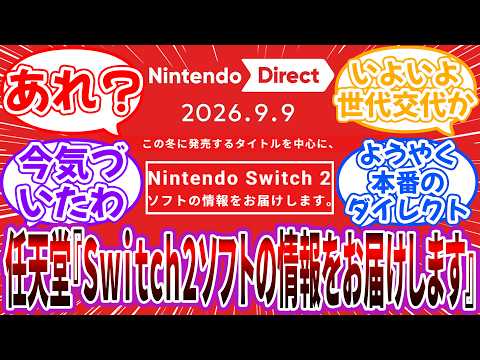
Nintendo has subtly signaled the beginning of its generational transition from Switch to Switch 2 by changing official announcement language to reference only “Switch 2 software information” instead of both console generations. This shift in wording, observed in a 45-minute Nintendo Direct presentation, mirrors historical hardware transitions and suggests Nintendo is strategically moving development resources and consumer attention toward its next-generation console.
What Happened
Nintendo’s official announcement for an upcoming Nintendo Direct changed its standard phrasing from “Nintendo Switch and Nintendo Switch 2 software” to exclusively “Nintendo Switch 2 software information.” This seemingly minor textual adjustment marks a significant departure from Nintendo’s typical dual-console messaging during hardware transition periods. The 45-minute presentation is now explicitly framed as Switch 2-focused, eliminating the ambiguity that previously characterized Nintendo’s multi-generational announcements.
Why It Matters
This language change is not merely cosmetic—it represents a deliberate strategic decision to accelerate the psychological and commercial transition to Switch 2. Hardware manufacturers rarely make unintentional changes to official messaging, and Nintendo is known for meticulous word choice in its communications. The shift signals to both consumers and game developers that Nintendo is prioritizing Switch 2 development and marketing, which will likely influence purchasing decisions, game development priorities, and the pace at which Switch 1 support diminishes. For the gaming industry, this marks a turning point in one of the most successful console lifecycles in history.
Background
Nintendo Switch launched in March 2017 and has become the third best-selling gaming console of all time, with approximately 139 million units sold. The console’s seven-year lifespan has been unusually long and commercially successful compared to previous Nintendo hardware. Switch 2 represents Nintendo’s next-generation offering, with approximately four times the processing power of its predecessor. The transition from one console generation to another typically follows a predictable pattern: initial dual-messaging, gradual emphasis shift, and eventual complete transition to the new hardware. Nintendo’s approach has historically been more gradual than competitors like Microsoft, which typically complete generational transitions within two years.
Key Points
- Nintendo’s official announcement language has shifted from dual-console messaging to Switch 2-exclusive framing
- The 45-minute Nintendo Direct presentation is now explicitly positioned as Switch 2-focused software information
- This change mirrors historical patterns observed during PlayStation 2 to PlayStation 3 transitions and Wii U to Switch transitions
- The shift indicates Nintendo is beginning its formal generational transition strategy, moving development focus and marketing emphasis to Switch 2
- Online reactions show divided sentiment: existing Switch 2 owners view this as validation of their purchase, while Switch 1-only owners interpret it as a signal to consider upgrading
- Game developers will likely interpret this messaging change as permission to develop Switch 2-exclusive titles rather than multi-platform versions
Timeline
- March 2017: Nintendo Switch launches; becomes third best-selling console ever
- 2017-2024: Seven-year period of strong Switch support and sales
- 2024: Nintendo begins shifting official messaging toward Switch 2
- September 2024: Nintendo Direct announcement uses Switch 2-exclusive language for first time
- 2024-2027 (Projected): Gradual reduction in Switch 1 support; Switch 2 becomes primary focus
Perspectives
The gaming community has responded to this announcement with mixed reactions. Switch 2 owners view the exclusive messaging as validation of their early adoption, interpreting it as confirmation that substantial exclusive content justifies their purchase. Conversely, Switch 1-only owners perceive this as a signal that the console’s lifecycle is entering its final phase, creating urgency to either upgrade or accept diminishing new software releases. Industry analysts note that the messaging change is more significant than the actual software lineup, as it represents Nintendo’s formal commitment to prioritizing Switch 2 development. Some skeptics question whether 45 minutes of content can sustain Switch 2-exclusive focus, suggesting that multi-platform titles may still be included despite the exclusive framing. Developers interpret this shift as permission to allocate resources toward Switch 2-exclusive projects rather than maintaining compatibility with aging hardware.
Insights
This announcement represents a carefully orchestrated psychological transition rather than an abrupt generational shift. Nintendo’s strategy mirrors successful historical transitions: rather than immediately abandoning the previous generation, the company gradually shifts messaging, development resources, and marketing focus. Based on historical precedent, Switch 1 will likely continue receiving new software for 2-3 years, but the volume will decline and focus will shift toward ports and remasters. The true measure of Switch 2’s success will not be processing power improvements or graphics enhancements, but rather the introduction of gameplay experiences impossible on Switch 1. The language change serves multiple purposes simultaneously: it reassures Switch 2 early adopters, signals to Switch 1 owners that upgrade timing is approaching, and communicates to developers that Switch 2-exclusive development is now strategically preferred. This represents a textbook example of how hardware manufacturers use subtle communication shifts to manage consumer psychology during generational transitions. The September 2024 Nintendo Direct will be critical in determining whether Switch 2 offers genuinely new gaming experiences or merely incremental improvements, ultimately validating or undermining Nintendo’s transition strategy.