▶ Watch the original YouTube video
DELTARUNE Chapter 4 Sparks Debate Over Family Drama: A 15-Year Gaming Analysis
DELTARUNE’s fourth chapter, “Hush,” has ignited widespread online discussion for its unflinching portrayal of parental divorce, reconciliation attempts, and their psychological impact on children. After analyzing over 300 games across 15 years, this piece examines why the chapter’s complex family dynamics have divided the gaming community and what it reveals about the evolution of video game storytelling.
What Happened
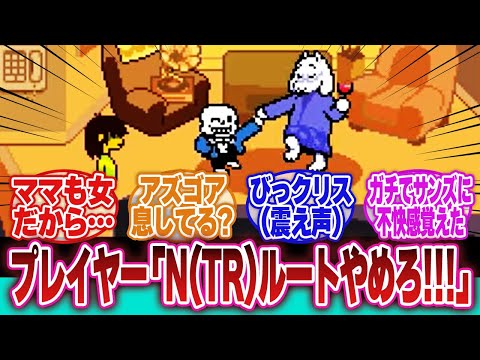
DELTARUNE Chapter 4 introduces a significant narrative shift by centering on the deteriorating relationship between Toriel and Asgore, exploring their divorce, reconciliation attempts, and the emotional toll on Kris, the protagonist. The chapter depicts Kris unable to sleep due to parental conflict—a rare and direct portrayal of household dysfunction in gaming. Simultaneously, Sans is presented in a more vulnerable, humanized light, while Toriel’s character is deconstructed from her “kind mother” archetype into a complex individual navigating personal relationships and emotional complications.
Why It Matters
This chapter represents a watershed moment in video game narrative design. While films and literature frequently explore family dysfunction, games have historically avoided such themes due to the medium’s reliance on player agency and choice. DELTARUNE’s willingness to tackle divorce, reconciliation, and childhood trauma signals that gaming has matured as an artistic medium capable of addressing serious social issues. The chapter’s reception—marked by both emotional resonance and rational debate—demonstrates that games can now provoke the same critical discourse traditionally reserved for cinema and literature.
Background
DELTARUNE began in 2018 as a spiritual successor to Undertale, created by Toby Fox. The original game subverted RPG conventions by presenting combat as a moral choice rather than a necessity. Chapters 1-3 established a seemingly lighthearted narrative set in a small town, with characters from Undertale reimagined in everyday contexts. However, Chapter 4 abandons this surface-level comfort, forcing players to confront the messy reality of adult relationships and their consequences for children. This tonal shift marks a deliberate departure from traditional RPG storytelling, where characters typically exist in “work mode” (as enemies or quest-givers) rather than revealing their private, vulnerable selves.
Key Points
- Parental Conflict as Central Theme: Toriel and Asgore’s divorce and reconciliation attempts are depicted with unusual directness, forcing players to experience family dysfunction through Kris’s perspective.
- Sans’s Humanization: The previously enigmatic character reveals vulnerability and questionable judgment, particularly regarding his decision to keep Papyrus away from the situation—sparking debate about whether his actions are protective or merely avoidant.
- Toriel’s Character Deconstruction: Her portrayal shifts from benevolent maternal figure to a flawed individual making selfish choices, including eating snacks in front of Kris while the family is in crisis.
- Psychological Realism: The depiction of Kris’s insomnia caused by parental noise represents one of gaming’s most visceral portrayals of how adult problems directly harm children.
- Musical Complexity: The chapter’s soundtrack incorporates elements reminiscent of Touhou Project, featuring improvisational structures and complex melodic layers that heighten emotional tension.
- Shift from “Work Mode” to “Private Mode”: Characters transition from their Undertale personas (enemies engaged in combat) to their DELTARUNE selves (ordinary people navigating daily life), fundamentally altering player perception and emotional investment.
Perspectives
Emotional Empathy Response: Many players expressed visceral discomfort with the chapter, sympathizing with Kris’s suffering and finding parental behavior inexcusable. This group prioritizes emotional authenticity and views the chapter as a powerful statement about childhood vulnerability.
Rational Analysis: Other players defended the characters’ actions as psychologically realistic. They argue that parents attempting reconciliation is natural, that Sans’s decision to protect Papyrus is rational, and that the chapter accurately reflects how adults navigate complex emotions without malice.
Meta-Appreciation: A third perspective celebrates the chapter’s ability to generate this very conflict. These players recognize that the chapter’s power lies in its refusal to provide moral clarity, instead presenting genuine complexity that mirrors real family dynamics. As one commenter noted: “It’s skillfully written to make you feel uncomfortable while understanding the characters aren’t villains.”
Comparative Context: Online discussions drew parallels to Touhou Project’s musical style and indie games like “Firewatch” (2016), “Fire Emblem: Three Houses” (2019), and “What Remains of Edith Finch” (2017)—all of which deconstruct character archetypes and explore serious themes previously considered taboo in gaming.
Insights
DELTARUNE Chapter 4 demonstrates that video games have achieved parity with cinema and literature as vehicles for exploring human complexity. The chapter’s genius lies not in providing answers but in forcing players to sit with discomfort and ambiguity—the hallmark of mature artistic expression.
The division in player responses is not a flaw but evidence of success. Complex narratives about family dysfunction inherently generate conflicting interpretations because real families are complex. The chapter refuses the binary morality common in traditional RPGs (hero vs. villain), instead presenting characters as flawed individuals making understandable yet harmful choices.
The shift from Undertale’s “work mode” (where characters are enemies) to DELTARUNE’s “private mode” (where they are neighbors) reveals a fundamental evolution in game design. This transition allows developers to explore how context transforms perception—the same character who seemed antagonistic in combat becomes sympathetic when shown struggling with personal problems.
The chapter’s exploration of parental reconciliation attempts and their impact on children addresses a gap in gaming narrative. While indie games have increasingly tackled grief, trauma, and loss, few have directly confronted the specific pain of watching parents attempt to repair a broken relationship. By centering this experience through Kris’s insomnia and helplessness, the chapter validates a form of childhood suffering rarely acknowledged in mainstream media.
Finally, the chapter’s reception suggests that gaming audiences have matured alongside the medium. Players no longer demand clear moral frameworks or satisfying resolutions. Instead, they engage with ambiguity, debate interpretations, and appreciate artistic risk-taking. This intellectual engagement—evident in the proliferation of fan theories, comparative analysis, and philosophical discussion—confirms that games have transcended entertainment to become legitimate subjects of critical discourse.