▶ Watch the original YouTube video
Touken Ranbu × Fit Boxing Collaboration: What the Crossover Reveals About Character Selection and Fan Engagement
The unexpected partnership between the long-running browser game Touken Ranbu and Nintendo Switch’s Fit Boxing has sparked widespread discussion among fans. With six characters selected as instructors and a focus on health management rather than traditional sword combat, this collaboration signals a strategic evolution in how the franchise engages with its aging fanbase.
What Happened
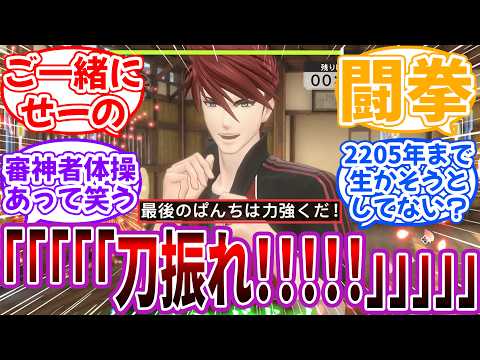
Touken Ranbu, the browser-based game celebrating its 10th anniversary, has partnered with Fit Boxing to create an unusual crossover. Six sword characters—Sada, Mikazuki Munechika, Ookikrigara, Shokukiri, Yamanbagiri Kunihiro, and Horikawa Kunihiro—appear as fitness instructors in the Nintendo Switch title. The collaboration features the tagline “Everyone together, ready—swing your sword!” despite the actual gameplay involving boxing rather than sword combat.
Why It Matters
This collaboration represents a significant shift in how established gaming franchises approach their aging player base. With Touken Ranbu’s original fanbase now in their 30s and 40s, the partnership with a health-focused game suggests deliberate efforts to address real-world wellness concerns. The collaboration also demonstrates how modern gaming franchises expand their narratives beyond their primary platforms, using crossovers to deepen worldbuilding and character development.
Background
Touken Ranbu launched in 2015 and has maintained a dedicated following for over a decade. The game centers on anthropomorphized historical swords protecting history through combat. Within the game’s lore, there exists a concept called “Sada’s Health Gymnastics,” establishing that health management is already part of the game’s narrative framework. Fit Boxing, meanwhile, is a mainstream fitness title on Nintendo Switch designed for players of all fitness levels. The crossover bridges these two seemingly disparate games through the concept of characters training to maintain their strength.
Key Points
- Six characters were selected as Fit Boxing instructors, representing different difficulty levels and personality types
- Character selection appears strategically designed around fitness archetypes: strict/passionate trainers, balanced instructors, and supportive mentors
- The collaboration emphasizes “health management for the main base” rather than traditional combat scenarios
- Fan reactions show appreciation for the concept while noting the absence of popular characters like Yamanbagiri Kunihiro as a primary instructor
- The crossover provides more character dialogue and worldbuilding than recent updates to the main game
- DLC expansion with additional characters is widely anticipated by the community
Character Selection Strategy
The six selected characters appear to follow a deliberate selection framework. Ookikrigara represents the strict, high-intensity trainer archetype. Shokukiri embodies a balanced, mid-level instructor approach. Mikazuki Munechika serves as the motivational figure concerned with the player character’s wellbeing. The selection also considers practical game development factors—characters with reusable body models and established personalities that translate well to fitness instruction roles.
Notably absent from the primary roster is Yamanbagiri Kunihiro, a character many fans identified as ideally suited for an encouraging, beginner-friendly instructor role. This omission has led to widespread speculation about future DLC additions.
The “Sword Swing” Paradox
The collaboration’s central tagline—”swing your sword”—creates an intentional disconnect with actual gameplay. Players perform boxing movements rather than sword techniques. Fan interpretations of this gap range from humorous (“the sword is moving your body, so you’re technically swinging it”) to narrative-based (“training to fight without weapons if disarmed”). This playful contradiction between stated premise and actual mechanics has become a defining characteristic of how Touken Ranbu fans engage with official content.
Perspectives
Fan Appreciation: Many players recognize the collaboration as evidence that developers understand their audience’s real-world needs. Comments emphasize that after 10+ years, the fanbase has aged and health considerations matter. The inclusion of character interactions and dialogue reflects developer awareness of fan desires for deeper character relationships.
Critical Questions: Some players question why boxing specifically was chosen over other exercise forms, and whether the health management framing is genuine concern or marketing strategy. Others note that sword-swinging itself is already a full-body exercise, making the distinction somewhat arbitrary.
Practical Concerns: Community members have raised safety considerations, noting that physical sword training carries risks of property damage and injury, making the controlled environment of boxing-based gameplay a more practical choice for home use.
Insights
This collaboration signals that Touken Ranbu has entered a mature phase of content development. Rather than simply adding new characters or story elements to the main game, the franchise now uses crossovers to explore new dimensions of its world and characters. The partnership demonstrates that established gaming franchises can evolve beyond their original scope to address the changing needs of long-term players.
The selection strategy reveals sophisticated understanding of game design principles—matching character personalities to difficulty levels and player progression paths. This suggests the collaboration was developed with genuine consideration for both narrative coherence and gameplay functionality.
Most significantly, the collaboration represents a shift toward holistic fan engagement. By addressing player health and wellness through narrative framing, the franchise positions itself not merely as entertainment but as a community that cares about its members’ real-world wellbeing. Whether this is genuine concern or strategic marketing, the effect is the same: deepening emotional investment in the franchise.
The widespread anticipation for DLC additions indicates that fans view this collaboration as an ongoing narrative rather than a limited event. The absence of certain popular characters appears intentional, reserving them for future content drops that will maintain long-term engagement with the crossover.