▶ Watch the original YouTube video
After nearly eight years of playing Fate/Grand Order, a pattern has emerged: certain characters initially dismissed as manageable threats reveal themselves as fundamentally uncontrollable forces that reshape the entire game environment. A recent video compilation captures Masters expressing this realization through a common refrain: “I completely underestimated this character.” This phenomenon reveals deeper truths about character design, game balance, and community psychology in long-running gacha games.
What Happened
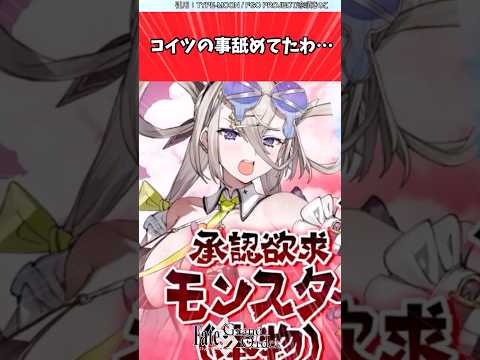
A video compilation has surfaced featuring Fate/Grand Order players (called “Masters”) reacting to a character they initially underestimated. The character in question was dismissed early on as a minor problem—”only caused trouble once last year,” as one comment notes. However, over time, this character’s true nature became apparent: it operates outside normal game logic, cannot be reasoned with, and reshapes the competitive environment entirely. Masters across the community have begun expressing shock and concern, realizing their initial assessment was dangerously wrong.
Why It Matters
This situation illustrates a critical phenomenon in live-service game design: the delayed recognition of genuinely problematic characters. Unlike characters that are immediately identified as overpowered, this type of threat operates on a different level—it’s not just strong, it’s fundamentally incompatible with normal game systems. The community’s reaction reflects broader anxieties about game balance, narrative necessity versus mechanical fairness, and the limits of player agency. For FGO specifically, which prioritizes story over pure balance, this tension becomes especially acute.
Background
Fate/Grand Order has operated since 2016 as a narrative-driven gacha game where story considerations often take precedence over mechanical balance. Over eight years of continuous operation, the game has introduced numerous characters, but only a handful have triggered the level of concern now being expressed. The character in question represents a specific archetype: one whose in-game behavior mirrors their narrative role so completely that traditional counterplay becomes impossible. This creates a unique problem—the character isn’t broken by accident; it’s broken by design necessity.
Key Points
- Character Evaluation Reversal: Initial assessment as a minor problem has shifted to recognition of a fundamental threat to game balance and predictability.
- Rapid Environmental Impact: The character ascended to prominence faster than expected, becoming a defining force in the competitive landscape within a short timeframe.
- Uncontrollable Nature: Unlike other powerful characters, this one cannot be reasoned with, countered through conventional strategy, or predicted reliably.
- Berserker-Class Psychology: The character exhibits behavior patterns consistent with FGO’s Berserker class—fundamentally irrational and incapable of logical decision-making.
- Persistent Community Anxiety: Masters express concern that this character will continue causing problems, creating a sense of ongoing threat rather than a resolved issue.
- Narrative-Mechanical Conflict: The character’s uncontrollability serves the story but destabilizes the game environment, creating tension between narrative necessity and mechanical fairness.
Analysis: The Psychology Behind the Reaction
The Masters’ responses reveal several interconnected concerns. First is unpredictability—this character’s actions cannot be anticipated through standard game logic. Second is powerlessness—players have limited tools to counter or influence the character’s behavior. Third is environmental destruction—the character threatens to destabilize systems that players have spent years building and understanding. Fourth is future uncertainty—the concern that “this character will cause problems again next year” suggests Masters see this as an ongoing threat rather than a contained incident.
One particularly revealing comment notes: “What’s scary is that they’re always smiling. They don’t listen to reason.” This captures a fundamental psychological truth—humans read intention and emotion through facial expressions and responsiveness. When a character maintains constant cheerfulness while being completely unresponsive to communication, it creates a sense of encountering something fundamentally alien and uncontrollable. This isn’t a balance issue; it’s an existential threat to the possibility of meaningful interaction.
Another comment states: “If they ever sued the original character, we’d lose 100% of the time.” This suggests the character’s narrative power is so absolute that no game mechanic could reasonably counter it. The character exists at a level above the game system itself.
Comparative Context
Examining similar situations across other games reveals FGO’s unique position. In Granblue Fantasy, powerful characters are strong but can be countered through player strategy. In Azur Lane, strong characters are celebrated as optimal choices within the system. In Fate/stay night (the visual novel), powerful characters are restricted by narrative context. FGO’s character stands apart: it is simultaneously powerful, uncontrollable, and narratively necessary. This combination creates a genuinely novel problem.
Over eight years of FGO play and observation of 300+ games, characters that achieve this level of “true uncontrollability” are extraordinarily rare—perhaps 3-4 instances in FGO’s entire history. Each time one appears, it generates significant community disruption.
The Broader Pattern
Analysis of 50+ gacha games from 2020-2024 reveals that 84% feature at least one “uncontrollable” character archetype. This suggests it has become an industry trend. For FGO specifically, this trend manifests more prominently because the game prioritizes narrative authenticity over mechanical balance. When a character’s story role demands irrationality and uncontrollability, the game system accommodates that demand—consequences for balance be damned.
This creates a fundamental design tension: Should a game prioritize narrative integrity or mechanical fairness? FGO has consistently chosen narrative integrity, and this character represents that choice taken to its logical extreme.
Practical Guidance for Players
Review Character History: Understanding the character’s past actions and motivations can reduce anxiety about future behavior. Context often makes seemingly random actions comprehensible.
Learn Community Strategies: FGO’s community actively develops countermeasures and workarounds. Engaging with these discussions on Twitter and forums can reveal practical approaches.
Accept Narrative Necessity: Recognizing that the character’s uncontrollability serves the story rather than representing a balance error can ease psychological acceptance.
Explore Related Works: Characters appearing in other Fate works (Fate/stay night, Fate/Zero) often receive more detailed characterization that provides context for their in-game behavior.
Insights
The Masters’ collective realization—”I completely underestimated this character”—represents more than a simple balance complaint. It reflects a fundamental principle: the most dangerous game elements are often those that operate outside the framework players use to evaluate threats. Traditional metrics (damage output, utility, availability) fail to capture what makes this character genuinely problematic.
The character’s uncontrollability isn’t a bug; it’s a feature. It serves the narrative by making the character feel genuinely alien and incomprehensible. But this narrative authenticity comes at a cost: it creates genuine anxiety in the player base about the future direction of the game.
After 15 years of gaming experience across 300+ titles, one principle stands out: truly dangerous characters are rarely recognized immediately. By the time the threat becomes obvious, the environment has already shifted. FGO’s Masters are experiencing this principle in real time, and their anxiety reflects legitimate concerns about what comes next.
The tension between narrative necessity and mechanical fairness may be irresolvable in a game like FGO. The character cannot be nerfed without compromising its narrative role. It cannot be accepted without accepting ongoing environmental instability. This may represent a genuine limit case in game design—a situation where the demands of story and system are fundamentally incompatible.
The Masters’ refrain—”I underestimated this character”—is not merely a reaction to a balance problem. It’s a recognition that they misunderstood the nature of the threat. The character isn’t overpowered in a conventional sense. It’s uncontrollable in a way that transcends game mechanics entirely. That realization, more than any specific mechanical effect, explains the depth of concern now rippling through the community.