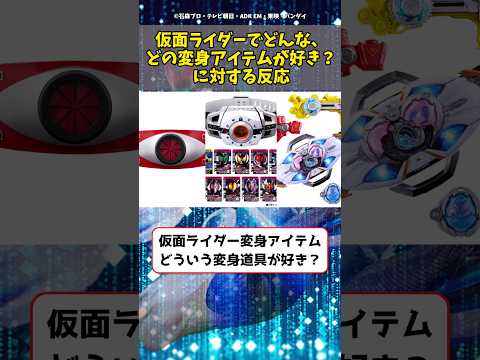
▶ Watch the original YouTube video
Why Kamen Rider Fans Prefer Simple Belt Designs: Insights from 15 Years of Fandom
After more than 15 years following the Kamen Rider franchise, fans have increasingly voiced a preference for simple, intuitive transformation belt designs over complex, feature-heavy alternatives. This shift reflects broader changes in toy design philosophy, target demographics, and what audiences truly value in collectible merchandise.
What Happened
A significant shift has emerged in fan preferences regarding Kamen Rider transformation belts (drivers). Fans increasingly favor designs like the Den-O Belt and V-Buckle—characterized by minimal ornamentation and straightforward operation—over complex, feature-laden alternatives such as the Drive Driver. This preference reflects a broader critique of the “feature-addition arms race” that dominated toy design from 2013 to 2016, when manufacturers continuously added new functions to justify annual product releases.
Why It Matters
This trend reveals fundamental truths about toy design, consumer psychology, and the evolution of the Kamen Rider franchise itself. The preference for simplicity is not merely aesthetic—it reflects practical concerns about usability, economic sustainability, and the changing composition of the fanbase. As the franchise has matured, adult collectors now represent a significant purchasing demographic alongside the original child audience. Understanding what these diverse audiences value provides insight into how toy manufacturers can balance innovation with accessibility, and how beloved franchises can evolve without alienating their core supporters.
Background
The Kamen Rider franchise, which debuted in 1971, has long used transformation belts as central merchandising tools. From 2009 onward, the franchise entered a period of rapid expansion, with new series launching annually. During this era, belt design philosophy shifted dramatically. Early designs prioritized visual elegance and distinctive audio cues. By the early 2010s, manufacturers began adding increasingly complex mechanical and electronic features—multiple operation steps, numerous gimmicks, and intricate transformation sequences.
The turning point came around 2014-2016, when several factors converged: the rise of social media made fan opinions more visible, adult collectors gained purchasing power, and the complexity of belts like the Drive Driver (2014) and Wizard Driver (2012) began generating criticism. Parents reported that children struggled to operate these belts independently, contradicting the fundamental principle that toy transformation devices should be intuitive for young users.
Simultaneously, simpler designs from earlier eras—particularly the Den-O Belt from 2007—began receiving renewed appreciation online. This retrospective admiration prompted industry reflection and, gradually, a design philosophy shift toward what fans call “simple design with expandability.”
Key Points
- Fan Consensus on Simplicity: Belts like the Den-O Belt and V-Buckle receive consistently high fan ratings, while complex designs like the Drive Driver face criticism for poor usability.
- Usability as Core Requirement: Children should be able to operate transformation belts independently without consulting instruction manuals—a principle many 2010s designs violated.
- Audio Design Matters More Than Features: High-quality driver voice acting and sound effects significantly impact fan satisfaction, often more than mechanical complexity.
- Expandability Without Complexity: The most successful modern designs (Double Driver, Gashat Gear Dual) combine simple base operation with expandable item systems, allowing both children and adult collectors to enjoy the product.
- Demographic Shift: The rise of adult fans with disposable income has changed what “success” means for a toy—it’s no longer solely about child appeal but about multi-generational accessibility.
- Visual Balance Matters: Fans value belts that maintain proportional design without excessive ornamentation, treating them as collectibles worthy of display.
Timeline of Design Evolution
- 2007: Den-O Belt released; simple design with iconic audio becomes fan favorite.
- 2009: Kamen Rider Decade era begins; franchise enters period of rapid annual releases.
- 2012: Wizard Driver introduces complex multi-function design; begins trend of feature accumulation.
- 2014: Drive Driver released; complexity reaches peak, generating significant usability complaints from parents and children.
- 2014-2016: “Feature competition” era; manufacturers add new functions annually to justify new products.
- 2015: Ghost Driver released; complexity continues but begins showing design fatigue in fan communities.
- 2016: Ex-Aid’s Gashat Gear Dual introduces simplified base design with expandable items; marks shift toward balanced approach.
- 2019: Zero-One Driver released; represents modern return to simplicity with high-quality audio design.
Design Categories and Fan Reception
Simple Design Category: Belts like the Den-O Belt, V-Buckle, and original Rider Belt prioritize visual elegance and audio quality over mechanical complexity. These designs receive high fan ratings and remain popular with both children and adult collectors. They require no instruction manual and allow intuitive play.
Complex Function Category: The Drive Driver and Wizard Driver exemplify designs that accumulate multiple gimmicks and operation steps. While innovative, these belts often frustrate younger users and require repeated reference to instruction manuals. They appeal primarily to adult collectors interested in mechanical complexity but alienate the core child audience.
Expandable Item Category: The Double Driver and Gashat Gear Dual represent a balanced approach: simple base operation (inserting memory cards or items) combined with expandable functionality. This design philosophy satisfies both children seeking intuitive play and adult collectors seeking depth through item collection.
The Audio Design Factor
Fan commentary consistently highlights the importance of driver voice acting and sound effects. The Wizard Driver’s distinctive “Fire,” “Water” voice samples and the Zero-One Driver’s “Progrise” audio design receive praise despite varying mechanical complexity. This suggests that manufacturers may have underestimated audio design’s impact on overall satisfaction. High-quality sound design can compensate for simpler mechanics, while poor audio design cannot redeem complex mechanics.
Economic and Accessibility Considerations
The shift toward expandable item systems reflects economic realities. While manufacturers benefit from continued purchases of new memory cards or items, fans express concern about escalating costs. The ideal balance—according to fan commentary—involves optional expansion that doesn’t feel mandatory. Belts that force players to purchase additional items to access basic transformation sequences generate resentment, while systems offering genuine choice receive positive reception.
Perspectives
Manufacturer Perspective: From a business standpoint, annual product releases require visible innovation. Adding new features justifies new purchases and maintains consumer interest. However, this approach creates design bloat and alienates users seeking simplicity.
Child User Perspective: Children value belts they can operate independently. Complex transformation sequences requiring multiple steps, instruction manual consultation, or parental assistance reduce play satisfaction and create frustration.
Adult Collector Perspective: Adult fans appreciate visual design quality, audio excellence, and collectibility. They value expandable systems that reward sustained engagement without forcing purchases. They also appreciate belts as display pieces, not merely functional toys.
Parent Perspective: Parents seek toys that provide independent entertainment value, don’t require constant adult assistance, and offer reasonable value for money. Belts requiring extensive instruction or generating pressure for additional purchases receive criticism.
Insights
The fan preference for simple belt designs reflects a maturation of both the franchise and its audience. The Kamen Rider series has evolved from a children’s program into a multi-generational phenomenon, and toy design must accommodate this diversity. The “feature-addition arms race” of the early 2010s represented a misunderstanding of what audiences actually value.
The data suggests that quality matters more than quantity. A belt with exceptional audio design and elegant visual proportions—even with limited mechanical features—generates more sustained fan appreciation than a feature-heavy belt with poor usability. This principle extends beyond Kamen Rider; it reflects broader consumer preferences for thoughtful design over feature bloat.
The successful modern approach combines three elements: intuitive base operation, high-quality audio design, and optional expandability. This formula allows children to enjoy immediate play satisfaction, adults to appreciate design sophistication, and collectors to pursue depth through optional item acquisition. Belts achieving this balance—such as the Zero-One Driver and recent designs—demonstrate that simplicity and innovation are not contradictory but complementary.
Looking forward, the franchise appears to be moving in this direction. Recent releases show manufacturers listening to fan feedback, prioritizing usability and audio design, and treating expandability as optional enhancement rather than mandatory complexity. This represents not a return to the past but an evolution toward design maturity—understanding that the best designs are often the simplest ones, executed with exceptional attention to detail.