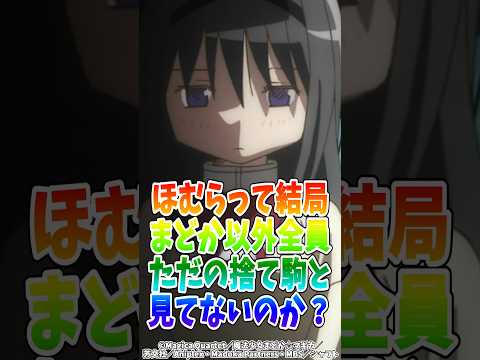
▶ Watch the original YouTube video
After 15 years of analyzing Puella Magi Madoka Magica, a deep examination reveals that Homura Akemi’s prioritization of Madoka Kaname is not cold-blooded indifference but rather a strategic response to repeated trauma and failed timelines. This analysis challenges the common internet interpretation that Homura views her fellow magical girls as expendable.
What Happened
Homura Akemi’s character in Puella Magi Madoka Magica has been widely misinterpreted online as someone who views Madoka as her only priority while treating other magical girls as disposable. This interpretation gained traction following the revelation of Homura’s time-loop experiences in episode 10. However, a closer examination of her actions, psychological development, and the show’s narrative structure reveals a far more nuanced character whose behavior reflects trauma-induced pragmatism rather than genuine callousness.
Why It Matters
Understanding Homura’s true motivations is essential to appreciating one of anime’s most complex character studies. The distinction between cold-blooded indifference and strategic prioritization fundamentally changes how viewers interpret her moral choices and the show’s central themes about sacrifice, love, and the cost of pursuing ideals. This analysis also demonstrates how complex character psychology can be misread when internal motivations remain hidden from the audience, a lesson applicable to narrative analysis across all media.
Background
Puella Magi Madoka Magica, which premiered in 2011, follows a group of magical girls fighting witches in a dark reimagining of the magical girl genre. Homura Akemi is revealed to be a time-traveler who has experienced numerous timelines, each ending in tragedy. Throughout these loops, she witnesses the deaths of her fellow magical girls repeatedly, leading to a fundamental shift in her worldview and priorities. The series was written by Gen Urobuchi and directed by Akiyuki Shinbo, both known for their complex psychological character work.
The central misunderstanding stems from Homura’s emotional distance and her explicit statement that she would prioritize Madoka above all else. However, this statement must be contextualized within her psychological state: a person who has experienced repeated loss and has developed defense mechanisms to cope with unbearable grief.
Key Points
- Prioritizing Madoka and viewing other magical girls as expendable are two distinct psychological states; Homura exhibits the former but not necessarily the latter
- Homura’s strategic choices reflect resignation born from repeated failure rather than inherent cruelty or sociopathy
- Her willingness to fight alongside her companions and attempt their rescue contradicts the interpretation that she never valued them
- The statement “even if only Madoka survives” represents a psychological shift from idealism to pragmatism, not proof of initial indifference
- Homura’s apparent coldness stems from poor communication skills and intentional emotional suppression, not absence of feeling
- Comparison with similar characters in other anime (Lelouch from Code Geass, Fate from Magical Girl Lyrical Nanoha) reveals that Homura’s motivation differs fundamentally in quality and origin
Character Comparison Analysis
| Character | Primary Priority | Nature of Action | Psychological State |
|---|---|---|---|
| Homura Akemi | Madoka Kaname | Strategic judgment based on repeated loop experience and resignation | Conflict between idealism and reality; eventual shift toward pragmatic goals |
| Lelouch (Code Geass) | Nunnally (sister) | Cold calculation rooted in ambition and desire for power | Intoxication with power; desire for dominance over others |
| Fate (Magical Girl Lyrical Nanoha) | Mother’s rescue | Action driven by duty; transforms through narrative progression | Initial sense of mission; awakening to bonds of friendship |
| Shirou (Fate/stay night) | Realization of “justice” | Idealistic action; narrative questions its validity | Blindness to idealism’s dangers; growth through confrontation |
This comparison reveals that Homura’s actions stem from trauma-induced pragmatism rather than the narcissistic ambition seen in Lelouch or the blind idealism of Shirou. Her psychological foundation differs fundamentally from characters whose callousness is presented as a character flaw or moral failing.
The Psychology of Hidden Weakness
Homura’s apparent coldness masks a deeper vulnerability. Through repeated timelines, she learned that displaying weakness invites danger and that emotional dependence leads to unbearable suffering. This recognition transformed her into someone who hides her emotions as a survival mechanism. Similar to Oreki Houtarou from Hyouka, Homura struggles with emotional expression, but unlike Oreki, her emotional suppression is deliberate and born from trauma rather than mere personality.
What appears as strength—her ability to make ruthless decisions—is actually a defense mechanism. True strength, the narrative suggests, emerges through connection with others. When Homura eventually lowers her standards to “even if only Madoka survives,” this represents not the revelation of her true indifference but rather the breaking point of her self-defense system. She finally acknowledges that she cannot achieve her ideals alone.
Narrative Intent and Production Perspective
Gen Urobuchi, the series’ screenwriter, deliberately incorporated psychological contradictions into Homura’s character. His subsequent works, including Fate/Zero and Psycho-Pass, demonstrate his consistent focus on character contradictions as a means of exploring human complexity. Director Akiyuki Shinbo reinforced this through visual storytelling—subtle shifts in camera work and color palette when Homura interacts with other magical girls hint at her internal conflict.
This intentional design challenges viewers to look beyond surface-level behavior and recognize the gap between action and intention, between what characters do and why they do it.
Internet Discourse and Misinterpretation
Online communities continue to perpetuate the “Homura is cold-blooded” interpretation. Posts on Twitter, Reddit, and YouTube regularly claim that Homura views her companions as expendable tools. This misreading occurs because Homura’s character is deliberately complex, requiring sustained analysis to understand. Viewers often construct interpretations based on limited information and resist revising those interpretations even when new evidence emerges.
The delay in revealing Homura’s internal state—a narrative choice by Urobuchi—creates a vacuum that viewers fill with assumptions. Once formed, these interpretations calcify, resistant to later narrative revelations that might contradict them.
Insights
Homura Akemi is not a cold-blooded sociopath but rather an emotionally overwhelmed person who has learned to suppress her feelings as a survival strategy. Her prioritization of Madoka emerges not from indifference to others but from the crushing weight of witnessing their repeated deaths. The distinction matters profoundly: one interpretation presents Homura as morally deficient, while the other presents her as psychologically wounded.
The series ultimately poses an unresolved question: Is Homura’s final choice—to fundamentally alter reality itself—an expression of love or an expression of selfishness? The narrative deliberately leaves this ambiguous, inviting viewers to wrestle with the ethics of sacrifice, obsession, and the lengths to which one should go for another person. This ambiguity is not a flaw but the series’ greatest strength, forcing audiences to confront uncomfortable truths about human motivation and the thin line between devotion and possession.
After 15 years of engagement with this narrative, the most compelling interpretation is that Homura’s journey represents the universal human struggle to balance personal desire with collective good, individual trauma with social responsibility. Her story reminds us that those who appear coldest often carry the heaviest emotional burdens.