▶ Watch the original YouTube video
How Mobile Suit Gundam SEED Divided Char’s Character Elements Among Three Pilots
After watching Gundam SEED FREEDOM, fans and analysts have identified a fascinating character design pattern: the iconic rival archetype of Char Aznable from the original 1979 Mobile Suit Gundam has been deliberately split across three distinct characters in the SEED universe. This division reveals both the universal appeal of Char as a character template and how modern Gundam storytelling has evolved to create more nuanced narratives.
What Happened
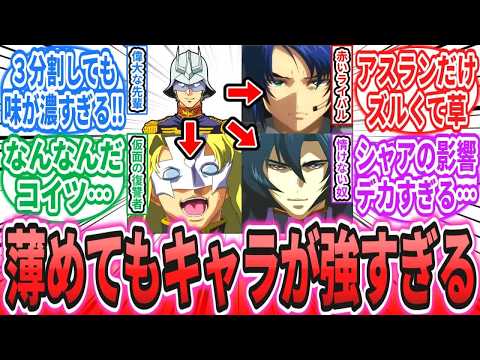
Following the theatrical release of Mobile Suit Gundam SEED FREEDOM, online fan communities began analyzing how the SEED series reimagines Char Aznable’s archetypal character traits. Rather than creating a direct successor to Char, the SEED narrative distributes his defining characteristics across three separate characters: Athrun Zala, Jibril Creuze, and Gilbert Durandal. Each character embodies different facets of Char’s complex personality and role within the story.
Why It Matters
This character design approach demonstrates how foundational archetypes in long-running franchises can be deconstructed and reimagined for new generations. Understanding this pattern reveals the creative sophistication behind Gundam SEED’s narrative structure and offers insight into how character design principles have evolved across 45 years of the Gundam franchise. The analysis also highlights how Athrun Zala ultimately transcends the “Char curse”—the pattern of self-destruction that defines Char’s trajectory—suggesting a fundamental shift in how the series approaches character destiny and redemption.
Background
Char Aznable emerged in 1979’s original Mobile Suit Gundam as a complex antagonist defined by several key traits: his red mobile suit, his role as a rival to protagonist Amuro Ray, his status as the son of an important political figure, his mask that conceals his true identity, his desire for revenge against the Earth Federation, and his ambitious plans to reshape the world. Over subsequent decades, Char appeared in multiple Gundam series including Zeta Gundam, Gundam ZZ, Char’s Counterattack, and Gundam UC, with his character becoming increasingly contradictory and his ultimate goals increasingly unclear.
Mobile Suit Gundam SEED, which aired in 2002-2003, arrived 23 years after the original series. The production team faced a creative challenge: how to honor the Char archetype while creating fresh characters for a new world and narrative. Their solution was to distribute Char’s essential elements across multiple characters rather than creating a direct successor.
Key Points
- Athrun Zala inherits Char’s visual identity (red mobile suit), his role as rival, his status as the son of an important figure, and his potential for absolute strength if free from doubt—but crucially, Athrun possesses constant internal conflict that Char lacks.
- Jibril Creuze embodies Char’s mask, his role as a vengeful figure, and his ideological vision for reshaping the world, yet represents a fundamentally different psychology: a person with “nothing to lose” who prioritizes only personal satisfaction.
- Gilbert Durandal carries Char’s weakness and vulnerability, his experience of being manipulated by others, and his failure to realize his grand plans despite their initial promise.
- These three characters, when analyzed together, contain all essential Char elements without contradiction, proving the universal and archetypal nature of Char’s character design.
- Athrun’s ultimate escape from the “Char pattern” represents Gundam SEED’s greatest achievement: demonstrating that the cycle of self-destruction can be broken through genuine human connection and guided choice.
- The presence of Cagalli Yula Athha as Athrun’s guide figure—a role Char never possessed—proves essential to his divergence from Char’s tragic fate.
Character Analysis: The Division of Char’s Elements
Athrun Zala: The Heir Apparent
Athrun Zala most directly inherits Char’s surface characteristics. His red mobile suit, his position as a rival to protagonist Kira Yamato, and his status as the son of Patrick Zala all directly parallel Char’s foundational traits. However, a critical distinction emerges: Athrun is defined by constant internal conflict and doubt. Whereas Char demonstrates unwavering commitment to his goals despite their contradictions, Athrun perpetually questions whether his path is correct. This hesitation becomes Athrun’s defining feature and the primary factor that separates him from Char’s trajectory.
Throughout the SEED series, particularly in SEED DESTINY and SEED FREEDOM, Athrun repeatedly makes deliberate choices that contradict his inherited position and expectations. Rather than being consumed by these contradictions like Char, Athrun actively works to resolve them, ultimately establishing himself as an independent agent rather than a prisoner of his circumstances.
Jibril Creuze: The Masked Ideologue
Jibril Creuze carries Char’s most visually distinctive element—the mask—along with his role as a vengeful figure pursuing grand ideological plans. However, Creuze represents an inversion of Char’s psychology. Where Char is constrained by responsibility, position, and competing ideals, Creuze is liberated by having nothing to lose. His motivations are purely personal satisfaction rather than any broader vision of justice or social transformation.
The mask itself functions differently in each character. Char’s mask maintains an almost expressionless facade that invites speculation about hidden thoughts. Creuze’s mask, by contrast, appears to shift in expression depending on the viewer’s perspective and emotional state—a design choice that reflects his fundamentally different nature as a character.
Gilbert Durandal: The Vulnerable Architect
Gilbert Durandal embodies the aspects of Char that are most often overlooked: his vulnerability, his susceptibility to manipulation, and his ultimate failure to achieve his vision. Durandal pursues his grand plan, the Destiny Plan, with conviction, yet finds himself outmaneuvered and defeated before realizing his goals. This mirrors Char’s repeated pattern of ambitious plans that collapse under the weight of circumstance and opposition.
Durandal represents what might be called the “inverse Char”—possessing Char’s ambition and planning capability but lacking the force of will or circumstantial advantage necessary to succeed. He embodies the human cost of ideological commitment when that commitment encounters immovable opposition.
Timeline
- 1979: Char Aznable debuts in Mobile Suit Gundam, establishing the archetype.
- 1985-1989: Char appears in Zeta Gundam and Gundam ZZ, with his character becoming increasingly contradictory.
- 1988: Char’s Counterattack depicts Char’s final, catastrophic attempt to reshape the world.
- 2002-2003: Mobile Suit Gundam SEED airs, introducing Athrun Zala, Jibril Creuze, and other characters who collectively reinterpret Char’s archetype.
- 2004-2005: Gundam SEED DESTINY continues Athrun’s character development, showing him wrestling with and ultimately transcending his inherited Char-like role.
- 2024: Mobile Suit Gundam SEED FREEDOM releases theatrically, prompting renewed fan analysis of how thoroughly Athrun has escaped the Char pattern.
Perspectives
The Archetypal Interpretation: From this perspective, Char represents a universal character archetype—the idealistic rival corrupted by circumstance, defined by contradiction, and ultimately destroyed by his own nature. The SEED series demonstrates that this archetype is so fundamental that it can be successfully divided among multiple characters without losing coherence. Each character carries one aspect of the whole, and together they create a more complete exploration of the archetype’s possibilities.
The Narrative Evolution View: This interpretation emphasizes how SEED represents an evolution in storytelling sophistication. Rather than repeating Char’s tragic pattern, SEED explores what might happen if the various elements of that pattern were distributed across characters with different psychological makeups and different relationships. This allows the narrative to examine both the inevitability of the Char pattern and the possibility of escaping it.
The Character Development Perspective: This view focuses on Athrun’s personal journey as the central achievement of the SEED series. By inheriting Char’s most visible traits while possessing the internal conflict and external guidance that Char lacked, Athrun demonstrates that the cycle of self-destruction is not inevitable. His repeated choices to act with integrity despite doubt, and his willingness to be guided by Cagalli, create a fundamentally different outcome from Char’s trajectory.
The Role of Cagalli Yula Athha: The Guide Who Changes Everything
A crucial element in Athrun’s divergence from the Char pattern is the presence of Cagalli Yula Athha as a guiding figure. Throughout the SEED series, Cagalli serves as a moral compass and emotional anchor for Athrun, particularly during moments when he might otherwise succumb to the same destructive patterns that consumed Char.
Char never possessed such a guide. While he encountered various figures throughout his appearances—Haman Karn, Amuro Ray, and others—none served as a genuine guide toward redemption or self-understanding. Haman manipulated Char; Amuro opposed him; but neither offered the kind of consistent, compassionate guidance that might have altered his trajectory. Cagalli’s role parallels that of Brex Folar, a mentor figure in the original Gundam who guided Amuro toward maturity and purpose. However, unlike Brex, Cagalli survives and remains present throughout Athrun’s journey, providing continuous support rather than a single moment of direction.
Insights
The division of Char across three characters in Gundam SEED reveals several profound truths about character design, narrative structure, and the nature of archetypes in long-running franchises.
The Universality of Char: Char Aznable has endured for 45 years not because he is a unique character, but because he embodies a universal human archetype: the idealist corrupted by circumstance, the person whose vision exceeds their ability to realize it, the individual trapped between competing loyalties. By successfully dividing Char’s elements among three distinct characters without creating narrative incoherence, SEED proves that Char’s appeal transcends any single personality or specific plot. The archetype itself is the source of his power.
The Evolution of Redemption: The original Gundam series and its sequels presented Char as essentially unredeemable—a figure whose contradictions and ambitions inevitably lead to destruction. Gundam SEED asks a different question: what if those contradictions were distributed differently? What if the person with Char’s ambition also possessed genuine doubt? What if the person with Char’s ideological vision lacked the will to pursue it? What if the person with Char’s visual identity had access to genuine guidance and connection? By distributing Char’s traits across multiple characters with different circumstances and relationships, SEED suggests that redemption is possible—not through denying the Char archetype, but through transforming the conditions that make it destructive.
The Power of Narrative Distribution: Rather than creating a direct successor to Char or abandoning the archetype entirely, SEED’s approach of distributing character elements across multiple figures allows for greater narrative complexity and thematic depth. Each character can explore one aspect of the archetype fully, without being constrained by the need to embody all aspects simultaneously. This technique has proven influential in subsequent Gundam works and demonstrates a sophisticated understanding of how character design can serve larger narrative purposes.
The Importance of Connection: Perhaps most significantly, the analysis reveals that Athrun’s escape from the Char pattern is fundamentally enabled by his connections to other characters—particularly Cagalli, but also Kira and others who refuse to allow him to be consumed by his inherited role. Char’s tragedy, in this reading, is not inevitable but circumstantial: he lacked the relationships and guidance that might have allowed him to transcend his contradictions. This suggests that even archetypal patterns of behavior can be interrupted through genuine human connection and the presence of those willing to guide rather than exploit.
The Enduring Relevance of Archetypes: The fact that Char continues to influence character design across anime and manga four decades after his creation demonstrates the power of archetypal characters. Char is not merely a character but a template—a way of thinking about ambition, contradiction, and the collision between individual will and circumstantial constraint. As long as stories explore these themes, Char’s influence will persist, whether through direct homage or through the kind of distributed reinterpretation that Gundam SEED exemplifies.
Gundam SEED’s achievement lies not in replacing Char but in proving that his essential elements remain vital and generative. By dividing Char among three characters, the series demonstrates both the universality of his archetype and the possibility of transcending the tragic pattern he represents. Athrun Zala stands as proof that the cycle of self-destruction need not be inevitable—that with the right circumstances, relationships, and choices, even those who inherit the Char archetype can forge a different destiny.