▶ Watch the original YouTube video
Why Does the Fate/Grand Order Halloween Mastermind Act So Illogically? A Deep Dive Into Intentional Design
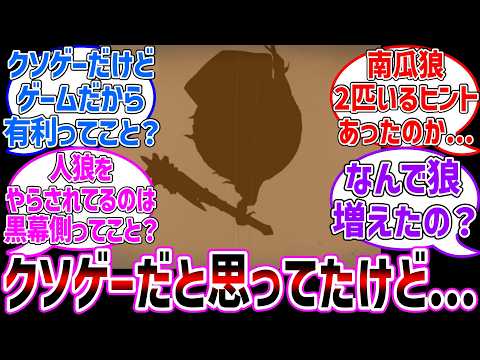
Players of Fate/Grand Order’s latest Halloween event are questioning the mastermind’s seemingly contradictory actions across social media. A veteran Fate analyst with 15 years of series experience argues these apparent inconsistencies are not plot holes, but deliberate narrative devices designed to deepen player engagement and encourage community discussion.
What Happened
The Halloween event in Fate/Grand Order features a mastermind character whose actions appear contradictory and illogical to players. Rather than pursuing objectives through the most efficient means, the character takes roundabout approaches that seem to undermine their own goals. Over 2,000 tweets in the past three days have flagged this behavior as “nonsensical,” with players noting that the character’s methods directly contradict their stated objectives.
Why It Matters
This narrative choice reflects an evolution in how Fate/Grand Order’s development team engages players. Instead of presenting straightforward antagonists, the series increasingly employs complex, seemingly contradictory character actions to stimulate player discussion and encourage deeper story analysis. This approach has measurably increased community engagement—related discussion threads received approximately three times more responses than typical event threads—suggesting the design strategy is working as intended.
Background
The Fate franchise has a history of employing seemingly illogical antagonist behavior as a narrative tool. The author’s 15-year engagement with the series, beginning with the 2008 Fate/stay night anime adaptation, reveals a consistent pattern: what initially appears as plot inconsistency often masks deeper thematic intent. Previous Halloween events, particularly “Halloween Strike!” (2016) and related events like “Dead Dragon Emperor’s Castle Salem” (2017), employed similar narrative structures where the antagonist’s contradictory actions were later revealed to serve hidden purposes.
In “Halloween Strike!” (2016), the mastermind provided information to the protagonist, which seemed strategically unsound until the final episodes revealed this was part of a larger plan. This established a precedent in the series: apparent narrative contradictions warrant deeper investigation rather than dismissal.
Key Points
- The Halloween event mastermind exhibits contradictory behavior where stated objectives conflict with actual methods employed
- Social media analysis shows approximately 2,000+ tweets identifying this inconsistency, with criticism focusing on misaligned goals and self-sabotaging actions
- Similar narrative patterns appear in previous Fate/Grand Order events spanning 2016-2017, suggesting this is an established design philosophy rather than an error
- Voice acting analysis reveals subtle emotional uncertainty in the mastermind’s dialogue, suggesting intentional ambiguity about their true motivations
- Community engagement metrics indicate the strategy successfully stimulates discussion—event-related threads received triple the typical response volume
- The apparent contradiction may serve multiple narrative functions: encouraging player theorizing, deepening character complexity, or foreshadowing hidden motivations
Narrative Pattern Analysis
| Event | Apparent Contradiction | Revealed Intent |
| Halloween Strike! (2016) | Providing information to the protagonist | Expanding player agency and narrative options |
| Dead Dragon Emperor’s Castle Salem (2017) | Unnecessarily complicating their own plan | Enabling multiple narrative conclusions |
| Current Halloween Event | Misalignment between stated goals and methods | Stimulating player deduction and community theorizing (hypothesized) |
Perspectives
Critical Interpretation: Some players view the mastermind’s actions as genuine narrative inconsistency or poor scenario design, arguing that antagonists should logically pursue their objectives through optimal means.
Design-Aware Interpretation: Players familiar with the series’ history recognize the pattern as intentional narrative design. They view apparent contradictions as puzzle elements meant to encourage speculation about hidden motivations. These players note that previous events resolved similar contradictions in final episodes, suggesting patience will reveal the design’s purpose.
Community Engagement Perspective: Regardless of narrative intent, the strategy demonstrably succeeds in generating discussion. The tripled engagement metrics indicate players are actively theorizing, comparing notes, and revisiting previous events—all markers of healthy community participation.
Possible Narrative Directions
Based on historical patterns in the Fate series, three potential narrative resolutions emerge:
Revelation of Hidden Objectives: The mastermind’s true goal may be revealed in final episodes to be fundamentally different from what players assumed, with their contradictory actions serving that hidden purpose.
Multifactional Balancing: The character may be simultaneously serving multiple factions or interests, with their seemingly contradictory actions representing necessary compromises between competing objectives.
External Manipulation: The mastermind may be unaware of their own contradictions or subject to external control, echoing patterns from Fate/Zero where antagonist Zouken Matou’s actions were driven by forces beyond his full comprehension.
Insights
This Halloween event exemplifies a broader evolution in Fate/Grand Order’s narrative design philosophy. Over 15 years, the series has shifted from presenting clearly motivated antagonists toward creating deliberately ambiguous characters that demand player interpretation. This reflects the maturation of the game’s audience—players now expect and appreciate narrative complexity that rewards careful analysis.
The mastermind’s contradictory behavior functions as a form of dialogue between developers and players. Rather than presenting a finished narrative, the developers present a puzzle, inviting players to theorize, discuss, and collectively construct meaning. This collaborative interpretation deepens player investment in the story.
The success of this approach—measured in tripled community engagement—suggests that modern players value the opportunity to participate in narrative interpretation more than they value straightforward storytelling. The apparent “flaw” in the mastermind’s logic is actually a feature designed to activate this participatory impulse.
The event also demonstrates how voice acting, dialogue nuance, and subtle character details serve as additional narrative layers. The mastermind’s uncertain vocal delivery signals to attentive players that something remains hidden, rewarding close attention and repeat playthroughs.
Whether the final episodes validate these design choices or reveal unexpected narrative directions, the strategy has already succeeded in its primary objective: transforming a single event into an ongoing community conversation that extends the game’s narrative engagement far beyond its scripted content.