▶ Watch the original YouTube video
Analyzing Madoka and Homura’s Relationship in ‘Puella Magi Madoka Magica: Walpurgisnacht Reversed’
The latest film in the Puella Magi Madoka Magica franchise presents a troubling evolution in the relationship between its two central characters. After 15 years as a devoted fan, this analysis examines why the conceptualized Madoka has become silent, what this means for her character, and how it reflects deeper contradictions in the story’s narrative structure.
What Happened
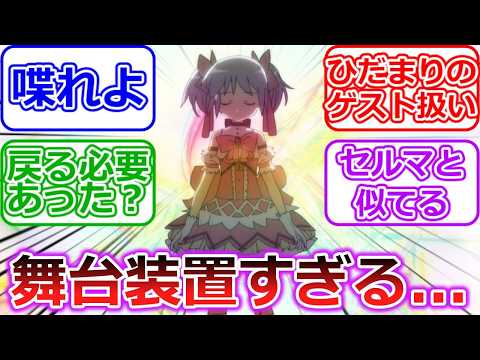
In the new film “Walpurgisnacht Reversed,” Madoka—now a conceptualized being existing as “Homura’s Law”—is depicted as a silent, non-speaking entity. This represents a dramatic departure from her characterization in the original television series and previous films, where she engaged in meaningful dialogue and demonstrated clear emotional agency. The film shows Homura undergoing a transformation into a demonic form in her attempt to “save” Madoka, while Madoka herself remains largely passive and wordless throughout the narrative.
Why It Matters
This shift raises fundamental questions about character development, narrative consistency, and the cost of sacrifice in storytelling. For a franchise built on the emotional complexity of its protagonist, the apparent erasure of Madoka’s voice and agency represents a critical turning point. The film’s treatment of these characters has sparked significant debate within the fanbase about whether the story is exploring a logical conclusion to its themes or abandoning its core character in favor of plot mechanics. Understanding this evolution is essential for longtime fans and newcomers alike to grasp what the franchise is attempting to communicate about the nature of sacrifice, love, and identity.
Background
The original Puella Magi Madoka Magica television series (2011) concluded with Madoka making a universe-altering wish to save all magical girls from despair. This wish transformed her into a conceptual entity known as “Homura’s Law”—a system that exists across all timelines to prevent magical girls from becoming witches. The 2013 film “Rebellion” further complicated this narrative by having Homura extract Madoka from this conceptual existence and place her into a false reality, raising questions about free will, love, and the ethics of salvation. “Walpurgisnacht Reversed” continues this thread, depicting the consequences of these choices and the deteriorating relationship between the two protagonists.
Key Points
- Madoka’s Silence as Character Loss: The choice to render Madoka non-speaking represents either a logical consequence of her conceptualization or a failure to maintain her as a fully realized character. The film offers no clear explanation for this silence, leaving viewers to interpret whether it reflects her transcendence or her erasure.
- Homura’s Demonic Transformation: Homura’s decision to become a demon in pursuit of saving Madoka mirrors Madoka’s original sacrifice, creating a cycle of mutual self-destruction disguised as love. This raises questions about whether either character is capable of breaking free from their patterns of self-abnegation.
- The Absence of Grounding Elements: Unlike the original series, which emphasized Madoka’s connections to her family and friends, the new film largely removes these relationships from the narrative. This eliminates the emotional anchors that previously made Madoka’s humanity tangible and relatable.
- Homura as the True Protagonist: The film’s narrative focus shifts decisively toward Homura’s agency and decision-making, while Madoka becomes increasingly passive. This structural choice raises questions about whether the story has inadvertently made Homura the true protagonist while reducing Madoka to a narrative object.
- The Logical Contradiction of Conceptual Humanity: The film grapples with an inherent contradiction: a being that has transcended physical existence and become a universal system cannot logically maintain human characteristics like speech, emotion, or individual desire. Yet the story seems unwilling to fully commit to this premise.
- Systemic Collapse and Narrative Instability: The film suggests that the system Madoka created is fundamentally unstable, requiring constant intervention from Homura to prevent its collapse. This undermines the original narrative’s suggestion that Madoka’s wish created a stable, functioning solution.
Timeline
- February 2011: Original Puella Magi Madoka Magica television series airs, concluding with Madoka’s transformative wish and conceptualization.
- 2013: “Rebellion” film released, depicting Homura’s extraction of Madoka from her conceptual existence and creation of a false reality.
- 2024: “Walpurgisnacht Reversed” released, showing the deteriorated state of both characters and Homura’s transformation into a demonic form.
Perspectives
The Logical Interpretation: Some viewers and critics argue that Madoka’s silence is a necessary consequence of her conceptualization. If she has transcended physical existence to become a universal system, then human speech and emotion would be logically inconsistent with her nature. From this perspective, the film is rigorously pursuing the implications of its own premise.
The Character Loss Interpretation: Others contend that the film represents a failure of narrative courage. By rendering Madoka silent and passive, the story abandons what made her compelling in the original series: her capacity for emotional connection, moral agency, and individual desire. This view holds that the film prioritizes conceptual consistency over character integrity.
The Structural Critique: A third perspective suggests that the film reveals a fundamental flaw in the original series’ conclusion. By making Madoka’s wish the climactic moment, the story left no room for her continued development as a character. The new film is simply exposing this narrative dead-end.
The Homura-Centric Reading: Some fans argue that the film is intentionally repositioning Homura as the true protagonist, with Madoka serving as the object of her devotion and the catalyst for her choices. This reading suggests the film is exploring the dangers of obsessive love and the cost of sacrifice.
Insights
“Walpurgisnacht Reversed” presents a narrative caught between two irreconcilable demands: the logical consistency of its conceptual framework and the emotional necessity of maintaining its characters’ humanity. The film’s treatment of Madoka—silent, passive, and increasingly defined solely through Homura’s relationship to her—suggests that the franchise may have reached an impasse in its storytelling.
The core issue is not merely one of character design but of narrative philosophy. The original series succeeded because it grounded its metaphysical themes in deeply human emotions and relationships. Madoka’s wish emerged from her compassion for other magical girls, a fundamentally human impulse. However, once that wish is granted and Madoka becomes a conceptual entity, the story faces an impossible choice: either maintain her humanity (which contradicts her new nature) or accept her dehumanization (which undermines what made her character meaningful).
The film’s apparent choice to embrace dehumanization—through Madoka’s silence and passivity—may represent the logical endpoint of the original series’ narrative trajectory. However, it also raises the question of whether this endpoint was worth reaching. By rendering Madoka voiceless, the film risks transforming her from a character into a plot device, a mere stage upon which Homura’s drama unfolds.
The relationship between Madoka and Homura, once defined by mutual recognition and emotional exchange, has devolved into a cycle of mutual self-sacrifice. Neither character appears capable of breaking free from the pattern of self-abnegation, and neither seems willing to accept the other’s autonomy. This tragic dynamic suggests that the film is aware of the problem but uncertain how to resolve it.
For viewers approaching this film, it is essential to recognize that “Walpurgisnacht Reversed” is not simply a continuation of the original story but a meditation on its consequences. The film asks whether the choices made in the original series and “Rebellion” were truly salvific or merely tragic in different forms. The answer remains ambiguous, left for future installments to clarify—if they are ever made.