▶ Watch the original YouTube video
Decoding the Rabbit’s Unease: What the Grandmother’s True Intentions Reveal About Chiikawa’s Dark Underbelly
A seemingly wholesome cooking episode of the anime Chiikawa conceals a disturbing subtext that challenges viewers’ moral judgments. Through careful analysis of character behavior and production choices, this episode reveals how the series deliberately blurs the line between comfort and dread, forcing audiences to question what they’re actually watching.
What Happened
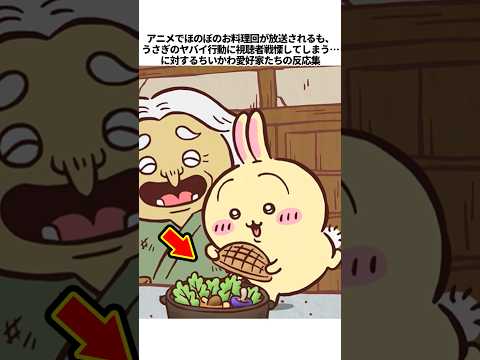
In a recent episode of Chiikawa, the rabbit character helps an elderly woman prepare a meal as thanks for rescuing it from a bear trap. On the surface, this appears to be a heartwarming slice-of-life sequence depicting rural hospitality and gratitude. However, closer examination reveals suspicious details: the rabbit appears to add questionable mushrooms to the dish while the grandmother isn’t looking, with the fungi displaying an unnaturally dark coloration. This contradiction between the episode’s wholesome framing and the rabbit’s suspicious behavior has sparked intense debate among viewers about the true nature of the scene.
Why It Matters
This episode exemplifies a growing trend in contemporary anime: the deliberate fusion of heartwarming aesthetics with psychological unease. Chiikawa operates at the intersection of comfort and dread, challenging viewers to abandon simple moral judgments. The episode demonstrates how production choices—color grading, pacing, character behavior—can systematically undermine viewer expectations. This approach reflects broader shifts in audience preferences, where straightforward wholesome content no longer satisfies viewers seeking narrative complexity and psychological depth. Understanding how Chiikawa achieves this effect provides insight into modern anime’s evolving artistic ambitions.
Background
Chiikawa originated as a four-panel manga series on Twitter, characterized by its unique blend of cozy aesthetics and unsettling undertones. The anime adaptation intensifies this duality through deliberate production choices. Unlike the source material, which treats similar scenes relatively lightly, the animated version amplifies tension through color work, sound design, and pacing. The series belongs to an emerging genre sometimes called “dark comfort”—works that maintain surface-level warmth while embedding disturbing implications beneath. Comparable works include Made in Abyss (2017), which juxtaposes beautiful landscapes with existential danger, and Higurashi: When They Cry (2006), which destroys the safety of rural settings through hidden tragedy.
Key Points
- Surface narrative: The rabbit repays the grandmother’s kindness by helping prepare and share a meal—a conventional expression of gratitude.
- Hidden subtext: The rabbit appears to add suspicious mushrooms to the dish without the grandmother’s knowledge, suggesting potential poisoning.
- Character contradiction: The rabbit’s established personality as a pure-hearted character conflicts sharply with this suspicious behavior, creating cognitive dissonance.
- Narrative inversion: The grandmother, initially positioned as a rescuer, becomes a potential victim, inverting typical victim-aggressor dynamics.
- Production intent: The anime adaptation deliberately emphasizes unsettling details absent or downplayed in the original manga, suggesting intentional directorial choice.
- Viewer psychology: The episode exploits the gap between expected comfort and actual unease, generating maximum psychological tension through incompleteness rather than explicit horror.
Timeline
- 2006: Higurashi: When They Cry establishes the template for destroying pastoral safety through hidden darkness.
- 2012: Another demonstrates how ordinary school settings can harbor death and dread.
- 2017: Made in Abyss shows how beautiful environments can mask existential danger.
- 2019–2024: “Dark comfort” emerges as a recognizable anime trend, with increasing production numbers.
- 2024: Chiikawa’s cooking episode represents the current apex of this trend, achieving unprecedented balance between warmth and unease.
Perspectives
The Comfort Reading: Some viewers interpret the episode straightforwardly—a kind grandmother helps a lost creature, and the rabbit expresses gratitude through assistance. This perspective focuses on the genuine warmth of rural hospitality and the beauty of simple acts of kindness. Comments like “I want to live this way, helped by a grandmother in the countryside” reflect this interpretation.
The Suspicion Reading: Other viewers detect intentional wrongdoing. The rabbit’s furtive behavior, the mushrooms’ unnatural appearance, and the deliberate concealment suggest attempted poisoning. This reading interprets the scene as a betrayal masked by surface pleasantness.
The Psychological Reading: A third interpretation suggests the rabbit harbors simultaneous gratitude and doubt. Rescued from danger, the rabbit nonetheless questions the grandmother’s motives—why was she present? Why is she helping? Unable to fully trust, the rabbit tests the grandmother’s character through the addition of suspicious substances, attempting to gauge her true nature. This reading positions the rabbit not as villain but as psychologically conflicted, caught between appreciation and suspicion.
The Meta Reading: The most complex interpretation suggests the entire scene functions as a commentary on the impossibility of moral certainty. The production deliberately prevents viewers from reaching definitive conclusions, forcing sustained ambiguity. This reflects the series’ broader project: depicting a world where simple good-versus-evil judgments collapse under scrutiny.
Insights
Chiikawa represents a significant evolution in anime storytelling. Rather than presenting clear moral frameworks, the series trains viewers to tolerate unresolved ambiguity. The cooking episode achieves this through what might be called “productive incompleteness”—the scene remains genuinely unclear, and this unclarity is the point. The production doesn’t resolve into either pure comfort or pure horror; it maintains both simultaneously.
This approach mirrors real-world moral complexity. Actual human relationships rarely fit neat categories of victim and aggressor, kindness and malice. By refusing to resolve its ambiguities, Chiikawa suggests that the world operates according to more intricate logic than conventional narratives allow. The grandmother may be genuinely kind and still harbor hidden motives. The rabbit may be grateful and still suspicious. Both states can coexist.
The episode also demonstrates how production technique shapes meaning. Identical narrative events can read as heartwarming or sinister depending on color grading, pacing, and framing. Chiikawa’s production team weaponizes these tools to systematically undermine viewer comfort, proving that anime’s visual and sonic dimensions carry equal narrative weight to dialogue and plot.
The intense viewer response—with audiences reporting genuine unease despite the episode’s surface wholesomeness—confirms that the production succeeds in its apparent intent. By forcing viewers to hold contradictory interpretations simultaneously, Chiikawa generates a distinctive form of psychological engagement. Whether this sustained ambiguity ultimately serves the narrative or merely cultivates anxiety remains an open question, but the series’ artistic ambition is undeniable.