▶ Watch the original YouTube video
Attack on Titan’s Unexpected Beauty Salon Collaboration Sparks Debate Among Fans
Attack on Titan has partnered with Hot Pepper Beauty, a major Japanese beauty booking platform, in a collaboration that has surprised and divided the anime’s fanbase. The partnership represents a new era of cross-industry collaborations that deliberately leverage the gap between a series’ dark, apocalyptic themes and everyday consumer services.
What Happened
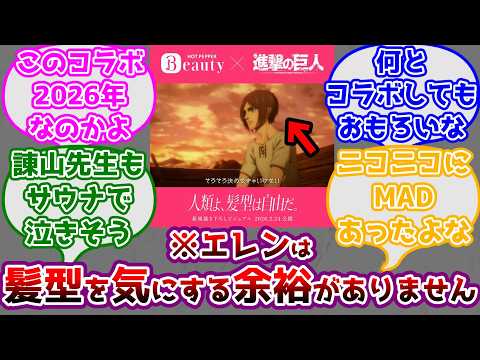
Attack on Titan, the long-running anime and manga series about humanity’s fight for survival against giant monsters, has announced a collaboration campaign with Hot Pepper Beauty, Japan’s leading beauty and wellness booking platform. The partnership marks an unusual pairing: a series known for its grim, existential themes of human extinction is now being promoted alongside beauty services focused on relaxation and self-care.
The collaboration has generated significant discussion across social media platforms, with fans expressing reactions ranging from enthusiastic support to skepticism about the commercial direction of the franchise.
Why It Matters
This collaboration exemplifies a fundamental shift in how major intellectual properties approach brand partnerships. Rather than seeking alignment between a series’ thematic content and a partner company’s services—the traditional model—this collaboration deliberately embraces the contradiction between Attack on Titan’s dark worldview and Hot Pepper Beauty’s everyday wellness focus.
The partnership signals that Attack on Titan has evolved from a niche anime property into a mainstream cultural asset with sufficient brand power to transcend genre boundaries. It also demonstrates how modern marketing strategies are increasingly designed to generate organic fan engagement through the creative tension between seemingly incompatible brands.
Background
Attack on Titan premiered in April 2013 and became a cultural phenomenon over its 11-year run. The series concluded its final season in 2023, marking the end of its primary narrative arc. With the story complete, the franchise has shifted focus from acquiring new audiences to maintaining existing fan satisfaction and expanding the work’s cultural significance.
The collaboration follows a pattern of previous Attack on Titan partnerships with companies like Uniqlo, Lawson, and Family Mart. However, this partnership with Hot Pepper Beauty represents a departure from previous collaborations, which typically involved products or services with more obvious connections to the series’ content.
Attack on Titan’s fanbase is notably diverse, spanning ages 20 to 40 and encompassing both male and female audiences. This demographic overlap with Hot Pepper Beauty’s typical user base creates a marketing opportunity that transcends traditional thematic alignment.
Key Points
- Hot Pepper Beauty launched a collaboration campaign featuring Attack on Titan characters and branding
- Fan reactions have been predominantly positive, with many viewing the partnership as entertainingly unexpected
- The collaboration has sparked discussion about the gap between the series’ apocalyptic themes and beauty services
- Fan-created content and memes about the partnership have circulated widely on social media platforms
- The collaboration represents a new marketing approach that leverages thematic contradiction as a content-generation tool
- Some longtime fans have expressed concerns about excessive commercialization of the franchise
Timeline
- April 2013: Attack on Titan anime series premieres
- 2019: Demon Slayer collaborates with Nissin Cup Noodles, establishing thematic alignment as standard practice
- 2020: Attack on Titan partners with Uniqlo for clothing line
- 2022: Demon Slayer collaborates with Marugame Seimen, demonstrating shift toward gap-based collaborations
- 2023: Attack on Titan final season concludes; franchise enters new strategic phase
- 2024: Hot Pepper Beauty collaboration announced, exemplifying new era of cross-industry partnerships
Perspectives
Enthusiastic Fans: Many community members view the collaboration as entertainingly absurd and appreciate the creative tension between the series’ dark worldview and beauty services. Comments like “the gap is amazing” and “imagining the characters caring about skincare is hilarious” dominate positive reactions. These fans see the partnership as evidence of the series’ cultural maturity and are actively creating fan content that explores the contradiction.
Critical Fans: Some longtime devotees express concern that the collaboration undermines the series’ serious narrative and thematic integrity. They worry that excessive commercialization may dilute the franchise’s cultural value and question whether such partnerships are necessary or appropriate for a story centered on human extinction and existential struggle.
Analytical Observers: A segment of the fanbase approaches the collaboration from a media literacy perspective, viewing it as a case study in modern marketing strategy. These fans recognize the partnership as a deliberate attempt to generate organic engagement through thematic contradiction and appreciate its innovative approach to brand collaboration.
The Evolution of Cross-Industry Collaborations
The Attack on Titan and Hot Pepper Beauty partnership reflects a broader evolution in how major intellectual properties approach brand partnerships. This evolution can be understood in three distinct phases:
Phase One (2000s): Thematic Alignment. Early collaborations prioritized direct connections between a series’ content and a partner’s services. For example, Code Geass partnered with Pizza Hut because the protagonist frequently ate at the restaurant within the show’s narrative.
Phase Two (2010s): Brand Value Priority. Companies began prioritizing intellectual property brand strength over thematic compatibility. Attack on Titan’s 2020 Uniqlo collaboration exemplified this approach, leveraging the series’ cultural cachet to drive customer acquisition rather than seeking narrative alignment.
Phase Three (2020s): Gap Utilization. The current era deliberately weaponizes the contradiction between a series’ themes and a partner’s services. The gap itself becomes the content, generating discussion and organic fan engagement. The Hot Pepper Beauty collaboration represents this new paradigm, where the incongruity between humanity’s apocalyptic struggle and beauty wellness becomes the primary source of entertainment and conversation.
Fan-Generated Content as Marketing Asset
A significant aspect of this collaboration’s success lies in its ability to inspire fan creativity. The thematic gap between Attack on Titan’s grim worldview and beauty services creates interpretive space that fans actively fill with original content. Social media platforms feature fan artwork and commentary imagining characters like Mikasa caring for her hair or Armin thoughtfully considering skincare routines.
This organic content generation represents a form of viral marketing that transcends traditional advertising. Rather than passive consumption of corporate messaging, fans become active participants in creating meaning around the collaboration. This participatory dynamic generates significantly more engagement than conventional promotional content.
Insights
The Attack on Titan and Hot Pepper Beauty collaboration serves as a watershed moment in how major cultural properties approach commercial partnerships. It demonstrates that a franchise’s maturity is no longer measured solely by thematic consistency but by its ability to transcend categorical boundaries and maintain cultural relevance across diverse contexts.
The partnership’s success—measured by fan engagement and social media discussion—suggests that audiences increasingly value entertainment value and creative tension over thematic purity. The collaboration works precisely because it is unexpected, inviting fans to engage in meta-commentary about commercialization, cultural significance, and the nature of fandom itself.
However, the collaboration also raises legitimate questions about franchise saturation. While this particular partnership has generated positive engagement, excessive commercialization risks diluting brand value and alienating fans who prioritize narrative integrity. The franchise’s producers must carefully balance the opportunities presented by high-profile collaborations with the risk of overexposure.
Ultimately, the Attack on Titan and Hot Pepper Beauty partnership represents both the culmination of the series’ evolution into mainstream cultural status and a template for how future intellectual properties might approach brand collaborations. By embracing rather than hiding the contradiction between a series’ themes and commercial partners, this collaboration has created a new model for generating authentic fan engagement in an increasingly commercialized entertainment landscape.