▶ Watch the original YouTube video
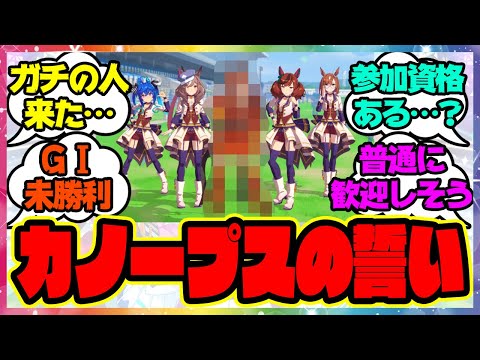
Mystery Character ‘Raymin’ Sparks Fan Frenzy in Uma Musume: Pretty Derby’s Canopus Event
A mysterious background character dubbed “Raymin” has become the subject of intense speculation among Uma Musume: Pretty Derby fans after appearing in the Canopus story event. The discovery has sparked widespread discussion across social media, with players debating whether this hidden character represents an intentional Easter egg or hints at a future official implementation.
What Happened
During the Canopus story event in Uma Musume: Pretty Derby, observant players discovered an unusual background character that stands out from typical event scenery. The character, nicknamed “Raymin” by the fan community, has become the subject of intense analysis and speculation. Screenshots and discussions have spread rapidly across Twitter and other social platforms, with fans debating the character’s identity, purpose, and whether this represents a teaser for future content.
Why It Matters
The Raymin phenomenon reveals how modern game developers use subtle design choices to foster community engagement and user-generated content. This discovery demonstrates a sophisticated approach to maintaining player interest in long-running games, where traditional content updates alone may not sustain excitement. The incident also illustrates how contemporary gaming communities actively participate in “discovering” hidden elements, transforming passive gameplay into collaborative investigation. For the broader gaming industry, this represents an emerging trend of intentionally designed mysteries that encourage social sharing and community discussion.
Background
Uma Musume: Pretty Derby is a mobile game combining horse racing simulation with character-driven storytelling and gacha mechanics. Since its launch, the game has accumulated over 100 playable characters and maintains an active player base through regular story events and character releases. The game’s development team has earned recognition for meticulous attention to detail, including subtle background elements and narrative callbacks to real-world horse racing history. The Raymin discovery fits within a broader pattern seen in successful live-service games, where developers intentionally embed hidden content to reward engaged players and stimulate community discourse.
Key Points
- Hidden Character Discovery: A mysterious background character appeared in the Canopus event, visually distinct from standard background NPCs, prompting fan investigation and naming it “Raymin”
- Community Interpretation: Fan reactions range from “adorable design” to “implementation flag speculation” to “developer playfulness,” with multiple interpretations coexisting
- Intentional Design: The character’s placement and visibility suggest deliberate developer strategy rather than accidental inclusion, designed to be discoverable yet easy to overlook
- Content Generation Catalyst: The discovery has triggered substantial fan art creation and community discussion, extending engagement beyond official content
- Industry Trend: This phenomenon reflects a growing industry practice of designing user-discovery mechanics to activate user-generated content and maintain long-term player interest
- Psychological Appeal: The mystery taps into human curiosity and the desire to solve puzzles, creating intrinsic motivation for continued engagement
Community Response
Fan reactions have been predominantly positive, with players expressing enthusiasm about the character’s design and speculating about potential future implementation. Common comments include “Raymin is adorable,” “This must be an implementation flag,” and “The developer team’s playfulness is wonderful.” Some skeptical voices questioned whether the character truly exists or is simply a regular background NPC, but these doubts were largely resolved through screenshot evidence. YouTube comments frequently referenced feeling the developer team’s “love” for the community through such thoughtful design choices. The diversity of interpretations reflects Uma Musume’s deliberate design philosophy of leaving room for player interpretation and community discussion.
Comparative Analysis with Similar Games
This phenomenon parallels similar discoveries in other major titles. In 2015, The Idolmaster: Cinderella Girls featured mysterious background characters that eventually received official implementation, generating significant excitement upon their formal introduction. Fate/Grand Order has established a reputation for embedding subtle details in event backgrounds, with player communities actively searching for hidden references and Easter eggs. Granblue Fantasy similarly incorporates discoverable narrative elements throughout its story events. What distinguishes Uma Musume’s approach is its emphasis on immediate social media virality and rapid community dissemination, suggesting the game is specifically designed for the social media era. The character’s visibility is calibrated to be noticeable enough for discovery yet subtle enough to reward careful observation.
Developer Strategy and Long-Term Implications
The Raymin placement appears to reflect a deliberate strategy to combat content fatigue in a game with over 100 characters. While regular character releases maintain baseline engagement, hidden discoveries provide an alternative form of excitement and novelty. This approach acknowledges that complete, fully-revealed content may diminish player interest over time, whereas mystery and incompleteness stimulate curiosity and investigation. The strategy parallels successful narrative games like NieR: Automata, which used multiple endings and persistent mysteries to encourage repeated engagement and community theorizing. For Uma Musume’s long-term sustainability, the critical question becomes whether the development team can continuously introduce new mysteries or if the novelty of this approach will eventually diminish.
Practical Recommendations for Players
For players interested in fully experiencing this phenomenon, replaying the Canopus event with deliberate focus on background details is recommended, with screenshots useful for community sharing. Following Raymin-related hashtags on Twitter reveals extensive fan art and analytical discussions that illuminate the broader community’s relationship with the game. Players intrigued by hidden game elements may also explore similar titles like Fate/Grand Order and Granblue Fantasy, which employ comparable design philosophies. Developing a habit of examining game environments for intentional developer details enhances overall gameplay enjoyment by transforming passive consumption into active discovery.
Insights
The Raymin phenomenon demonstrates that modern game success increasingly depends on fostering active player participation rather than simply delivering content. Uma Musume’s development team has moved beyond traditional live-service models that rely solely on character additions and story progression, instead creating conditions for player-driven discovery and community co-creation. This represents a sophisticated understanding of contemporary gaming culture, where social sharing and community discussion are integral to a game’s cultural relevance. However, this strategy carries inherent limitations—the appeal of mystery and incompleteness may not sustain indefinitely, and the development team must continuously innovate to maintain this engagement model. The Raymin discovery serves as a case study in how intentional design ambiguity, when executed skillfully, can generate disproportionate community engagement and extend a game’s cultural lifespan. Whether Uma Musume can sustain this approach long-term will likely influence industry-wide adoption of similar user-participation-focused design philosophies.