▶ Watch the original YouTube video
How “The Blue Immortal Flame” Created Aoi Imokou: A Deep Analysis of Fan Reception and Creative Excellence
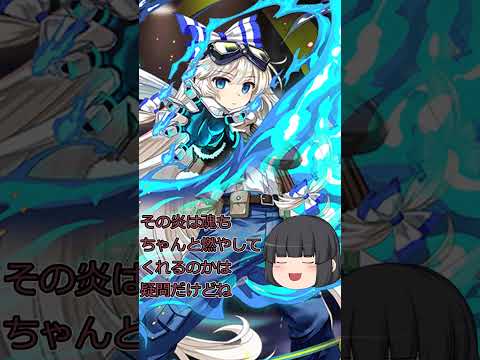
“The Blue Immortal Flame,” a Touhou Project fan-created series, has generated widespread acclaim for introducing Aoi Imokou, a character derived from the original Imokou but established as a fully independent persona. Through extensive analysis of fan reactions and creative methodology, this series demonstrates how fan works can achieve artistic sophistication comparable to official creations.
What Happened
“The Blue Immortal Flame” series introduced a character concept that reimagines Touhou’s Imokou through a single visual modification—changing her signature red flames to blue. Rather than creating a superficial color variant, the series’ creator developed an entirely distinct character with independent psychological traits, behavioral patterns, and narrative functions. This approach generated substantial positive reception within the Touhou fan community, with viewers recognizing Aoi Imokou as a legitimate character rather than a mere aesthetic variation.
Why It Matters
This series exemplifies how fan-created works can achieve creative sophistication within constrained parameters. The success of Aoi Imokou challenges conventional assumptions about derivative works, demonstrating that originality and depth are achievable even when working within established fictional universes. For fan communities and creative practitioners, this represents a significant benchmark for character development and narrative design. The series also reflects the maturation of the Touhou fandom, where creators and audiences increasingly value thematic exploration over simple character reinterpretation.
Background
The Touhou Project, an independently developed bullet-hell shooter series, has generated one of the most prolific fan-creation ecosystems in anime and gaming culture. Unlike many franchises that restrict fan works, Touhou’s creator actively encourages derivative content, resulting in thousands of fan videos, artwork, and stories. Over the past 15 years, this fandom has evolved from producing simple “what-if” scenarios to creating sophisticated narrative works that explore character psychology and thematic depth. “The Blue Immortal Flame” emerged within this mature creative environment, representing a culmination of fan-creation techniques refined over more than a decade.
Imokou, the original character, is defined by her immortality and red flame abilities. She serves as a complex figure in Touhou lore, connected to historical Japanese mythology. The character’s established traits—passionate, impulsive, and emotionally driven—provided the foundation upon which the series’ creator built Aoi Imokou’s contrasting characteristics.
Key Points
- Character Differentiation: Aoi Imokou possesses distinct psychological traits—calm, thoughtful, and strategically minded—that contrast sharply with the original Imokou’s passionate nature, creating a meaningful character dichotomy rather than a superficial variation.
- Psychological Framework: The character operates as a “sage archetype” in Jungian terms, embodying wisdom and measured judgment, while the original Imokou represents the “hero archetype” of impulsive action and conviction.
- Narrative Function: Within the “Touhou Royal” battle-royale setting, Aoi Imokou serves as a counterpoint to the original character, offering rational decision-making where the original offers emotional responses, thereby enriching the story’s thematic complexity.
- Fan Reception: YouTube comments and social media responses overwhelmingly recognize Aoi Imokou as an independent character rather than a color variant, with viewers praising the contrast between the two versions and the psychological depth of the characterization.
- Creative Methodology: The series succeeds by preserving core character elements (immortality, flame abilities) while allowing a single variable (flame color) to cascade into comprehensive character differentiation across psychology, behavior, and narrative role.
- Fandom Maturation: The positive reception reflects a shift in fan-creation values, where audiences increasingly appreciate thematic exploration and character development over novelty or parody.
Timeline
- 2010s (Early Period): Touhou fan works primarily focused on “what-if” scenarios and character reinterpretations, often changing circumstances rather than character traits.
- 2015 Onward: A new creative trend emerged emphasizing preservation of core character elements while exploring new psychological dimensions and narrative possibilities.
- Recent Period: “The Blue Immortal Flame” represents the current apex of this trend, demonstrating fully realized character differentiation within constrained creative parameters.
Perspectives
Supportive Interpretation: The majority of fan responses view Aoi Imokou as a sophisticated character creation that successfully differentiates itself through psychological and behavioral traits. Viewers appreciate how the series uses a single visual element to justify comprehensive character divergence, and many note that the contrast between the two versions enriches both characters’ narratives. This perspective treats the work as a serious creative achievement worthy of analysis and appreciation.
Critical Perspective: Some viewers maintain skepticism about color-variant characters, arguing that creating entirely new characters would be more creatively valuable than deriving variants from existing ones. This viewpoint questions whether the distinction between Aoi Imokou and the original is sufficiently meaningful to justify the character’s existence. However, this perspective represents a minority position within the broader fan community.
Analytical Framework: From a creative studies perspective, the series demonstrates how constraint-based creativity can produce sophisticated results. Rather than viewing the existing Touhou universe as a limitation, the creator leveraged it as a framework for exploring character psychology and narrative possibility, suggesting that derivative works can achieve artistic legitimacy through depth of execution.
Insights
“The Blue Immortal Flame” illustrates a fundamental principle of mature creative communities: originality is not determined by novelty of source material, but by depth of execution within chosen parameters. The series’ success suggests that fan-creation communities have evolved beyond viewing derivative works as inherently inferior to original creations. Instead, the capacity to develop fully realized characters within established fictional universes is increasingly recognized as a legitimate and sophisticated creative achievement.
The positive reception of Aoi Imokou also indicates that audiences value psychological consistency and narrative function over visual distinctiveness. The character’s appeal derives not from her blue flames, but from how those flames justify a comprehensive reimagining of personality, decision-making patterns, and story role. This suggests that future fan creators may find success by focusing on thematic depth rather than surface-level differentiation.
Furthermore, the series demonstrates how the Touhou fandom has matured into a community capable of supporting sophisticated character analysis and creative critique. The shift from simple character reinterpretation to complex psychological exploration reflects broader evolution in fan-creation culture, where communities increasingly engage with derivative works as serious artistic endeavors rather than casual entertainment.
The broader implication is that fan-creation ecosystems, when properly nurtured, can produce works of genuine artistic merit that rival or exceed officially sanctioned content in terms of creative sophistication and thematic depth. “The Blue Immortal Flame” serves as evidence that the distinction between “official” and “fan-created” content is becoming increasingly irrelevant when measured by artistic quality and creative achievement.