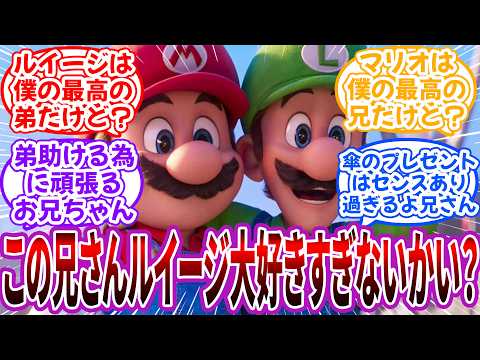
▶ Watch the original YouTube video
Super Mario Movie’s Family Setting Is Official Canon: Why Shigeru Miyamoto Kept It Hidden
The Super Mario movie reveals that Mario and Luigi’s family background as Brooklyn-born Italian immigrants is not a film invention, but rather official canon that Shigeru Miyamoto deliberately withheld from game releases. After 15 years of following the Mario franchise, one longtime fan discovered that the movie’s seemingly original settings actually trace back to the 1993 live-action film and represent Miyamoto’s consistent vision for the series.
What Happened
The Super Mario movie introduced several character details that surprised longtime fans: Mario and Luigi’s parents appear on screen, their Brooklyn background is explicitly established, and Princess Peach is revealed to be a human from another world. What initially appeared to be creative liberties taken by the filmmakers turned out to be official settings that Shigeru Miyamoto had conceived decades earlier but never incorporated into the games themselves. The film’s narrative about Mario and Luigi’s brotherly bond, their family background, and the broader world-building elements all trace back to Miyamoto’s original vision, including elements present in the 1993 live-action Mario film.
Why It Matters
This revelation fundamentally changes how fans should interpret the Mario franchise and the relationship between different media adaptations. Rather than the movie being a standalone interpretation, it represents the first complete cinematic expression of Miyamoto’s full world-building vision. Understanding that these settings were intentionally withheld from games rather than invented for film helps explain design choices across multiple Mario titles and suggests a deliberate philosophy about how different media should present the franchise. This also demonstrates how film can serve as a medium to reveal aspects of a creator’s vision that the original medium—in this case, video games—was not designed to fully express.
Background
The Mario franchise has maintained a deliberately minimalist approach to narrative and world-building in its games. Unlike many video game series, Mario titles rarely provide explicit backstory, character relationships, or detailed world explanations. This design philosophy stems from Nintendo’s belief that games should allow players freedom to interpret and imagine the world themselves. However, evidence suggests Miyamoto had developed a complete backstory that simply remained unexpressed in the games.
The 1993 live-action Super Mario Bros. film, which Miyamoto was involved with, established Mario and Luigi as Brooklyn-born plumbers of Italian descent. For decades, this film was considered non-canonical and largely forgotten. The recent animated film, however, reveals that these foundational details were not abandoned but rather preserved as part of Miyamoto’s original vision. Similarly, elements like Mario’s difficulty with mushrooms and the complex relationship between the brothers had been subtly embedded in previous games through mechanics and character design rather than explicit narrative.
Key Points
- Mario and Luigi’s family background as Brooklyn-born Italian immigrants is official canon established by Miyamoto, not a film invention
- The 1993 live-action Mario film contained settings that Miyamoto conceived and that the new animated film faithfully reproduces
- Princess Peach being a human from another world resolves logical inconsistencies in the game series and explains her unique abilities in the film
- The brotherly bond between Mario and Luigi, emphasized throughout the film, represents the core of Miyamoto’s original vision for the characters
- Miyamoto deliberately withheld detailed backstory from games to preserve player freedom of interpretation, a fundamental aspect of game design philosophy
- The film represents the first complete expression of Miyamoto’s full world-building vision across the Mario franchise
Timeline
- 1993: Live-action Super Mario Bros. film released with Miyamoto’s involvement, establishing Brooklyn background and Italian heritage
- 2000s-2010s: Mario games continue to minimize narrative details while subtly embedding character relationships through mechanics
- 2023: Animated Super Mario movie released, faithfully reproducing Miyamoto’s original settings and revealing them to audiences
- Post-release: Fan analysis reveals the film’s settings are canonical rather than original, sparking discussion about media-specific design philosophy
Perspectives
The revelation that the movie’s settings are official canon rather than creative invention presents multiple interpretations. Some fans view this as validation that Miyamoto had a complete vision all along, and the film finally allows that vision to be fully expressed. Others see it as evidence of deliberate design philosophy: Miyamoto understood that games and films are fundamentally different media, and each requires different approaches to storytelling. Games benefit from ambiguity and player interpretation, while films require explicit narrative and character development.
The film’s emphasis on family and brotherly love aligns with American cinema conventions, yet this does not represent the filmmakers imposing their values on the source material. Rather, the Mario brothers’ relationship was always central to the franchise—evident in the very title “Super Mario Bros.”—and the film simply makes explicit what the games left implicit. This suggests that the movie succeeded not by changing the source material but by revealing its hidden depths.
The characterization of Luigi deserves particular attention. In games like Mario 2, Luigi’s superior jumping ability but slippery landing mechanics were presented as gameplay balance. The film recontextualizes these mechanics as expressions of Luigi’s character: he possesses natural talent but struggles with self-doubt and instability. This interpretation suggests that game mechanics themselves can encode character information that becomes fully legible only when translated to narrative media.
Insights
The Super Mario movie demonstrates that a successful adaptation need not choose between faithfulness to source material and creative expression. By revealing Miyamoto’s long-hidden vision, the film achieves both simultaneously. The movie’s approach suggests a model for future video game adaptations: rather than imposing new interpretations, filmmakers might excavate the creator’s complete vision and find ways to express elements that the original medium could not fully convey.
The deliberate withholding of backstory from games reveals a sophisticated understanding of medium-specific storytelling. Miyamoto recognized that games require different narrative approaches than films, not because of technical limitations but because of fundamental differences in how these media engage audiences. Games invite players to co-create meaning through interpretation and choice, while films present a fixed narrative that demands emotional investment in predetermined character arcs. The Mario film succeeds because it respects this distinction rather than fighting against it.
The film’s revelation of Princess Peach as a human from another world exemplifies how the movie resolves logical inconsistencies that players had long noticed but accepted as part of game logic. By providing rational explanations for seemingly arbitrary world-building elements, the film demonstrates that Miyamoto’s vision was internally coherent all along—players simply lacked the narrative framework to perceive that coherence. This suggests that future Mario media might continue to reveal additional layers of intentional design that were always present but unexpressed.
Ultimately, the Super Mario movie functions as a form of creative archaeology, excavating and presenting Miyamoto’s complete vision for the first time. Rather than representing a departure from the games, it represents their fulfillment through a different medium. For longtime fans, this recontextualization transforms how they understand not just the movie but the entire Mario franchise, revealing that what appeared to be minimalist game design was actually a carefully preserved vision waiting for the right medium to fully emerge.