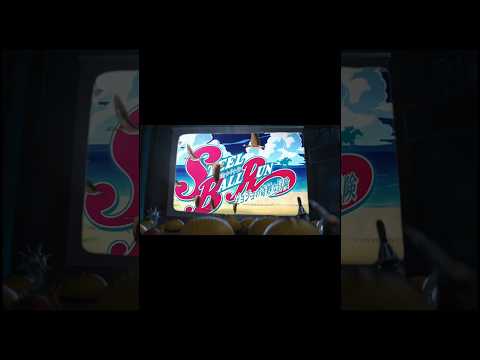
▶ Watch the original YouTube video
How Universal Animation Transcends Language: A Deep Analysis of JoJo’s Steel Ball Run Opening Through a Minion’s Eyes
A viral reaction video showing a Minion responding to JoJo’s Bizarre Adventure: Steel Ball Run’s opening and ending sequences reveals a profound truth about animation: the most powerful visual storytelling requires no language at all. This analysis explores how the 2023 anime adaptation achieves what few productions manage—communicating pure excitement across linguistic and cultural boundaries.
What Happened
A reaction video featuring a Minion character watching the opening and ending sequences of JoJo’s Bizarre Adventure: Steel Ball Run has gained significant traction online. The Minion, a character incapable of conventional language, responds with enthusiastic repetitions of “Pinyu! Pinyu!”—demonstrating visceral excitement despite having no linguistic understanding of the content. This seemingly simple reaction has sparked broader discussions about how animation communicates meaning beyond words.
Why It Matters
In an increasingly globalized entertainment landscape, the ability of visual media to transcend language barriers has become a critical measure of artistic success. The Steel Ball Run opening demonstrates that masterfully crafted animation can trigger emotional responses independent of cultural context or linguistic comprehension. This challenges conventional wisdom about storytelling and suggests that the anime industry’s investment in visual synchronization with music is not merely aesthetic—it’s a strategic approach to global audience engagement.
Background
Steel Ball Run is the seventh installment of the long-running JoJo’s Bizarre Adventure franchise, originally serialized from 2004 to 2011. The anime adaptation premiered in 2023 under the direction of David Production, the studio responsible for previous JoJo anime adaptations. The series is set during an 1890s transcontinental horse race across America, combining the franchise’s signature supernatural elements with a grounded historical setting. The opening and ending sequences represent a significant production investment, featuring meticulously synchronized visual cuts, color palettes, and musical composition designed to convey narrative themes of adventure, progress, and determination.
Key Points
- Visual-Audio Synchronization: The Steel Ball Run opening achieves near-perfect synchronization between musical tempo and visual cuts, with 3-5 cuts per second matching the rhythm of the soundtrack.
- Color Strategy: The opening employs warm color tones—yellows and oranges—that symbolize adventure and excitement, chosen deliberately to evoke emotional responses without relying on narrative context.
- Character Movement: Large, powerful character movements communicate determination and resolve through kinetic energy rather than dialogue or exposition.
- Universal Emotional Response: The Minion’s enthusiastic reaction demonstrates that the opening successfully triggers excitement in viewers regardless of language comprehension or cultural background.
- Industry Trend: Since 2018, anime openings and endings have been repositioned from skippable elements to essential components of a series’ identity and marketing strategy.
- Global Production Strategy: The historical American setting combined with language-independent visual storytelling suggests deliberate targeting of international audiences.
Timeline
- 2004-2011: Steel Ball Run serialized in Weekly Shonen Jump
- 2008: JoJo’s Bizarre Adventure television anime adaptation announced
- 2013: Attack on Titan premiere establishes opening sequences as critical to series identity
- 2018: Attack on Titan Season 3 marks the industry-wide reassessment of opening and ending importance
- 2023: Steel Ball Run anime adaptation premieres with acclaimed opening and ending sequences
- 2023-2024: Minion reaction video gains viral traction, sparking analysis of language-independent animation
Perspectives
From a production standpoint, the Steel Ball Run opening represents a calculated investment in what might be termed “pre-attentive processing”—the brain’s automatic emotional response to visual and auditory stimuli before conscious linguistic interpretation occurs. The human brain processes visual information and emotional reaction faster than language comprehension, and the opening exploits this neurological reality through rapid cuts synchronized with musical beats.
From an audience perspective, international viewers and non-Japanese speakers report experiencing the same excitement as Japanese-language audiences, suggesting the opening successfully communicates narrative themes—adventure, determination, forward momentum—through pure visual language. The Minion’s reaction exemplifies this: without understanding Japanese or possessing conventional language, the character responds authentically to the visual spectacle and musical energy.
From an industry perspective, this represents a broader shift in anime production philosophy. Where 1990s and 2000s anime often prioritized narrative exposition in openings, contemporary productions increasingly treat openings as standalone visual experiences—essentially music videos that establish mood and thematic content independent of plot.
Comparative Analysis
Steel Ball Run’s opening shares structural similarities with other acclaimed anime openings that achieve language-independent impact. Attack on Titan’s first opening (2013) employs rapid cuts in dark color palettes to communicate existential threat. Demon Slayer uses multi-colored visual complexity to convey action and intensity. Steel Ball Run distinguishes itself through warm color dominance and consistent forward-motion visual metaphors—scrolling, zooming, and character movement all reinforce the narrative concept of progression across a landscape.
A comparative analysis of recent anime reveals that Steel Ball Run ranks among the highest in what might be termed “language-independence quotient”—the degree to which visual and musical elements communicate meaning without linguistic support. This positioning alongside Attack on Titan suggests that both productions deliberately prioritized global accessibility in their opening design.
Industry Trends and Future Implications
Over the past five years, anime production has increasingly emphasized opening and ending sequences as primary marketing and narrative tools. This represents a significant shift from the 2010s, when openings were often considered expendable elements that viewers would skip. Contemporary anime producers now recognize that openings function as the series’ visual identity and emotional entry point.
The success of Steel Ball Run’s opening suggests several emerging trends: first, the continued refinement of audio-visual synchronization to achieve music-video-level production quality; second, the deliberate design of openings for global audiences rather than Japanese-domestic viewership; and third, the increasing use of visual metaphor and kinetic storytelling to replace dialogue-dependent exposition.
Future anime productions are likely to further emphasize this language-independent approach, particularly as streaming platforms expand international distribution and production budgets increasingly depend on global viewership metrics rather than domestic Japanese audiences alone.
Audience Reception and Critical Response
The minion reaction video has generated substantial engagement across social media platforms, particularly on YouTube and Reddit. Comments frequently emphasize the connection between visual quality and emotional response independent of language. International anime communities have highlighted the opening as evidence that “good animation doesn’t need language to communicate excitement,” with particular praise for the synchronization between musical tempo and visual cuts.
Professional anime critics have noted that Steel Ball Run’s opening represents 2023’s highest achievement in what might be termed “visual storytelling efficiency”—the ability to communicate complex narrative and emotional content within a 90-second timeframe using purely visual and musical language.
Insights
The Minion’s enthusiastic response to Steel Ball Run’s opening illuminates a fundamental principle of artistic communication: the most powerful expressions transcend the boundaries of language and culture. This is not merely an aesthetic observation but a practical reality of how human brains process and respond to visual and auditory stimuli.
Steel Ball Run’s opening succeeds because its creators understood that excitement, determination, and adventure are universal human experiences that can be communicated through color, rhythm, movement, and sound without requiring linguistic mediation. The warm color palette, rapid cuts synchronized to musical beats, and kinetic character movements all function as a visual language that precedes and supersedes conventional speech.
This approach has significant implications for the future of global entertainment. As streaming platforms continue to distribute content across linguistic and cultural boundaries, productions that prioritize visual communication over dialogue-dependent storytelling will likely achieve greater international success. Steel Ball Run’s opening suggests that anime—and animation more broadly—is increasingly positioned as a medium that communicates through visual syntax rather than linguistic syntax.
However, a critical question remains: while openings and endings achieve language-independent communication, does the narrative content of the series itself maintain this accessibility? Steel Ball Run’s complex plot and character psychology may require linguistic understanding that the opening’s pure visual language does not provide. This distinction between opening-sequence accessibility and narrative-content accessibility represents an important frontier for future anime production and international distribution strategy.
Recommendations for Viewers
For those beginning Steel Ball Run, the primary recommendation is to watch the opening and ending sequences in full rather than skipping them. These sequences evolve throughout the series, with visual elements shifting to reflect narrative progression and character development—a technique common to JoJo’s Bizarre Adventure adaptations. Comparing the opening’s visual language to the original manga source material can deepen appreciation for how the animation team translated narrative concepts into pure visual form.
Related viewing that illuminates similar principles of language-independent animation includes Attack on Titan’s complete series, Demon Slayer’s theatrical releases, and previous JoJo’s Bizarre Adventure anime adaptations (Parts 1-6), which collectively demonstrate the evolution of opening-sequence design in contemporary anime production.